
Exploring Earth Day: Understanding and Celebrating Our Planet
Every year, on April 22nd, people around the world come together to celebrate Earth Day. But what exactly is Earth Day, and why is it observed? Let’s take a closer look at this special day dedicated to our planet’s health and well-being.
What is Earth Day?
Earth Day is an annual event celebrated worldwide to demonstrate support for environmental protection. It’s a day when people of all ages, backgrounds, and nationalities come together to take action to protect the Earth and promote sustainability.
Why Do We Celebrate Earth Day?
Earth Day is observed for several important reasons:
- Raising Awareness: Earth Day raises awareness about environmental issues such as pollution, deforestation, climate change, and habitat loss. By learning about these issues, we can better understand the impact of human activities on the planet.
- Taking Action: Earth Day encourages individuals and communities to take action to protect the environment. Whether it’s planting trees, cleaning up litter, or conserving water and energy, everyone can contribute to making a positive difference.
- Promoting Sustainability: Earth Day promotes the idea of sustainability, which means meeting the needs of the present without compromising the ability of future generations to meet their own needs. By adopting sustainable practices, we can ensure that our planet remains healthy and habitable for generations to come.
- Celebrating Nature: Earth Day is also a celebration of the beauty and diversity of the natural world. It’s a time to appreciate the wonders of nature, from majestic mountains and lush forests to colorful coral reefs and diverse ecosystems.
How Can We Get Involved?
We can play a crucial role in Earth Day celebrations and environmental conservation efforts. Here are some ways you can get involved:
- Learn About Environmental Issues: Take the time to learn about environmental issues affecting our planet, such as climate change, pollution, and endangered species. You can read books, watch documentaries, or research online to deepen your understanding.
- Reduce, Reuse, Recycle: Practice the three R’s of sustainability: reduce, reuse, and recycle. Reduce your consumption of single-use plastics, reuse items whenever possible, and recycle materials like paper, plastic, and glass.
- Plant Trees: Trees play a vital role in combating climate change by absorbing carbon dioxide and producing oxygen. You can participate in tree-planting events in your community or even plant trees in your own backyard.
- Clean Up Your Community: Organize a neighborhood clean-up event to pick up litter and trash from parks, streets, and waterways. By working together, you can make a positive impact on your local environment.
- Conserve Water and Energy: Practice water and energy conservation at home and at school. Turn off lights and electronics when not in use, take shorter showers, and fix leaky faucets to conserve water.
Conclusion
Earth Day is a time to come together as a global community to celebrate and protect our planet. By raising awareness, taking action, and promoting sustainability, we can all contribute to building a healthier, more sustainable world for future generations. So let’s join hands and make every day Earth Day!

Earth Day Activities Plant a Garden: Gather some seeds, soil, and pots, and get your hands dirty by planting a small garden. You can grow flowers to attract pollinators like bees and butterflies, or plant vegetables and herbs to enjoy fresh, homegrown produce.
DIY Bird Feeder: Create your own bird feeder using recycled materials. You can use a plastic bottle, cardboard, or even a pinecone. Fill it with birdseed and hang it outside your window to attract birds to your backyard.
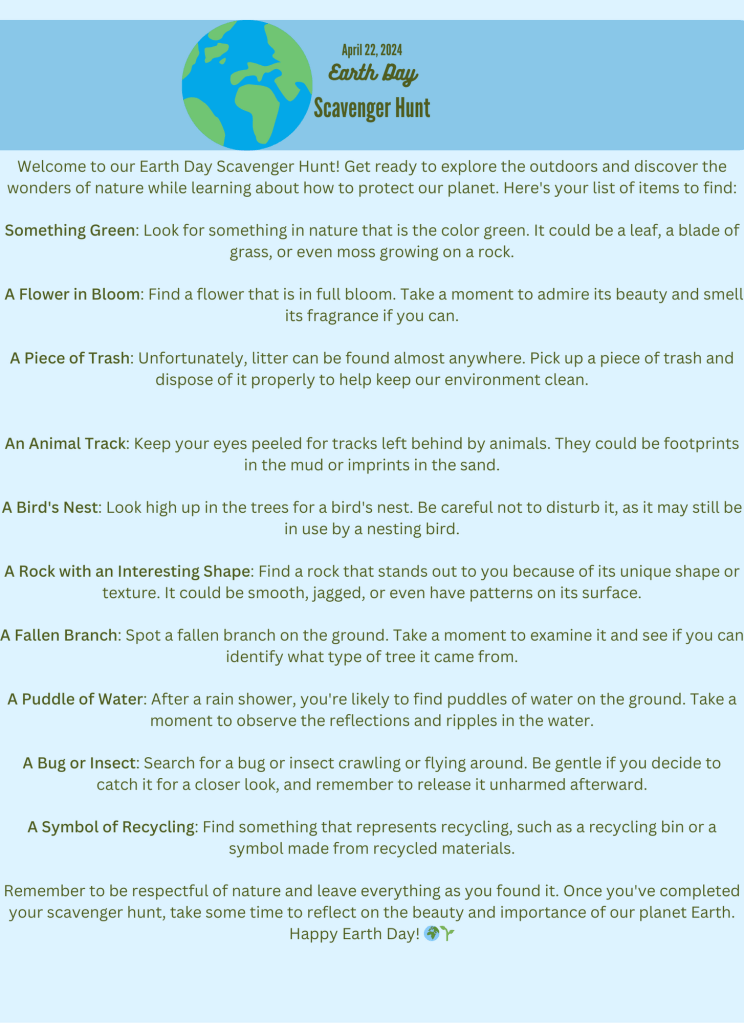
Nature Scavenger Hunt: Head outdoors with a list of items to find in nature, such as a pinecone, a bird’s nest, or a certain type of flower. Take a walk in your neighborhood or a nearby park and see how many items you can check off your list.
Upcycled Crafts: Get creative with items you would normally throw away by turning them into works of art. You can make jewelry from old magazines, sculptures from cardboard boxes, or even a mosaic from broken tiles or glass.
Beach Clean-Up: If you live near the coast, organize a beach clean-up with your friends and family. Bring gloves and trash bags, and spend the day picking up litter along the shoreline. Not only will you help protect marine life, but you’ll also get some fresh air and exercise.
Recycled Paper Making: Learn how to make your own paper from recycled materials like old newspapers or junk mail. Tear the paper into small pieces, blend it with water, and press it into molds to create new sheets of paper. You can even add flower petals or seeds for a decorative touch.
Energy Audit: Conduct an energy audit of your home to identify areas where you can conserve energy. Check for drafts around windows and doors, unplug electronics when they’re not in use, and switch to energy-efficient light bulbs. Challenge your family to reduce your household energy consumption and track your progress over time. Nature Art: Use natural materials like leaves, sticks, and rocks to create beautiful works of art. Arrange them into patterns or shapes on the ground, or use them to make sculptures and collages. Take photos of your creations before they’re reclaimed by nature. Composting: Start a compost bin in your backyard or even indoors using a small container. Collect food scraps like fruit and vegetable peels, coffee grounds, and eggshells, and layer them with brown materials like leaves or shredded paper. Over time, your compost will break down into nutrient-rich soil that you can use to fertilize your garden. Water Conservation Experiment: Explore the importance of water conservation by conducting a simple experiment. Fill two containers with the same amount of water and place one under a dripping faucet while covering the other. Measure how much water is collected over time to demonstrate the impact of small leaks and the benefits of fixing them. These hands-on activities are not only fun but also educational and meaningful ways to celebrate Earth Day and promote environmental stewardship. So roll up your sleeves and get ready to make a positive difference for our planet!
 Unleashed Learning Gateway