
Unveiling the Mystery: An Introduction to Solar Eclipses
Welcome, explorers of the cosmos, to the celestial spectacle known as a solar eclipse. In the vast tapestry of our universe, few phenomena captivate our imagination quite like the dance between the sun, moon, and Earth during these rare events. Join me on a journey as we unravel the mystery behind this breathtaking display of cosmic alignment.
What is a Solar Eclipse?
A solar eclipse occurs when the moon moves between the Earth and the sun, temporarily blocking the sun’s light from reaching parts of the Earth’s surface. This captivating interplay of celestial bodies creates a dramatic shadow on our planet, turning day into an eerie twilight and revealing the sun’s corona in all its splendor.
Types of Solar Eclipses:
There are four main types of solar eclipses, each with its own unique characteristics:
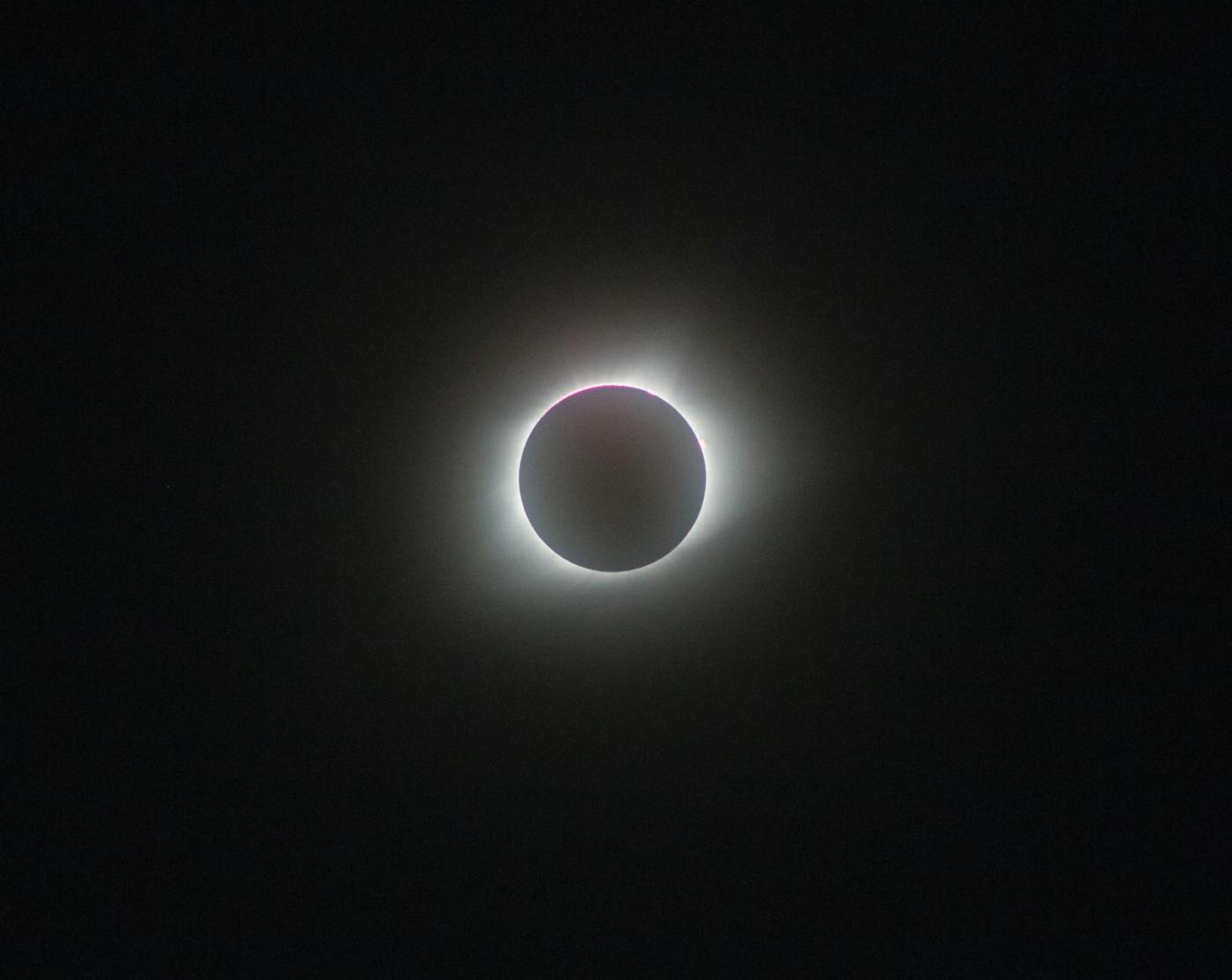
Total Solar Eclipse: During a total solar eclipse, the moon completely covers the sun, casting a shadow on the Earth and plunging the landscape into darkness. This rare and awe-inspiring event allows observers within the path of totality to witness the sun’s outer atmosphere, or corona, shimmering in the sky.
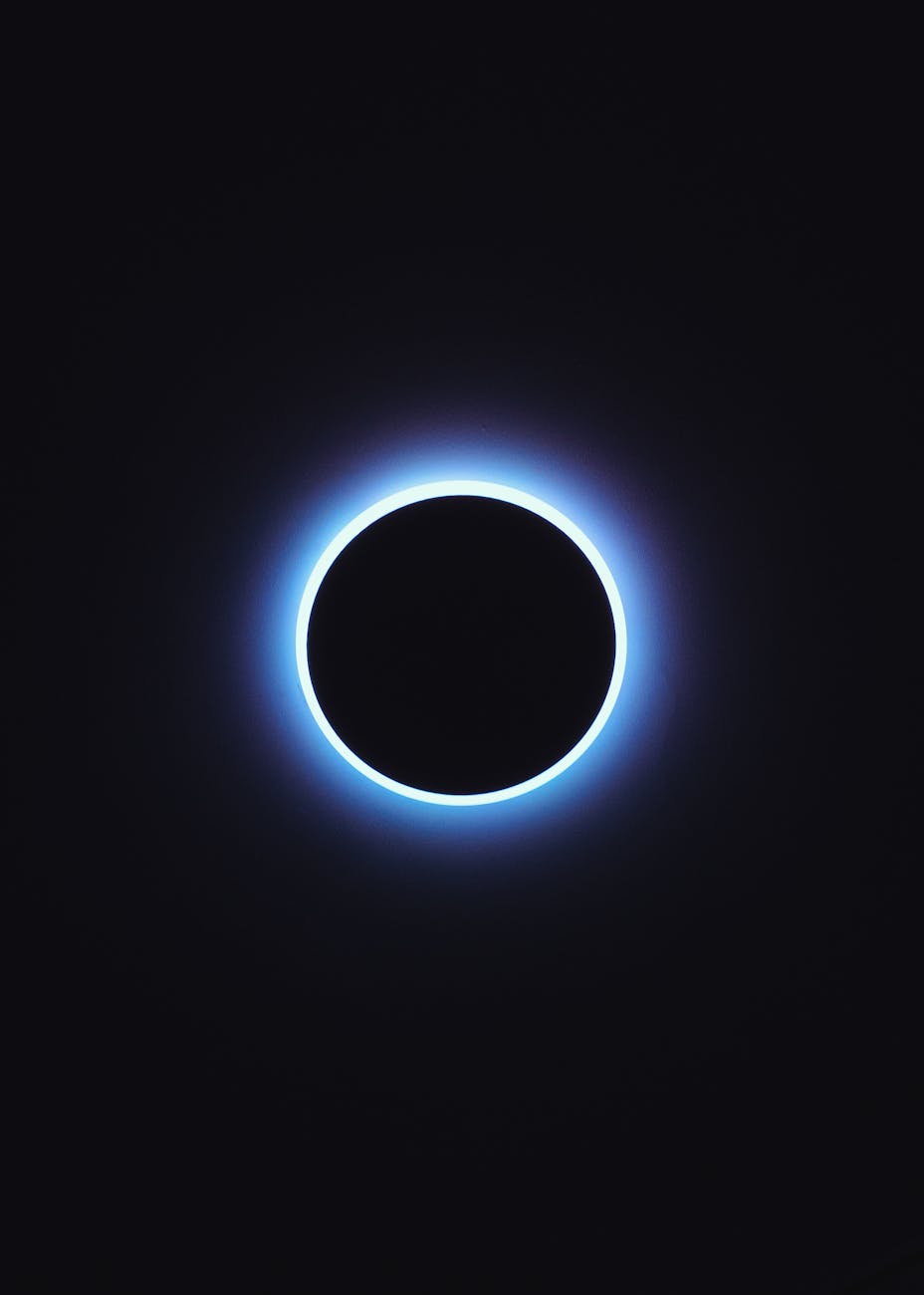
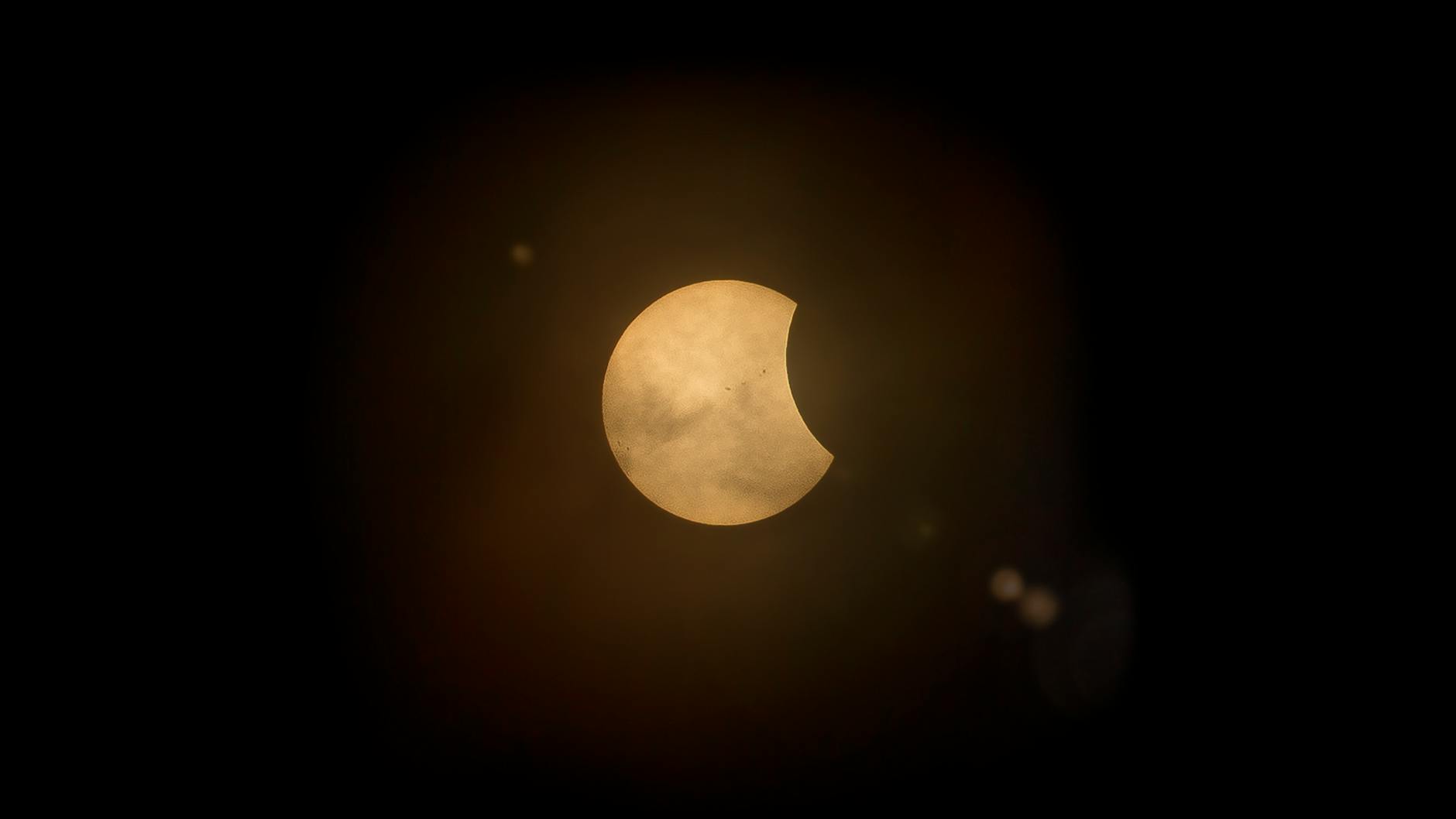
Partial Solar Eclipse: In a partial solar eclipse, the moon only partially obscures the sun, resulting in a crescent-shaped shadow. While not as dramatic as a total eclipse, a partial eclipse still offers a mesmerizing spectacle as the moon takes a bite out of the sun.
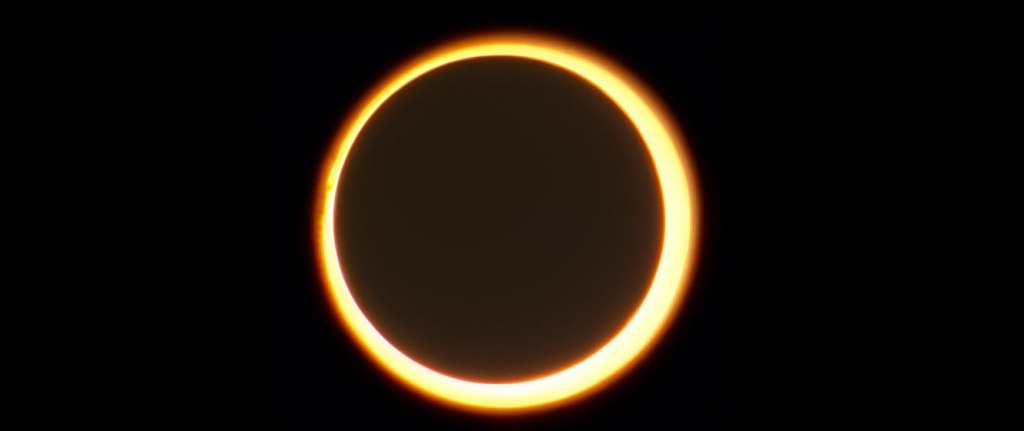
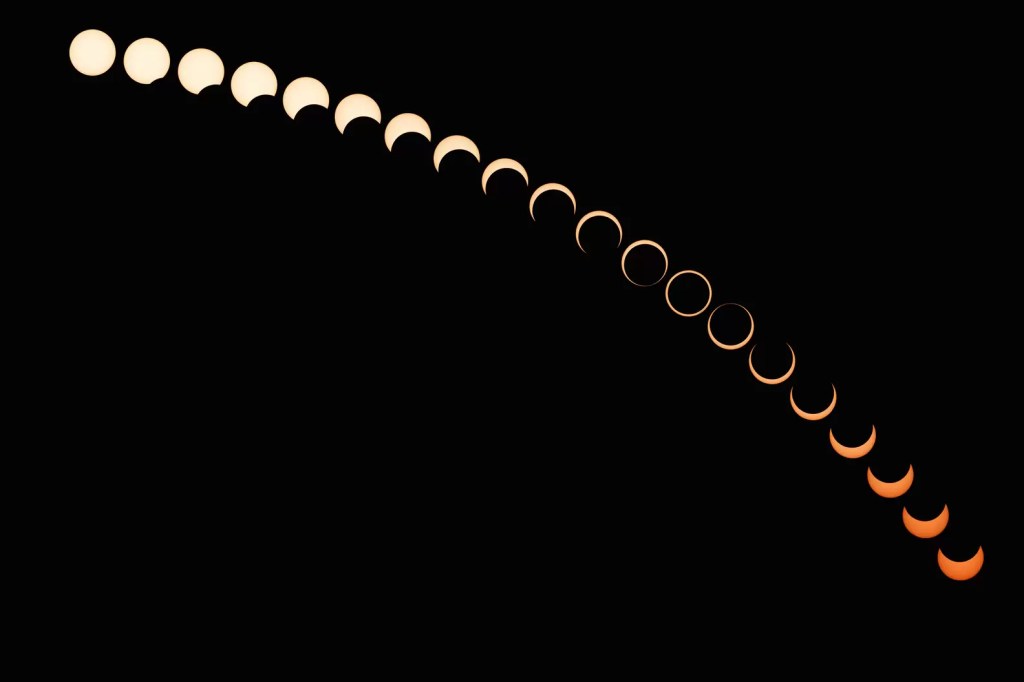
Annular Solar Eclipse: An annular solar eclipse occurs when the moon is too far from the Earth to completely cover the sun’s disk. As a result, a ring of sunlight remains visible around the edges of the moon, creating a striking “ring of fire” in the sky.
Image below shows Annular Solar Eclipse.
Hybrid Eclipse: A hybrid eclipse, also known as an annular-total eclipse, is a rare and fascinating celestial event that combines the characteristics of both total and annular solar eclipses. What makes hybrid eclipses unique is that they transition between being annular and total along different parts of their path of totality.
The Dance of Celestial Bodies:
The occurrence of a solar eclipse is a testament to the intricate choreography of our solar system. As the moon orbits the Earth and the Earth orbits the sun, rare moments of alignment create opportunities for these breathtaking cosmic displays. It’s a reminder of the interconnectedness of celestial bodies and the wonder of our place in the universe.
In conclusion, as we embark on this journey to uncover the secrets of solar eclipses, let us marvel at the beauty and complexity of our cosmos. From the ancient civilizations who revered these celestial events to modern-day scientists who study them with precision, solar eclipses continue to inspire wonder and ignite our curiosity about the mysteries of the universe. So, grab your solar glasses and join me as we gaze upon the wonders of a solar eclipse, a celestial spectacle like no other.
Worksheet: Unveiling the Mystery: An Introduction to Solar Eclipses
Instructions: Read each question carefully and choose the correct answer or fill in the blanks with the appropriate information based on the introduction to solar eclipses provided.
1. What is a solar eclipse?
2. During a total solar eclipse, what is visible in the sky?
a) A ring of sunlight surrounding the moon.
b) The darkened disk of the moon covering the sun.
c) The outer atmosphere of the sun, known as the corona.
4. Which type of solar eclipse occurs when the moon is too far from the Earth to completely cover the sun’s disk?
a) Partial Eclipse
b) Total Eclipse
c) Annular Eclipse
5. What is the path on the Earth’s surface where a total solar eclipse is visible?
a) Path of Totality
b) Path of Partiality
c) Path of Annularity
6. Define “corona” in the context of a solar eclipse:
7. True or False: A solar eclipse occurs when the Earth moves between the sun and the moon.
9. Which term describes the precise positioning of celestial bodies such as the sun, moon, and Earth in relation to each other?
a) Celestial
b) Alignment
c) Penumbra
10.During a hybrid eclipse, the transition between total and annular phases depends on:
a) The observer’s location along the eclipse’s path of totality.
b) The phase of the moon at the time of the eclipse.
c) The speed of the Earth’s rotation.
d) The presence of clouds in the sky.
11. What distinguishes a hybrid eclipse from other types of solar eclipses?
a) It only occurs in the southern hemisphere.
b) It transitions between being total and annular along different parts of its path of totality.
c) It occurs when the moon is at its farthest point from the Earth.
d) It lasts longer than other types of eclipses.
The Cosmic Tapestry: Exploring the Cultural Significance of Solar Eclipses
Throughout human history, the awe-inspiring sight of a solar eclipse has stirred the imagination, inspired myths and legends, and left a profound impact on cultures around the world. Beyond its scientific significance, the solar eclipse holds deep cultural and spiritual significance for societies across the globe. Let us embark on a journey to unravel the rich tapestry of beliefs, rituals, and traditions woven around this celestial phenomenon.
In ancient civilizations, solar eclipses were often viewed as omens or harbingers of change. From the Maya of Central America to the ancient Chinese dynasties, cultures around the world interpreted eclipses as signs of impending doom, divine intervention, or cosmic battles between celestial forces. In many cases, rituals and sacrifices were performed to appease the gods and protect against perceived threats.
The interpretation of solar eclipses varies widely across different cultures and time periods. In some societies, eclipses are seen as symbols of transformation and renewal, representing the cyclical nature of existence and the balance between light and darkness. In others, they are associated with themes of death and rebirth, the passage of souls, or the alignment of cosmic energies.
Many religious traditions incorporate solar eclipses into their beliefs and practices. In Hindu mythology, the demon Rahu is said to swallow the sun during eclipses, symbolizing the triumph of light over darkness. In Norse mythology, the eclipse is attributed to the wolves Skoll and Hati chasing the sun and the moon across the sky, signaling the onset of Ragnarok, the end of the world.
Across cultures, solar eclipses have inspired a variety of ceremonial observances, from elaborate rituals and prayers to communal gatherings and festivals. In some indigenous cultures, special dances and songs are performed to honor the sun and moon and ensure the continuity of life. In others, taboos and prohibitions are observed during eclipses to ward off evil spirits or avoid potential harm.
In today’s world, solar eclipses continue to capture the public imagination and inspire wonder and curiosity. Scientific advancements have allowed researchers to study eclipses with precision, unraveling the mysteries of the sun’s outer atmosphere and the dynamics of the Earth-moon-sun system. Meanwhile, eclipse tourism has become increasingly popular, drawing skywatchers from around the world to witness these celestial spectacles firsthand.
As we reflect on the cultural significance of solar eclipses, we are reminded of the interconnectedness of humanity and the cosmos. Across time and space, diverse cultures have found meaning and inspiration in the dance of the sun, moon, and Earth, weaving stories and traditions that reflect our shared fascination with the mysteries of the universe. Whether viewed through the lens of science, spirituality, or mythology, the solar eclipse remains a powerful symbol of the enduring human quest to understand our place in the cosmos.
Words to Know:
- Harbinger- a sign or indication of something to come, often used to foreshadow or predict future events. It can be a person, thing, or phenomenon that precedes and heralds the arrival of something else. In the context of a solar eclipse, it might symbolize a significant change or transformation on the horizon.
- Celestial- refers to anything related to the sky or heavens, particularly objects or phenomena located in outer space. It encompasses stars, planets, moons, galaxies, and other celestial bodies. In the context of a solar eclipse, the sun and moon are considered celestial objects.
- Cyclical- refers to events or processes that occur in repeating patterns or cycles. These cycles may be natural, such as the changing seasons, lunar phases, or solar eclipses, or they may be cultural or societal, such as religious rituals or economic trends. The cyclical nature of solar eclipses refers to their periodic occurrence as the moon orbits the Earth and aligns with the sun.
- Communal- pertains to activities, experiences, or resources shared by a group of people or a community. It involves a sense of collective participation, cooperation, and identity. In the context of observing a solar eclipse, communal gatherings or festivals might bring people together to witness the event and share in the experience as a community.
- Taboos- social or cultural prohibitions or restrictions against certain actions, behaviors, or practices. They are often rooted in tradition, belief systems, or societal norms and serve to regulate individual and group behavior. During a solar eclipse, taboos might include avoiding certain activities or behaviors perceived as risky or disrespectful, such as eating, drinking, or looking directly at the sun without protection.
Worksheet: The Cosmic Tapestry
Title: Exploring the Cosmic Tapestry: A Worksheet on Solar Eclipses and Cultural Significance
Instructions:
Read each question carefully and choose the correct answer or fill in the blanks with the appropriate information based on the information provided about solar eclipses and their cultural significance.
1. What term refers to the phenomenon of a solar eclipse being used as a sign or indication of something to come?
a) Celestial
b) Harbinger
c) Cyclical
2. Describe the meaning of the term “celestial” in the context of solar eclipses.
3. Solar eclipses are often viewed as symbolic of:
a) Renewal and transformation
b) Death and destruction
c) Chaos and disorder
5. What does the term “cyclical” refer to in the context of solar eclipses?
6. True or False: Solar eclipses occur randomly and unpredictably throughout the year.
8. Describe one way in which solar eclipses are celebrated communally in some cultures.
9. How do modern perspectives on solar eclipses differ from ancient beliefs and myths?
10. Bonus Question: Can you name one cultural ritual or tradition associated with solar eclipses in a specific society or civilization?
Safeguarding Your Sight: The Importance of Solar Eclipse Safety
As we eagerly anticipate the celestial spectacle of a solar eclipse, it’s crucial to prioritize safety to ensure a memorable and enjoyable viewing experience. While witnessing the beauty of a solar eclipse is undeniably mesmerizing, it’s essential to take precautions to protect your eyes from potential harm. Let’s delve into the importance of solar eclipse safety and explore practical tips for safely observing this awe-inspiring event.
Understanding the Risks:
The sun emits intense radiation, including harmful ultraviolet (UV) and infrared (IR) rays, which can cause serious damage to the delicate tissues of the eyes. Staring directly at the sun, even for brief periods, can result in permanent eye damage, including solar retinopathy, which occurs when the retina is burned by solar radiation. During a solar eclipse, the temptation to gaze at the sun may be heightened, making it crucial to be aware of the risks and take appropriate precautions.
Essential Safety Precautions:
- Use Certified Solar Eclipse Glasses: Only use specialized solar eclipse glasses that meet international safety standards (ISO 12312-2). These glasses are designed to filter out harmful UV and IR radiation, allowing you to safely view the sun during an eclipse. Regular sunglasses, homemade filters, or improvised solutions like CDs or smoked glass are not safe for viewing a solar eclipse.
- Inspect Your Glasses: Before using solar eclipse glasses, carefully inspect them for any signs of damage, such as scratches, cracks, or warping. Discard any glasses that are compromised or past their expiration date, as they may not provide adequate protection.
- Supervise Children and Pets: Ensure that children and pets are supervised at all times during a solar eclipse to prevent them from looking directly at the sun without proper eye protection. Educate children about the dangers of staring at the sun and provide them with safe viewing alternatives, such as solar eclipse glasses or pinhole projectors.
- Use Safe Viewing Methods: In addition to solar eclipse glasses, there are several safe viewing methods that allow you to observe a solar eclipse without risking eye damage. These include pinhole projectors, solar filters for telescopes or cameras, or indirect viewing techniques such as projecting the sun’s image onto a surface using a telescope or binoculars.
- Seek Shade or Indoors During Totality: If you are within the path of totality during a total solar eclipse, you can safely remove your solar eclipse glasses during the brief period of totality when the sun is completely covered by the moon. However, it’s essential to put your glasses back on as soon as the sun begins to emerge from behind the moon’s shadow.
As we prepare to witness the breathtaking beauty of a solar eclipse, let’s prioritize safety and responsibility to safeguard our eyesight for years to come. By following essential safety precautions, such as using certified solar eclipse glasses and supervising children and pets, we can ensure a safe and enjoyable viewing experience. Let’s embrace the wonder of the cosmos while protecting our most precious sense—our vision.
Worksheet: Solar Eclipse Safety
Instructions:
Read each question carefully and choose the correct answer or fill in the blanks with the appropriate information based on the information provided about solar eclipse safety.
1. Why is it important to prioritize safety during a solar eclipse?
a) To protect your eyes from potential damage caused by solar radiation.
b) To avoid getting sunburned.
c) To prevent damage to your camera or telescope.
2. What type of radiation emitted by the sun can cause damage to the eyes during a solar eclipse?
a) Ultraviolet (UV) and Infrared (IR) rays
b) X-rays
c) Visible light
3. Which of the following is NOT a safe method for viewing a solar eclipse?
a) Using certified solar eclipse glasses
b) Looking directly at the sun without protection
c) Using a pinhole projector
4. True or False: Regular sunglasses provide sufficient protection for viewing a solar eclipse.
5. Describe one safe viewing method for observing a solar eclipse without risking eye damage.
6. What should you do if you notice any damage or defects in your solar eclipse glasses?
7. What should you do if you are within the path of totality during a total solar eclipse?
a) Look directly at the sun without protection.
b) Put on your solar eclipse glasses.
c) Remove your solar eclipse glasses.
8. Why is it important to supervise children and pets during a solar eclipse?
9. Fill in the blank: Solar eclipse glasses must meet international safety standards, specifically _______________, to ensure adequate protection for the eyes.
10. Bonus Question: Can you name one potential risk associated with looking directly at the sun during a solar eclipse without proper eye protection?

 Unleashed Learning Gateway