
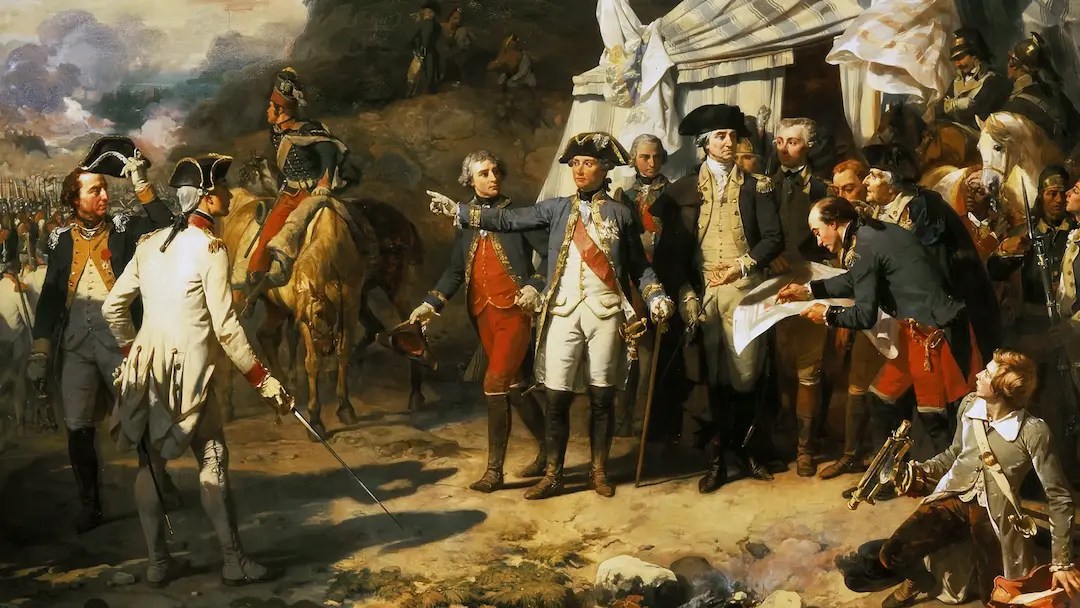
Chapter 6-The Surrender at Yorktown
Vocabulary List
Surrender-the act of giving up or yielding to an opponent, often in a formal manner.
Siege– a military operation in which a location is surrounded and isolated to force surrender.
Decisive-having the power to settle an issue or bring about a definite result.
Culmination-the highest point or climax of a series of events.
Strategic– relating to the careful planning and execution of actions to achieve a specific goal.
Perseverance-persistence in the face of challenges or difficulties.
Futility– pointlessness or lack of effectiveness.
Bombard– to attack continuously with artillery or other projectiles.
Outnumbered– having a smaller number of people or resources compared to an opponent.
Morale– the confidence, enthusiasm, and discipline of a person or group, especially in a difficult situation.
Tyranny– oppressive or unjust use of power or authority.
Triumph– a great victory or achievement.
Legacy– something handed down or inherited from the past, often with significant historical or cultural importance.
Resilience– the ability to recover quickly from difficulties or setbacks.
Quest– a long or arduous search for something.
Title: The Surrender at Yorktown: A Pivotal Moment in American History
The Surrender at Yorktown, which took place in 1781, marked a significant turning point in the American Revolutionary War. This event, often regarded as the decisive victory that secured American independence from British rule, was the culmination of strategic planning, international alliances, and determined perseverance. In this article, we will delve into the events leading up to the surrender, the key players involved, and the profound impact it had on shaping the future of the United States.
By the fall of 1781, the American Revolutionary War had been raging for several years. The American colonies, seeking independence from British rule, had faced numerous challenges and setbacks. However, with the support of allies such as France, they continued to fight for their freedom.
In September 1781, American and French forces, led by General George Washington and General Rochambeau respectively, converged on Yorktown, Virginia. They laid siege to the British army under the command of General Lord Cornwallis, trapping them on a peninsula between the York and James Rivers. The combined American and French forces effectively cut off Cornwallis’ escape route and began bombarding the British positions.
Facing dwindling supplies and outnumbered by the besieging forces, Cornwallis realized that further resistance was futile. On October 19, 1781, he surrendered his army to Washington and Rochambeau, effectively ending major fighting in the American Revolutionary War. The surrender took place at Yorktown, Virginia, where British troops laid down their arms and marched in defeat.
Key Players:
- General George Washington: The Commander-in-Chief of the Continental Army and leader of the American forces during the Siege of Yorktown.
- General Rochambeau: The French commander who led French forces in support of the American cause.
- General Lord Cornwallis: The British commander who surrendered his army at Yorktown, effectively ending British hopes of victory in the war.
Significance of the Surrender:
The Surrender at Yorktown was a watershed moment in American history for several reasons:
- It marked the decisive victory that led to the end of major fighting in the American Revolutionary War.
- The surrender of a British army boosted American morale and garnered support for the American cause both at home and abroad.
- The Treaty of Paris, signed in 1783, formally ended the Revolutionary War and recognized the independence of the United States from British rule.
The Surrender at Yorktown stands as a pivotal moment in American history, symbolizing the triumph of freedom over tyranny and the birth of a new nation. It was the culmination of years of struggle, sacrifice, and determination by the American colonies in their quest for independence. The legacy of Yorktown lives on as a testament to the courage and resilience of those who fought for liberty and justice, shaping the course of American history for generations to come.
Worksheet: The Surrender at Yorktown, 1781
Instructions:
Read each question carefully. Write your answers in the spaces provided.
Questions:
What was the Surrender at Yorktown? Describe the event in your own words.
When did the Surrender at Yorktown take place?
Who were the main commanders involved in the Surrender at Yorktown?
Where did the Surrender at Yorktown occur?
What was the significance of the siege of Yorktown in the American Revolutionary War?
Describe the conditions that led to the surrender of the British army at Yorktown.
What role did General George Washington and the French forces play in the Surrender at Yorktown?
What impact did the Surrender at Yorktown have on the outcome of the American Revolutionary War?
Why is the Surrender at Yorktown considered a pivotal moment in American history?
Imagine you are a soldier participating in the Surrender at Yorktown. Write a short journal entry describing your experiences and feelings during the event.
Bonus Question:
Research and list two key figures who played important roles in the Surrender at Yorktown, aside from General George Washington. Write a brief description of each.

 Unleashed Learning Gateway