
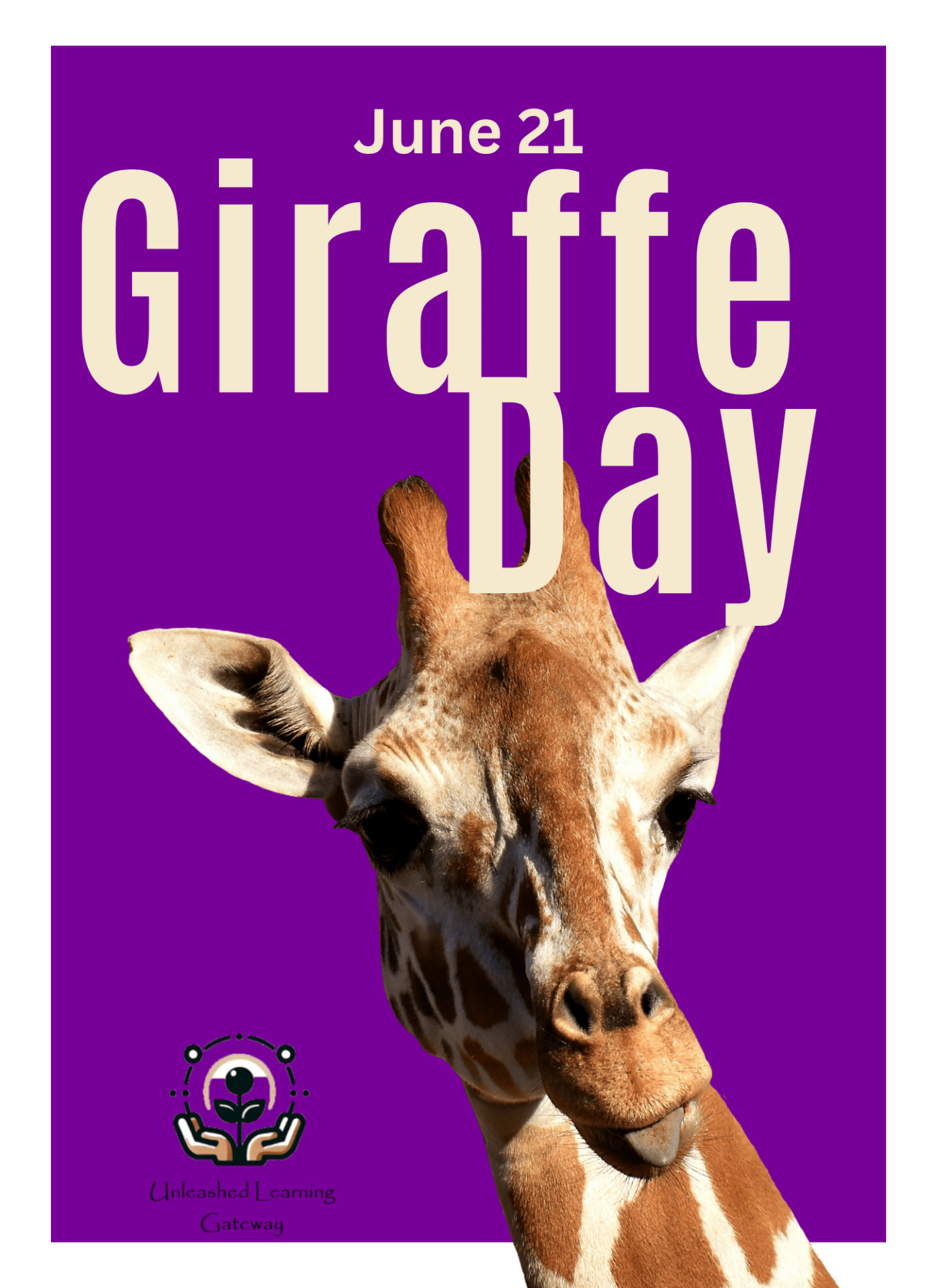
Giraffe Day: Celebrating the Tallest Animals on Earth!
What is Giraffe Day? Giraffe Day is celebrated on June 21st every year, and it’s a special day dedicated to raising awareness about giraffes. These incredible animals are the tallest in the world, but did you know they are facing threats that could lead to their extinction? Giraffe Day helps us learn about these majestic creatures and find ways to protect them.
Why is Giraffe Day Important? Giraffes are not only fascinating because of their height, but they also play a crucial role in their ecosystems. They help maintain the health of the environment by eating leaves that other animals can’t reach, which allows sunlight to reach other plants and promotes growth. Unfortunately, giraffes are endangered due to habitat loss, poaching, and climate change. By celebrating Giraffe Day, we can learn how to help conserve their habitats and ensure they have a future.
How Can You Celebrate Giraffe Day?
- Learn About Giraffes: Read books or watch documentaries about giraffes to understand more about their lives.
- Spread Awareness: Tell your friends and family about the importance of giraffes and how they can help.
- Support Conservation Efforts: Participate in fundraisers or donate to organizations that work to protect giraffes.
Fun Fact: Did you know that a giraffe’s tongue is about 18-20 inches long? They use it to grab leaves from tall trees!
All About Giraffes
Habitat Giraffes live in the savannas, grasslands, and open woodlands of Africa. These areas provide them with the trees and bushes they need to feed on.
Diet Giraffes are herbivores, which means they eat plants. Their favorite food is the leaves of the acacia tree. They use their long necks and tongues to reach high branches that other animals can’t.
Animal Classification Giraffes are mammals and belong to the family Giraffidae. Their scientific name is Giraffa camelopardalis. They are closely related to the okapi, another African mammal.
Caring for Their Young A baby giraffe, called a calf, is born after about 15 months. The mother gives birth standing up, and the calf drops to the ground, but it’s strong enough to stand within an hour. Mothers are very protective and nurse their calves until they are about a year old.
Size Giraffes can grow up to 18 feet tall, with males being taller than females. They can weigh between 1,600 to 3,000 pounds!
10 Fun Facts About Giraffes
- Giraffes have the same number of neck vertebrae as humans – seven!
- Each giraffe’s coat pattern is unique, much like human fingerprints.
- They can run up to 35 miles per hour for short distances.
- Giraffes sleep standing up and only for short periods.
- They rarely need to drink water as they get most of their moisture from leaves.
- A giraffe’s heart can weigh up to 25 pounds, necessary to pump blood up its long neck.
- They communicate through sounds too low for humans to hear, called infrasound.
- Giraffes have excellent eyesight, helping them spot predators from far away.
- Their tongues are dark blue to protect against sunburn.
- Giraffes have a prehensile tongue, meaning it can grasp and hold items.
Giraffes are truly amazing animals that need our help to survive. By celebrating Giraffe Day and learning more about these gentle giants, we can all contribute to their conservation and ensure they continue to grace our planet for generations to come.
Videos
Critical Thinking Question What role do giraffes play in their ecosystem, and why is it important to protect them?
A. They are predators that control the population of smaller animals.
B. They help maintain the health of the environment by eating leaves from tall trees.
C. They provide shelter for other animals.
D. They pollinate flowers.
Fun Activity: Giraffe Spotting Game Create your own giraffe spotting game! Draw or print out pictures of different giraffes with unique coat patterns. Hide them around your classroom or yard. Then, go on a giraffe safari to find and identify each giraffe by its unique pattern. This activity helps you learn about giraffe individuality and the importance of each animal in the wild.
 Unleashed Learning Gateway