
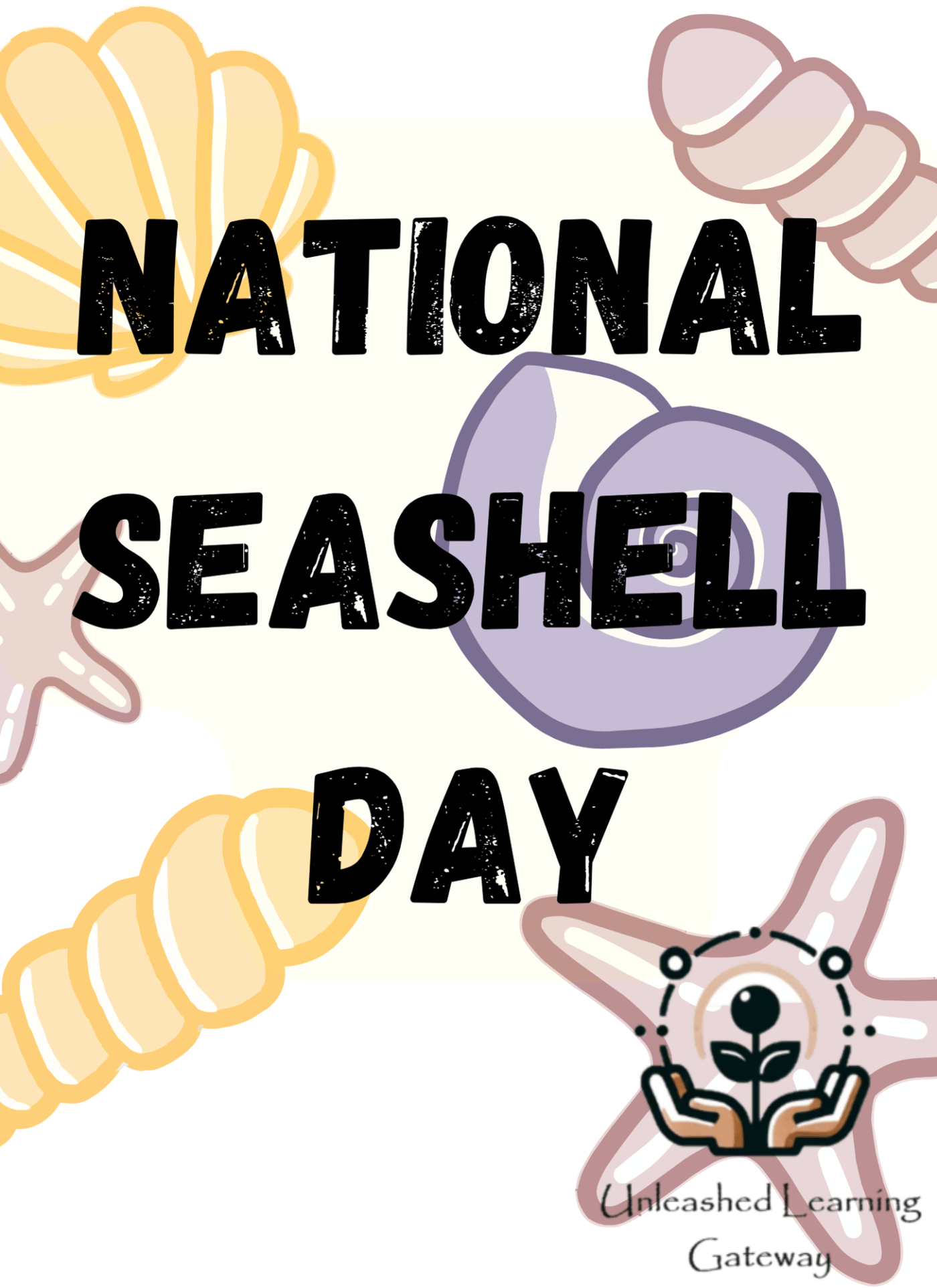

What is Seashell Day?
Seashell Day is a fun and educational celebration dedicated to the beautiful and diverse shells found along our shorelines. This special day is celebrated on June 21st every year. It was created to raise awareness about marine life and the importance of protecting our oceans and beaches.
When was Seashell Day Created?
Seashell Day was first celebrated in 2016. The idea came from shell enthusiasts and marine conservationists who wanted to highlight the wonders of seashells and their role in the ocean ecosystem.
Where Do Seashells Come From?
Seashells come from marine animals called mollusks. Mollusks are soft-bodied creatures that often have hard, protective shells. These creatures include snails, clams, oysters, and many others. When these animals die, their shells are left behind and often wash up on beaches, where we can find and collect them.
What Are Seashells Made Of?
Seashells are primarily made of calcium carbonate. This is the same substance that makes up chalk and limestone. Mollusks secrete calcium carbonate from their bodies to form their shells, which grow as the mollusk grows.
Different Types of Seashells
There are thousands of different types of seashells, but they can be broadly categorized into a few groups:
- Gastropods: These are univalve shells, meaning they have one piece. Examples include snails and whelks.
- Bivalves: These shells have two hinged parts. Clams, oysters, and scallops are common examples.
- Cephalopods: These are shells from a class of mollusks that includes squid and octopuses. The nautilus shell is a well-known example.
- Scaphopods: Also known as tusk shells, these are tubular and open at both ends.
Fun Scientific Facts About Seashells
- Seashell Colors: The colors and patterns of seashells are created by pigments in the mollusk’s diet and environment. Each shell’s design is unique, like a fingerprint.
- Shell Growth: Seashells grow with the animal inside. The mollusk adds new material to the edge of the shell, making it larger over time.
- Ancient Tools: Ancient humans used seashells as tools, jewelry, and even money in some cultures.
- Sound of the Ocean: The sound you hear when you hold a seashell to your ear is not the ocean. It’s the sound of ambient noise being resonated within the shell.
- Sea Butterfly: The sea butterfly, a type of small sea snail, has a shell so thin and transparent that it’s almost invisible in the water.
Learn More About Seashells
Here are some great websites where you can dive deeper into the world of seashells:
- Smithsonian Ocean: Learn about different mollusks and their shells.
https://ocean.si.edu/ocean-life/invertebrates/spaceship-mollusk
- The Bailey-Matthews National Shell Museum: Explore exhibits and educational resources about seashells.
Home
- National Geographic Kids: Fun facts and information about seashells for kids.
https://kids.nationalgeographic.com/nature/article/shells
- Marine Life Encyclopedia: Detailed information about marine life, including mollusks and their shells.
Mollusks
Seashell Day is a perfect time to learn more about these fascinating ocean treasures, so head to the beach or your nearest library and dive into the wonderful world of seashells!
Critical Thinking Multiple Choice Questions
Question 1:
Seashells are made primarily of calcium carbonate. Which of the following is NOT a use of calcium carbonate in human activities?
A. Building materials (like cement and marble)
B. Dietary supplements for calcium
C. Fuel for cars
D. Ingredients in toothpaste
Question 2:
If you found a seashell on the beach, what might its condition tell you about the environment it came from?
A. A very colorful and intact shell indicates a highly polluted environment.
B. A broken or eroded shell suggests strong waves or rough handling.
C. An intact but colorless shell means the mollusk that lived inside was very young.
D. A shell with holes was likely used as currency in ancient times.
Question 3:
The sound you hear when you hold a seashell to your ear is often described as “the ocean.” What is actually causing this sound?
A. Echoes of the ocean waves recorded inside the shell.
B. Blood rushing through the veins in your ear.
C. Ambient noise resonating in the shell’s cavity.
D. Vibrations from marine life still living inside the shell.
Question 4:
Which of the following statements best explains why ancient humans used seashells as tools and currency?
A. Seashells are abundant and easy to find, making them a readily available resource.
B. Seashells have magical properties that made them highly valued.
C. The intricate designs on seashells provided detailed maps and navigation aids.
D. Seashells were considered a sign of wealth and power due to their beauty and rarity.
Question 5:
Seashells can be found in various shapes and sizes. What is the main reason for this diversity?
A. The different diets of mollusks.
B. The various predators that mollusks need to protect themselves from.
C. The environment and habitat in which the mollusks live.
D. The age of the seashells.
Question 6:
Why is it important to celebrate Seashell Day and raise awareness about marine life?
A. To encourage people to collect as many seashells as possible.
B. To promote the sale of seashell jewelry and decorations.
C. To educate people about marine ecosystems and the importance of conservation.
D. To compete in seashell collecting competitions.
Question 7:
Which type of mollusk is known for having a shell that is open at both ends?
A. Gastropod
B. Bivalve
C. Cephalopod
D. Scaphopod
Question 8:
How can studying seashells help scientists understand past marine environments?
A. By providing DNA samples from ancient marine life.
B. By offering clues about the diet and behavior of prehistoric animals.
C. By indicating past ocean temperatures and chemical compositions through shell analysis.
D. By showing how ancient humans used seashells in their daily lives.
Answers
Answer:
Question 1
C. Fuel for cars
Question 2
Answer: B. A broken or eroded shell suggests strong waves or rough handling.
Question 3
Answer: C. Ambient noise resonating in the shell’s cavity.
Question 4
Answer: A. Seashells are abundant and easy to find, making them a readily available resource.
Question 5
Answer: C. The environment and habitat in which the mollusks live.
Question 6
Answer: C. To educate people about marine ecosystems and the importance of conservation.
Question 7
Answer: D. Scaphopod
Question 8
Answer: C. By indicating past ocean temperatures and chemical compositions through shell analysis.
 Unleashed Learning Gateway