
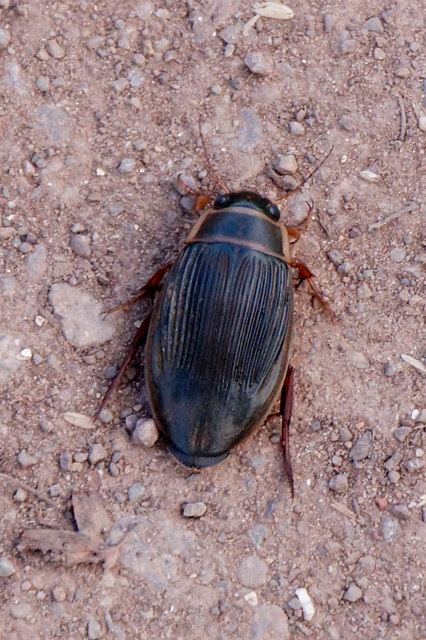
The Great Diving Beetle: A Master of Water and Survival
The great diving beetle is a fascinating insect that lives both on land and in water, making it one of nature’s true survival experts. Found in freshwater habitats, this beetle is known for its powerful swimming skills, unique life cycle, and clever ways of staying safe from predators. Let’s dive into the world of the great diving beetle and explore what makes it so amazing!

Life Stages of the Great Diving Beetle
- Egg Stage: The life of a great diving beetle begins when the female lays her eggs on aquatic plants. The eggs are usually hidden to keep them safe from predators. After a few weeks, the eggs hatch into larvae.
- Larva Stage: The larva is the next stage, and it’s often called a “water tiger” because of its fierce hunting skills. The larva has a long, segmented body with large jaws that it uses to catch prey. During this stage, it feeds on other insects, tadpoles, and even small fish. The larva molts several times as it grows.
- Pupa Stage: After several weeks, the larva transforms into a pupa. The pupa is a resting stage where the beetle’s body changes, getting ready for adulthood. This stage usually lasts a couple of weeks.
- Adult Stage: Finally, the beetle emerges as an adult. Adult great diving beetles are strong swimmers and can live for up to two years. They spend most of their time in water but can also fly and move on land when needed.
How They Care for Their Young
Great diving beetles don’t provide much care for their young after laying eggs. However, the female beetle ensures that the eggs are hidden in safe places, usually on submerged plants, to protect them from predators.
Where Do They Live?
Great diving beetles are found in freshwater habitats such as ponds, lakes, marshes, and slow-moving rivers. They prefer places with lots of aquatic plants where they can hide and find food.
What Kind of Food Do They Eat and How Do They Obtain Their Food?
The diet of a great diving beetle changes as it grows. Larvae, or water tigers, are fierce predators and feed on small aquatic creatures, such as tadpoles, other insect larvae, and small fish. They use their sharp jaws to catch and eat their prey.
Adult beetles are also carnivorous and hunt in the water. They catch their prey with their strong front legs and eat small fish, tadpoles, and other insects. If food is scarce, they can also eat dead plants or animals.
How Do They Stay Hidden from Predators?
Great diving beetles have several clever ways to stay hidden from predators. Their dark brown or black coloring helps them blend into the murky water, making it difficult for predators to spot them. They also use aquatic plants for cover, hiding among the leaves and stems to avoid detection.
What Is Their Defense Mechanism?
When threatened, great diving beetles can release a foul-smelling chemical from their bodies to deter predators. This chemical makes them less appealing to animals that might want to eat them. Additionally, they can dive quickly into the water and stay submerged for long periods, making it harder for predators to catch them.
10 Fun Facts About Great Diving Beetles
- Great diving beetles can trap air under their wing covers to breathe underwater!
- They can swim using their back legs, which act like oars.
- The beetles can fly to find new ponds or lakes if their current habitat dries up.
- Adult beetles can stay underwater for up to 30 minutes!
- They are found on every continent except Antarctica.
- Great diving beetles are excellent hunters and can even catch prey larger than themselves.
- They have been known to eat small fish and tadpoles in aquariums.
- The larva’s jaws are so strong that they can pierce through the skin of their prey.
- They can detect changes in light and movement to avoid predators.
- Great diving beetles can fly surprisingly well, despite spending most of their lives in water.
5 Vocabulary Words
- Larva: The immature stage of an insect that looks different from the adult.
- Pupa: A stage in an insect’s life cycle when it transforms from a larva to an adult.
- Carnivorous: Feeding on other animals.
- Aquatic: Living or growing in water.
- Molting: The process of shedding an outer layer, such as skin or an exoskeleton, to allow for growth.
10 Multiple-Choice Questions
What stage of life does the great diving beetle start in?
a) Pupa
b) Larva
c) Egg
d) Adult
What do great diving beetle larvae eat?
a) Plants
b) Fish and tadpoles
c) Algae
d) Dirt
Where do great diving beetles prefer to live?
a) Oceans
b) Ponds and lakes
c) Deserts
d) Forests
What is one way great diving beetles avoid predators?
a) They make loud noises.
b) They use camouflage.
c) They dig tunnels.
d) They fly away.
How long can adult great diving beetles stay underwater?
a) 5 minutes
b) 10 minutes
c) 30 minutes
d) 1 hour
What is the primary defense mechanism of great diving beetles?
a) Biting
b) Releasing a foul smell
c) Playing dead
d) Spitting venom
What do adult great diving beetles use to swim?
a) Their front legs
b) Their wings
c) Their back legs
d) Their tails
What happens during the pupa stage?
a) The beetle hunts for food.
b) The beetle rests and transforms.
c) The beetle lays eggs.
d) The beetle molts.
How do great diving beetles breathe underwater?
a) Through their skin
b) Using gills
c) By trapping air under their wings
d) By holding their breath
What do great diving beetles do if their habitat dries up?
a) Stay and adapt
b) Fly to a new location
c) Build a new home
d) Burrow underground
Answers to Multiple-Choice Questions
- c) Egg
- b) Fish and tadpoles
- b) Ponds and lakes
- b) They use camouflage.
- c) 30 minutes
- b) Releasing a foul smell
- c) Their back legs
- b) The beetle rests and transforms.
- c) By trapping air under their wings
- b) Fly to a new location
 Unleashed Learning Gateway
Leave a comment