
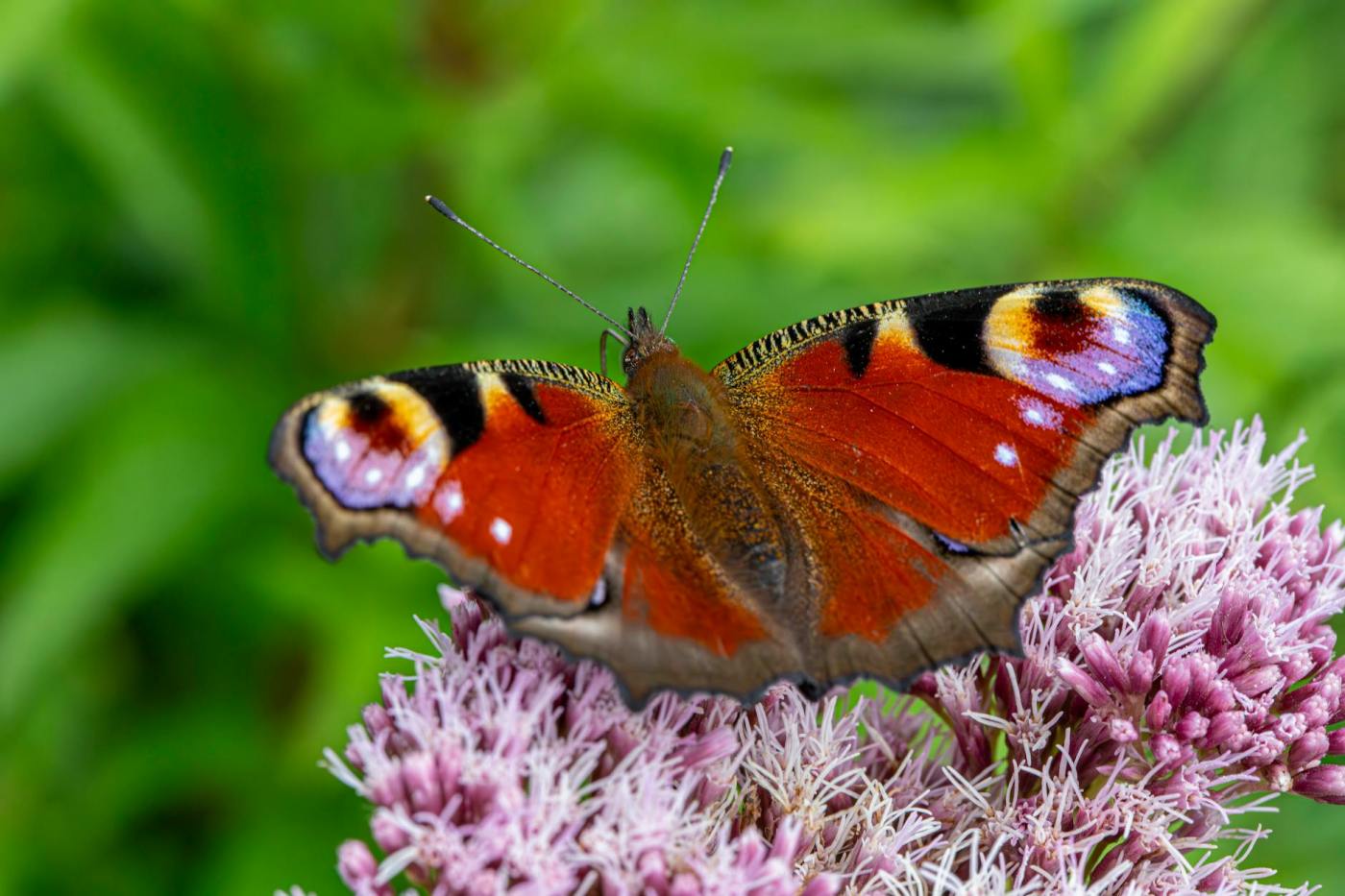
Peacock butterflies, with their vibrant wings and eye-catching patterns, are some of the most fascinating creatures in the insect world. Named for their striking “eyespots” on their wings, these butterflies use beauty as both a display and a defense. Let’s dive into the life of the peacock butterfly and learn about its incredible journey, from tiny egg to graceful adult.
Life Stages
Peacock butterflies go through complete metamorphosis, which means they experience four life stages:
- Egg: The female lays tiny, round, greenish eggs on the underside of a nettle leaf.
- Caterpillar (Larva): After about a week, the eggs hatch into black caterpillars covered with tiny spines. These caterpillars feed on stinging nettles for several weeks, growing bigger and shedding their skin multiple times.
- Pupa (Chrysalis): The caterpillar then finds a safe spot to hang upside down, turning into a hard-shelled chrysalis. Inside, the magic happens as the caterpillar transforms into a butterfly.
- Adult Butterfly: After about two to three weeks, the adult butterfly emerges. Its wings are soft and wrinkled at first, but after a few hours, they dry out and harden, allowing it to fly.
Caring for Their Young
Unlike mammals, butterflies don’t care for their young after laying eggs. Peacock butterfly mothers lay their eggs in large clusters, giving their young the best chance of survival. The eggs are laid on plants that caterpillars will eat when they hatch, ensuring they have food right away.
Where Do They Live?
Peacock butterflies are found across Europe and parts of Asia. They thrive in gardens, woodlands, meadows, and parks. During warmer months, they are often seen fluttering around flowers in search of nectar. In winter, they hibernate in dark, sheltered places like sheds, attics, or hollow trees.
What Do They Eat?
As caterpillars, peacock butterflies eat stinging nettles—lots of them! As adults, their diet changes to nectar, which they find in flowers like thistles, dandelions, and buddleias. They use a long, straw-like tongue called a proboscis to suck up the sweet nectar.
Staying Hidden from Predators
Peacock butterflies have two clever ways to stay safe from predators like birds:
- Camouflage: When their wings are closed, peacock butterflies are a dull brown color, blending in with tree bark or leaves. This helps them stay hidden.
- Eyespots: If a predator gets too close, the butterfly opens its wings wide, revealing bright spots that look like the eyes of a larger animal. These eyespots can scare away birds and other predators!
Defense Mechanism
In addition to their eyespots, peacock butterflies can also make a hissing sound by rubbing their wings together. This sound, combined with the sudden flash of their eyespots, can startle predators and give the butterfly time to escape.
10 Fun Facts About Peacock Butterflies
- Peacock butterflies get their name from their wing spots, which resemble the colorful feathers of a peacock.
- They can live up to 11 months, making them one of the longest-living butterflies.
- When threatened, they use both visual and sound-based defenses to scare away predators.
- Peacock butterflies can hibernate through the winter and wake up when temperatures rise.
- They are common in gardens and love feeding on flowers like dandelions and thistles.
- Their wingspan can be as wide as 5-6 centimeters.
- The caterpillars are black with tiny spines, making them look fierce, but they are harmless.
- Adult butterflies drink nectar, but they have also been known to feed on overripe fruit.
- Peacock butterflies are part of the “brush-footed” butterfly family, meaning their front legs are much shorter than their back legs.
- They are cold-blooded and need sunlight to warm up their wings for flying.
Vocabulary Words
- Metamorphosis (meh-tuh-MAWR-fuh-sis): A complete transformation in an animal’s life cycle, such as from a caterpillar to a butterfly.
- Proboscis (proh-BOS-is): A long, tube-like mouthpart used by butterflies to drink nectar.
- Camouflage (KAM-uh-flahzh): The ability of an animal to blend in with its surroundings to avoid detection.
- Chrysalis (KRIS-uh-lis): The pupa stage of a butterfly’s life when it is inside a hard shell, transforming from a caterpillar into a butterfly.
- Hibernate (HY-bur-nayt): To spend the winter in a dormant state, conserving energy and staying safe from cold weather.
Multiple-Choice Questions
What is the first stage of a peacock butterfly’s life cycle?
a. Caterpillar
b. Chrysalis
c. Egg
d. Adult Butterfly
What do peacock caterpillars eat?
a. Flowers
b. Fruit
c. Stinging nettles
d. Grass
How do peacock butterflies stay hidden from predators when resting?
a. They fly high into the sky
b. They close their wings to blend in with tree bark
c. They dig underground
d. They hide in water
What is a peacock butterfly’s main food source as an adult?
a. Leaves
b. Nectar
c. Bugs
d. Seeds
What are the bright spots on a peacock butterfly’s wings called?
a. Wing patches
b. Eyespots
c. Camouflage dots
d. Butterfly marks
Where do peacock butterflies usually hibernate?
a. In tree branches
b. Under the soil
c. In dark, sheltered places like attics or sheds
d. In bird nests
Which part of a butterfly is used to drink nectar?
a. Antenna
b. Wings
c. Proboscis
d. Legs
What sound does a peacock butterfly make to scare off predators?
a. Hissing
b. Chirping
c. Clicking
d. Buzzing
What is the term for the transformation from caterpillar to butterfly?
a. Evolution
b. Metamorphosis
c. Mutation
d. Migration
What family do peacock butterflies belong to?
a. Brush-footed butterflies
b. Swallowtail butterflies
c. Monarch butterflies
d. Moth family
Answers to Multiple-Choice Questions
- c. Egg
- c. Stinging nettles
- b. They close their wings to blend in with tree bark
- b. Nectar
- b. Eyespots
- c. In dark, sheltered places like attics or sheds
- c. Proboscis
- a. Hissing
- b. Metamorphosis
- a. Brush-footed butterflies
 Unleashed Learning Gateway