
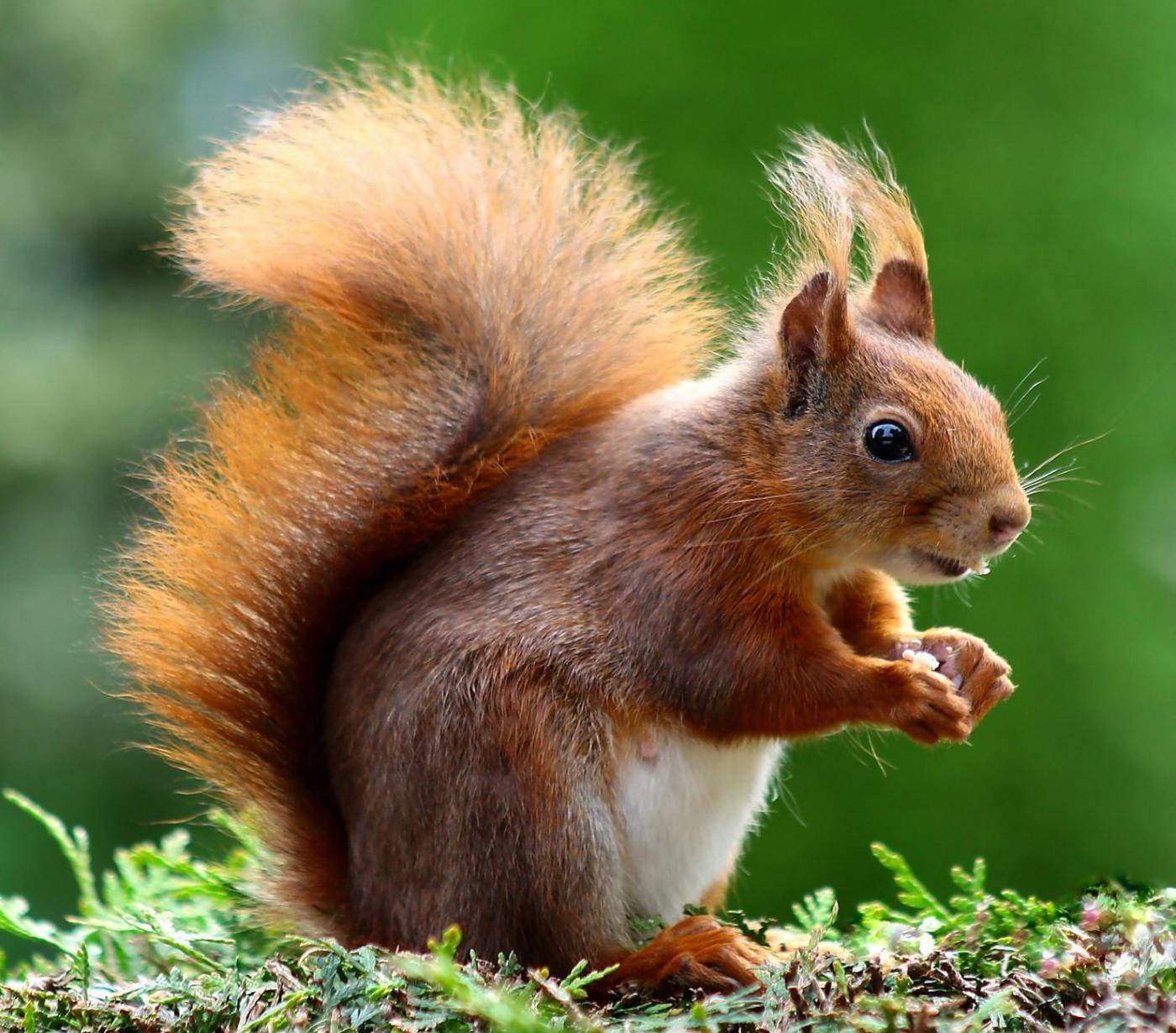

Squirrels: Nature’s Acrobat and Forest Planner!

Squirrels are some of the most recognizable and entertaining creatures in the animal world. Their swift movements, bushy tails, and impressive tree-climbing abilities make them a joy to watch. But there’s more to squirrels than their playful nature! These tiny acrobats play an important role in the environment. Let’s explore their habitats, what they eat, how they care for their young, and some fascinating facts about their lives.
Habitat
Squirrels are found in a wide variety of habitats, from dense forests and woodlands to city parks and backyards. They prefer areas with plenty of trees because they rely on them for food and shelter. Their nests, called dreys, are usually built in the forks of trees and made from leaves and twigs, providing a safe space to rest and raise their young.
Diet and How They Get Their Food
Squirrels are primarily herbivores, but they also eat small insects and bird eggs. Their main diet consists of nuts, seeds, fruits, and fungi. Squirrels are excellent foragers and often bury nuts and seeds in the ground to save for winter. This habit, known as “caching,” helps them survive during colder months when food is scarce. They have sharp claws and strong teeth that allow them to crack open nuts and shells easily.
How They Take Care of Their Young
Female squirrels, called does, are very attentive mothers. After a gestation period of about 40–45 days, they give birth to 2–4 young. The babies, called kittens, are born blind and helpless, so the mother stays with them for several weeks, nursing and protecting them in the drey. As the kittens grow, they begin to venture out, learning how to forage and climb trees.
Fun Fact About the Young:
Squirrel kittens are born hairless and blind, and they rely completely on their mother for the first few weeks of life. By the time they are 8 weeks old, they are ready to explore outside the nest.
Why Squirrels Are Important for the Environment
Squirrels play a key role in the health of forests. When they bury nuts and seeds, they often forget where they’ve hidden some of them. These forgotten seeds eventually sprout into new trees, helping to spread vegetation. This activity contributes to forest regeneration and helps maintain healthy ecosystems.
Really Fun Fact:
Squirrels can leap up to 10 times their body length! Their strong hind legs and sharp claws allow them to make impressive jumps between trees.
________________________________________________________________
Squirrels are much more than just energetic animals scurrying up trees. Their feeding and caching behaviors help forests grow, and their nurturing care for their young shows how intelligent and resourceful they are. Next time you see a squirrel, remember how much they contribute to the environment—one nut at a time!
_______________________________________________________________
Vocabulary with Pronunciation Guide:
- Forage (for-ij) – To search widely for food.
- Drey (dray) – A squirrel’s nest, usually built in a tree.
- Herbivore (hur-bi-vor) – An animal that primarily eats plants.
- Caching (kash-ing) – The act of storing food for later use.
- Gestation (je-stay-shun) – The period of development inside the mother’s womb.
Multiple-Choice Worksheet:
- Where do squirrels build their nests?
a) Underground
b) In trees
c) In caves
d) In burrows
- What is a squirrel’s nest called?
a) Burrow
b) Den
c) Hive
d) Drey
- What do squirrels mainly eat?
a) Insects and worms
b) Nuts, seeds, and fruits
c) Fish and small mammals
d) Grass and flowers
- What is the purpose of caching?
a) To find food for other animals
b) To store food for winter
c) To protect their territory
d) To keep their young safe
- How many kittens do squirrels usually have at one time?
a) 1-2
b) 2-4
c) 6-8
d) 10-12
- Why are squirrels important for the environment?
a) They help spread seeds for new trees to grow.
b) They clean up the forest floor.
c) They protect trees from disease.
d) They eat harmful insects.
- How far can a squirrel jump?
a) 2 times their body length
b) 5 times their body length
c) 10 times their body length
d) 15 times their body length
- What are baby squirrels called?
a) Pups
b) Kittens
c) Cubs
d) Piglets
- How do mother squirrels take care of their young?
a) They leave them alone to find food.
b) They nurse them and teach them survival skills.
c) They let other squirrels take care of them.
d) They hide them underground.
10. What is the diet of a squirrel?
a) Carnivorous
b) Herbivorous
c) Omnivorous
d) Insectivorous
Critical Thinking
Squirrels often bury more nuts than they can remember. How do you think this benefits both the squirrels and the forest ecosystem?
10 Fascinating Species of Squirrels and Their Habitats
There are over 200 species of squirrels worldwide, classified into three main types: tree squirrels, ground squirrels, and flying squirrels. These species are spread across different regions, each adapted to various habitats and climates.Each species has unique characteristics and habitat preferences. Here are 10 fascinating species of squirrels and a look at where they live:
1. Eastern Gray Squirrel (Sciurus carolinensis)
Found primarily in the eastern United States, this squirrel thrives in deciduous and mixed forests. They are also commonly seen in urban areas, parks, and gardens, where they adapt to living near humans.
2. Red Squirrel (Sciurus vulgaris)
Native to Europe and northern Asia, the red squirrel prefers coniferous and mixed woodlands. They are often found in forests with dense trees, which provide plenty of food sources like seeds and pine cones.
3. Fox Squirrel (Sciurus niger)
The fox squirrel is native to North America, especially in the central and eastern regions. It prefers open forests with large, scattered trees such as oak and hickory, as well as urban parks and residential areas.
4. Indian Giant Squirrel (Ratufa indica)
This strikingly colorful squirrel is native to India and prefers tropical forests. It thrives in dense, wet deciduous forests where it can find a wide variety of fruits, nuts, and seeds to eat.
5. Japanese Dwarf Flying Squirrel (Pteromys momonga)
Found in Japan’s forests, particularly in Honshu and Kyushu, this flying squirrel glides between trees in temperate and subalpine forests. They are known to live in regions with high elevation, preferring areas with plenty of trees for gliding.
6. Prevost’s Squirrel (Callosciurus prevostii)
Native to Southeast Asia, including countries like Malaysia, Indonesia, and Thailand, the Prevost’s squirrel is found in tropical rainforests. It is arboreal, spending most of its time in trees, where it feeds on fruits, seeds, and sometimes small insects.
7. Cape Ground Squirrel (Xerus inauris)
This squirrel species lives in the dry savannas and grasslands of southern Africa. Unlike tree squirrels, the Cape ground squirrel is a burrowing animal that creates complex underground homes to escape the harsh heat of its desert-like environment.
8. Malabar Giant Squirrel (Ratufa macroura)
The Malabar giant squirrel is native to southern India and Sri Lanka. It lives in tropical and subtropical forests, where it spends most of its time high in the tree canopy. Its large size helps it navigate the dense forest in search of fruits and nuts.
9. Southern Flying Squirrel (Glaucomys volans)
Found in the eastern United States, the southern flying squirrel prefers deciduous forests with mature trees. These trees provide cavities for nesting and a steady supply of acorns, nuts, and seeds, which are their primary food sources.
10. Alpine Marmot (Marmota marmota)
The Alpine marmot, a type of ground squirrel, is found in the mountainous regions of Europe, particularly in the Alps. It prefers alpine meadows and rocky slopes, where it builds burrows to hibernate during the cold winter months.
________________________________________________________________
Squirrels are incredibly diverse and can be found in a wide range of habitats, from tropical rainforests to urban cities. Each species has adapted to its environment in unique ways, whether it’s flying between trees, burrowing underground, or foraging in dense forests. Squirrels are true survivors, showcasing how animals evolve to thrive in different parts of the world.
________________________________________________________________
Answers:
- b) In trees
- d) Drey
- b) Nuts, seeds, and fruits
- b) To store food for winter
- b) 2-4
- a) They help spread seeds for new trees to grow.
- c) 10 times their body length
- b) Kittens
- b) They nurse them and teach them survival skills.
- b) Herbivorous
 Unleashed Learning Gateway