
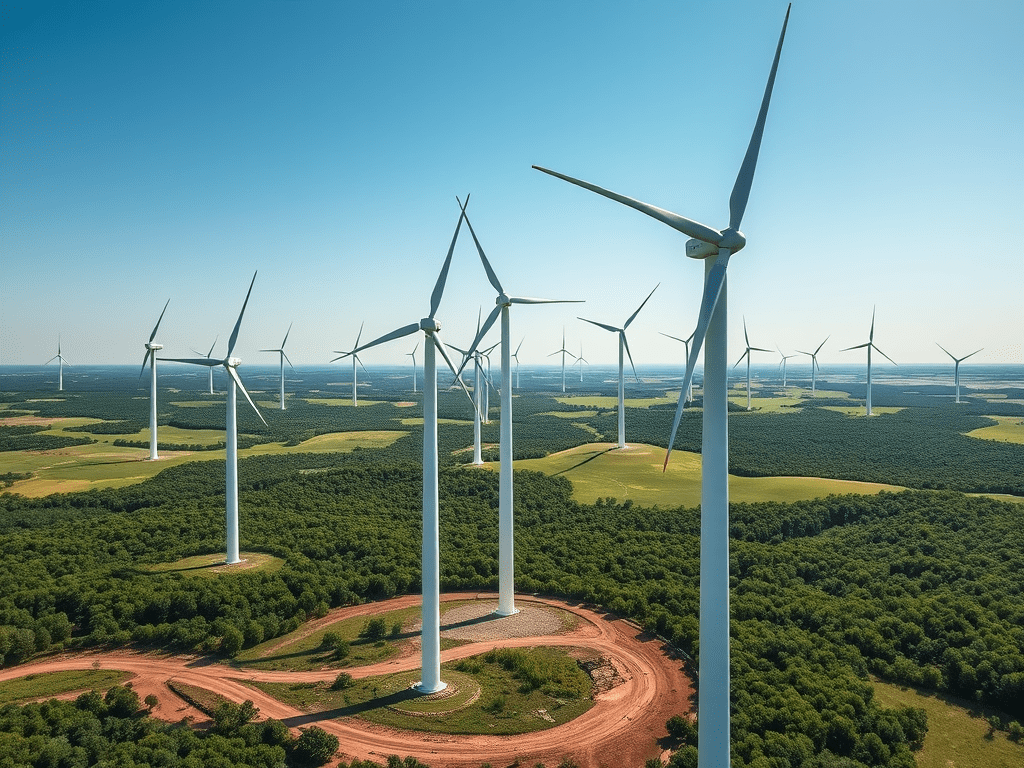
Mississippi has made a significant leap towards renewable energy with the establishment of its first utility-scale wind farm, the Red Wind Energy Center. Located in Tunica County, this wind farm marks a milestone in the state’s journey towards sustainable energy solutions. This article will delve into the specifics of this groundbreaking project, its location, relevance, scientific aspects, and environmental impact.
Location and Relevance
The Red Wind Energy Center is strategically situated in Tunica County, in the northwest part of Mississippi. This location was chosen for its favorable wind conditions, open landscapes, and proximity to the electrical grid. The wind farm covers approximately 10,000 acres, making it one of the most extensive renewable energy projects in the state.
Scientific Facts: How Wind Farms Work
A wind farm consists of numerous wind turbines, which are large structures with blades that rotate when the wind blows. Here are some key scientific facts about how wind farms work:
- Wind Turbines: Each turbine has three blades attached to a rotor. The wind’s kinetic energy causes the blades to spin.
- Generator: The rotor is connected to a generator inside the turbine. As the rotor spins, it turns the generator, which converts the kinetic energy into electrical energy.
- Transmission: The electrical energy is then transmitted through cables to a substation, where it is converted to a higher voltage for transmission over the electrical grid.
- Distribution: Finally, the electricity is distributed to homes, businesses, and industries, providing a clean and renewable source of energy.
Environmental Impact
The environmental benefits of the Red Wind Energy Center are substantial. Wind energy is a clean, renewable source of power that has minimal environmental impact compared to fossil fuels. Here are some key points about its environmental relevance:
- Reduction in Carbon Emissions: Wind energy produces no greenhouse gases during operation, which helps reduce the overall carbon footprint and combat climate change.
- Conservation of Water Resources: Unlike traditional power plants, wind farms do not require water for cooling, thereby conserving precious water resources.
- Habitat Preservation: While wind farms do occupy land, they have a smaller land footprint compared to other energy sources, and agricultural activities can often continue around the turbines.
- Energy Independence: By producing its own renewable energy, Mississippi can reduce its reliance on imported fossil fuels, promoting energy independence and economic resilience.
Benefits to the Community
The establishment of the Red Wind Energy Center brings several benefits to the local community and the state at large:
- Job Creation: The construction and maintenance of the wind farm have created numerous jobs, boosting the local economy.
- Educational Opportunities: The wind farm serves as a learning resource for students and researchers interested in renewable energy and sustainability.
- Economic Growth: The wind farm attracts investments and can lead to the development of related industries in the region.
Critical Thinking Questions
- What is the primary function of the Red Wind Energy Center?
- A. To provide clean drinking water
- B. To generate renewable energy
- C. To serve as a wildlife sanctuary
- D. To produce fossil fuels
- Which of the following is a key benefit of wind energy?
- A. It generates greenhouse gases.
- B. It conserves water resources.
- C. It relies on imported fossil fuels.
- D. It increases the carbon footprint.
- Why was Tunica County chosen as the location for the Red Wind Energy Center?
- A. It has favorable wind conditions and open landscapes.
- B. It is close to the ocean.
- C. It has a large population.
- D. It is a major city.
- How do wind turbines generate electricity?
- A. By using solar panels
- B. By burning fossil fuels
- C. By converting the wind’s kinetic energy into electrical energy
- D. By using geothermal energy
- What is one way that wind energy benefits the environment?
- A. It increases water usage.
- B. It generates greenhouse gases.
- C. It reduces carbon emissions.
- D. It depletes natural resources.
The Red Wind Energy Center is more than just a technological marvel; it is a symbol of progress and a step towards a sustainable future for Mississippi. By harnessing the power of the wind, the state is not only meeting its energy needs but also contributing to a cleaner, greener planet.
 Unleashed Learning Gateway