

Fall, also called autumn, is the season between summer and winter. It’s a time when the world outside changes in amazing ways. But why does this happen? Let’s take a closer look at the science behind the season.
Why Does Fall Happen? 🌍☀️
The Earth travels around the sun in one year. But the Earth is tilted on its axis—like a spinning top leaning to one side. In the summer, our part of the Earth leans toward the sun, so we get more direct sunlight and longer days. In the fall, the Earth tilts away, so the sunlight is less direct. That’s why temperatures slowly get cooler.
Fun Fact: The first day of fall is called the autumnal equinox (around September 22–23). On that day, day and night are almost exactly the same length!
Weather Changes in Fall 🌡️🍃
- Cooler Air: Because the sun’s rays hit Earth at a lower angle, the air warms up less. This is why mornings and evenings feel chilly, even if afternoons are still warm.
- Wind: Cooler air moves differently than warm air. As warm summer air rises and cooler air rushes in, winds often become breezier in the fall.
- Rain: Some areas get more rain during fall as weather systems shift. This helps plants prepare for winter by storing nutrients.
Fun Fact: Fall is “tornado season” for some parts of the U.S., especially in the South, because warm and cool air often collide.
Why Leaves Change Color 🌈🍁
Leaves are like tiny food factories for trees. During spring and summer, leaves are full of chlorophyll, the green pigment that captures sunlight for photosynthesis (the process plants use to make food).
In fall, with less sunlight and cooler air, trees begin to “shut down” their food-making process. Chlorophyll breaks down, and other pigments show through:
- Carotenoids make leaves look yellow or orange (like carrots!).
- Anthocyanins make them red or purple.
Eventually, the leaves dry out and fall to the ground.
Fun Fact: Some of the brightest red leaves appear after cool nights and sunny days—that perfect mix boosts anthocyanin pigments!
Animals and Fall 🐿️🦆
Animals pay close attention to weather changes too.
- Birds migrate south to follow warmer weather and food sources.
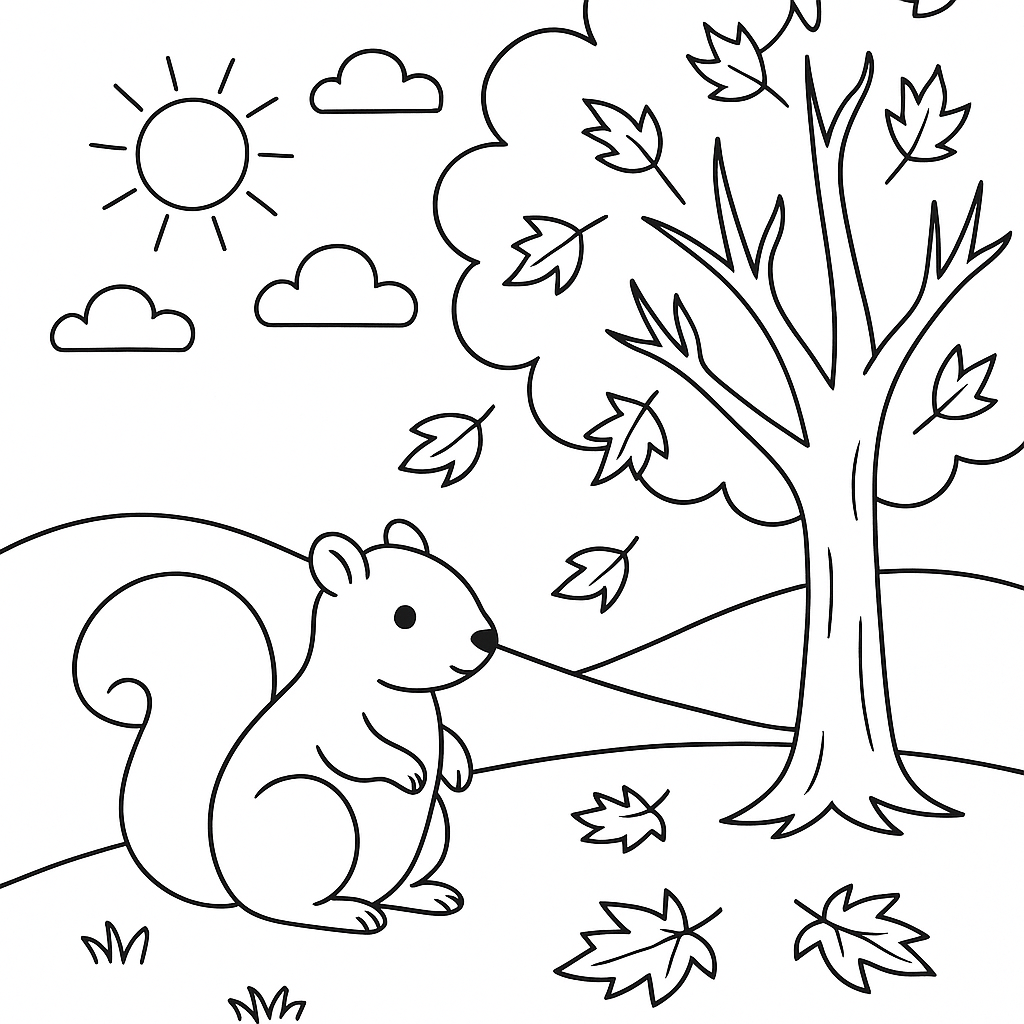
- Squirrels, chipmunks, and bears gather food or eat extra to prepare for hibernation.
- Insects like crickets and cicadas are less active as the temperature drops.
Fun Fact: Monarch butterflies travel up to 3,000 miles from the U.S. and Canada all the way to Mexico each fall!
Shorter Days, Longer Nights 🌒
Fall is also when daylight hours shrink. With less sunlight, plants slow down, animals change their behavior, and people often notice their routines shifting too. By the time winter comes, days are the shortest of the year.
Fun Fact: In some places far north (like Alaska), fall days shrink quickly—sometimes losing 6–7 minutes of daylight per day!
Discussion 💬
- What changes have you noticed in the air, the sky, or the trees?
- Have you ever seen birds flying in a V-shape during fall? Why do you think they do that?
- Which fall animal behavior do you find the most interesting?
Activity: Fall Signs Walk 🚶🍁
Take a quick walk outside (or look through a window). Pay close attention to the scientific signs of fall:
- Cooler air
- Windy breezes
- Leaf colors
- Animals storing food
- Shorter daylight
👉 Make a list or drawing of what you see. Try to connect it to the science: Why are the leaves changing? Why do you think that animal is busy?

 Unleashed Learning Gateway