

A long time ago, people didn’t have money. If you wanted something, you had to trade for it. This was called barter. For example, you might trade two chickens for a bag of rice. But barter was tricky. What if the person with rice didn’t want chickens?
That’s why people created money. Money is something everyone agrees has value. Instead of trading chickens for rice, you could sell your chickens for money, then use the money to buy rice—or anything else you needed.
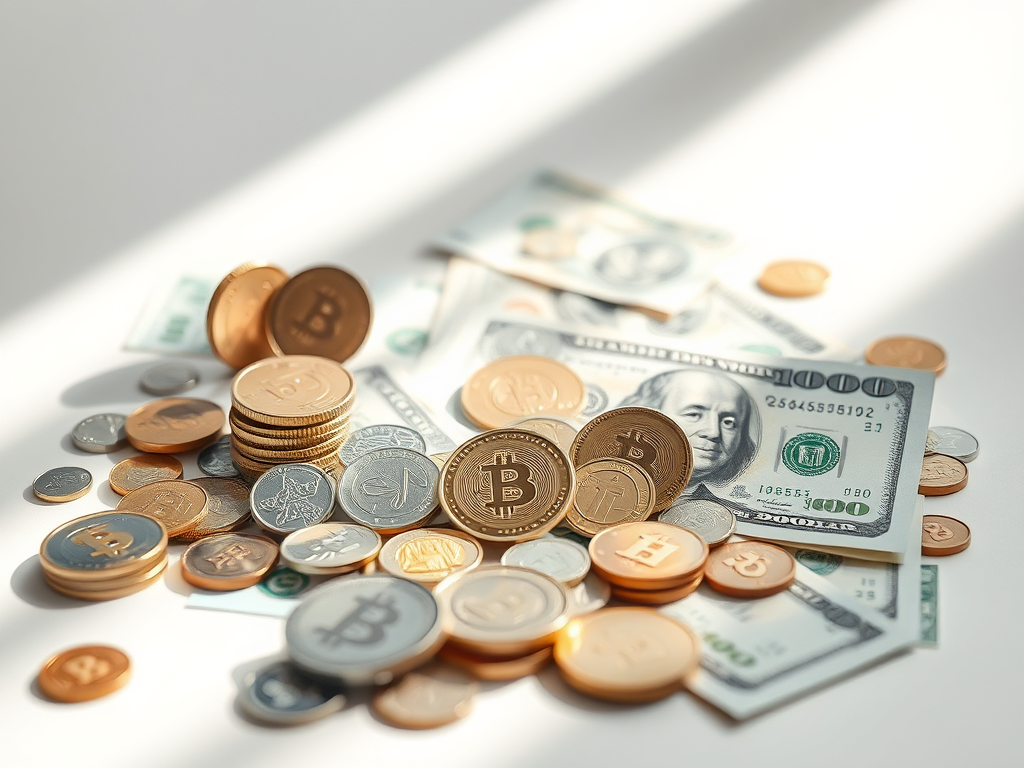
Over time, money has changed. Long ago, people used shells, beads, or even salt as money. Today, we use currency like coins, bills, and even digital money on credit cards or apps.
Money is powerful because it makes trade simple. But remember: money itself is just paper or metal. It only works because people agree it has value!
Key Terms
- Barter – trading goods/services without money.
- Currency – money used in a country.
- Value – the worth of something.
Question: “If money didn’t exist, how would you buy your lunch?”
Maya’s Money Choices (Read)
Maya’s parents gave her $15 for lunch money this week. At school, her lunch costs $3 each day. She also loves buying snacks after lunch—like chips or cookies—that cost $1.50.
On Monday, Maya’s teacher announced that there will be a field trip on Friday. The trip costs $5, and everyone needs to bring the money by Thursday. Maya quickly realized she would have to think carefully about how she spent her money this week.
Maya also gets a $10 allowance every Saturday for doing chores at home. She usually spends it on little things like candy or stickers. But lately, Maya has had her eye on a new skateboard that costs $40. She really wants it, but she knows she’ll have to save up to buy it.
At lunch on Tuesday, Maya faced a choice. If she bought lunch and a snack every day, she wouldn’t have enough money left for the field trip. She thought about it: was a cookie more important than going on the field trip with her friends?
Maya decided to skip snacks for the rest of the week so she could pay for the field trip. She also told herself that instead of spending all of her allowance on candy this week, she would put it into her savings jar for the skateboard.
That night, Maya had an idea. She asked her parents if she could do extra chores around the house to earn more money for her skateboard. Her mom thought it was a great idea and created a special Chore List with Prices:
- Clean the main bathroom – $5
- Clean the kitchen – $4
- Wash and fold the laundry – $3
Maya was excited. If she chose to do more chores each week, she could reach her skateboard goal faster. She realized that money isn’t just about spending or saving—it’s also about earning by working hard.
Maya learned that every money decision has a trade-off. By skipping snacks and doing extra chores, she could pay for the field trip and save for her skateboard.
Key Terms
- Allowance – money given regularly, often for chores.
- Budget – a plan for how to spend and save money.
- Savings – money set aside for later.
- Earning – money received for doing work.
- Opportunity Cost – the thing you give up when you choose something else.
💡 Discussion Questions
- What money decisions did Maya have to make this week?
- Why did Maya decide to skip buying snacks?
- How will doing extra chores help Maya reach her skateboard goal faster?
- If you were Maya, which chore would you choose first and why?
🎲 Fun Class Activity
“Maya’s Money Challenge” – Give each student a pretend $15 budget and the chore list.
- Lunch = $3/day
- Snacks = $1.50 each
- Field Trip = $5
- Chore List:
- Bathroom $5
- Kitchen $4
- Laundry $3
Challenge Questions for Students:
- Can you afford lunch every day and the field trip if you buy snacks too?
- If you skip snacks, how much can you save?
- If you do the bathroom chore twice this month, how much closer are you to the skateboard?
 Unleashed Learning Gateway