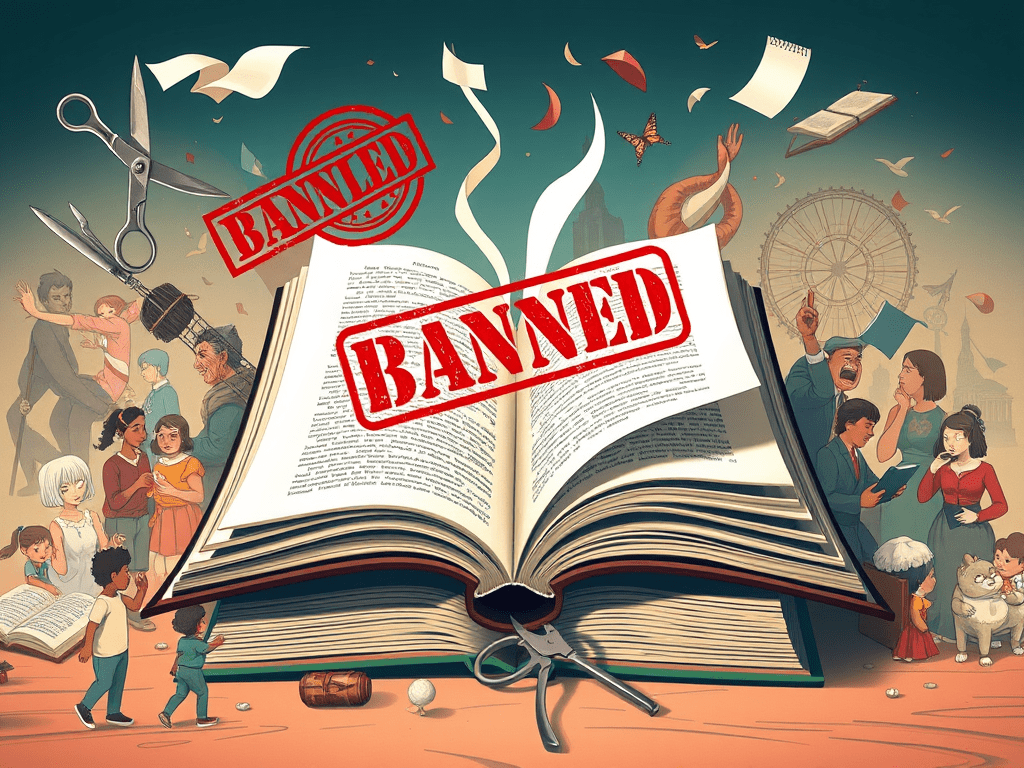
People challenge or ban books for all kinds of reasons—some serious, some surprising. Here are a few of the most common:
- “The language is inappropriate!”
→ Some books use swear words or slang that adults think kids shouldn’t read. - “The topics are too mature.”
→ Books that talk about violence, trauma, or serious life situations can make some people uncomfortable. - “It goes against my beliefs.”
→ Sometimes, a book’s ideas don’t match a group’s cultural, political, or religious views. - “The book talks about race, gender, or identity.”
→ These can be powerful topics, but not everyone agrees on how (or whether) they should be discussed. - “It might give kids the wrong idea.”
→ Some adults worry that books will encourage behavior they disagree with (even though that’s usually not true!).
The important thing to remember is this: when a book is banned, everyone loses the chance to read, think, and make their own decisions.
📌 Fun Fact: Some of these books later became award winners, classroom staples, or even movies — proving that banned doesn’t mean “bad”!
Why This Matters
Books are more than just stories — they’re windows into other people’s lives and mirrors that help us understand our own.
When books are banned, those windows and mirrors get covered up. We miss out on learning about different experiences, asking tough questions, and growing as thoughtful readers.
Think About It
If someone wanted to ban your favorite book, how would that make you feel?
What would you say to convince them it should stay on the shelf?
Quick Activity: “Defend the Book!”
- Pick one book from the list above (or another banned book you know).
- Pretend you’re a lawyer defending it in court! 🧑⚖️📚
- Write down three strong reasons why students should have the right to read it.
- Share your argument with a family member, classmate, or reading group.
👉 You’ll practice critical thinking and get to be a superhero for stories!
📖 Key Takeaways
- Books can be banned for language, themes, beliefs, or representation.
- Many banned books are actually powerful stories that help readers grow.
- Reading freely and thinking critically are important parts of learning.
- Your voice matters — you can stand up for the right to read.
Final Thought
Next time you pick up a book, remember: someone, somewhere, might have tried to keep it off the shelf.
The fact that you can read it means your freedom to explore ideas is alive and well — and that’s worth celebrating.
 Unleashed Learning Gateway