Imagine picking up a book you’re excited to read—only to find out it’s been taken off the shelves. No one is allowed to check it out. You can’t talk about it in class. You can’t even find it in your local library.
This might sound surprising, but it happens more often than you think.
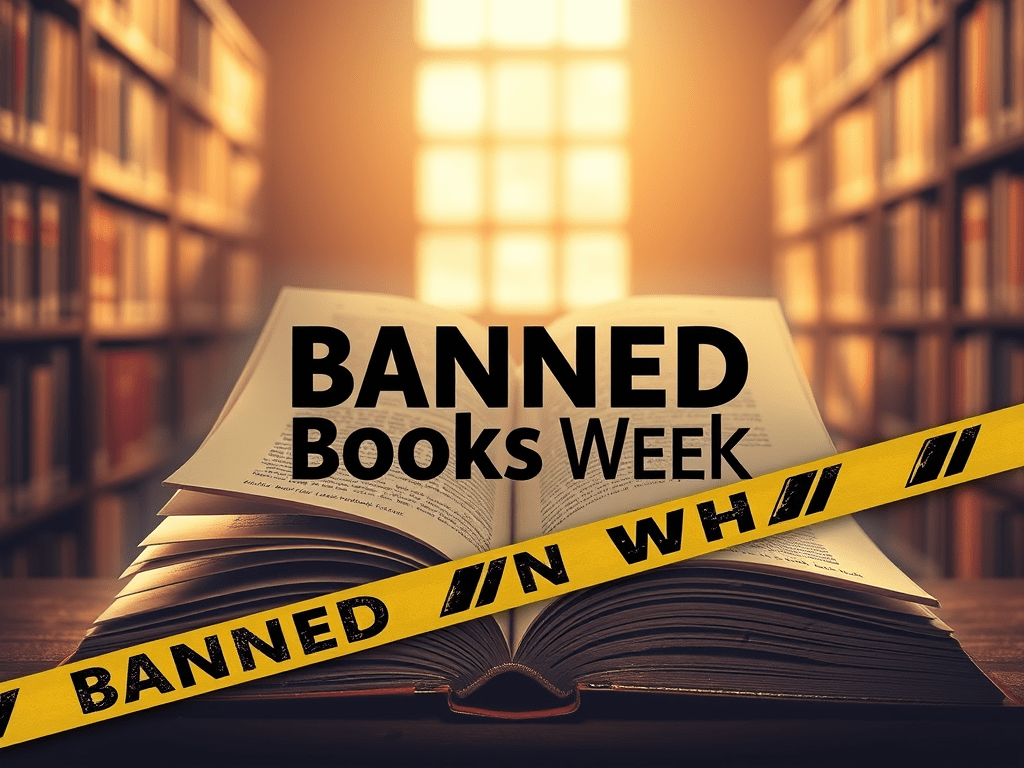
Every year, books are challenged or even banned in schools and libraries across the country. To raise awareness and celebrate the importance of reading freely, people observe Banned Books Week.
What Is Banned Books Week?
Banned Books Week is an annual celebration that shines a light on the freedom to read. It usually takes place in late September or early October — in 2025, it’s from October 1–7.
During this week, libraries, classrooms, and bookstores highlight books that have been challenged or banned, share their stories, and encourage conversations about why protecting access to information is important.
Banned Books Week began in 1982 after a sudden rise in the number of books being challenged in the United States. Librarians, teachers, and authors joined together to create a week that defends the right to read and encourages people to explore diverse ideas.
What Does It Mean When a Book Is “Challenged” or “Banned”?
- A challenge happens when someone (such as a parent, group, or community member) formally objects to a book and wants it to be removed from a library, classroom, or reading list.
- A ban happens when that challenge is successful, and the book is actually removed or restricted so that students can’t easily access it.
People challenge books for different reasons. Common reasons include:
- Language they consider offensive
- Content involving race, gender, or sexuality
- Political or religious viewpoints they disagree with
- Violence or mature themes they believe aren’t suitable for certain ages
While parents have the right to guide their own child’s reading, banning books removes choices from everyone.
Examples of Frequently Challenged Books
Some books that have been banned or challenged might surprise you. Many are classics or popular titles that deal with real-world issues. Here are a few examples:
- The Giver by Lois Lowry — challenged for “dark themes” and questioning authority
- To Kill a Mockingbird by Harper Lee — challenged for racial language and uncomfortable themes
- The Hate U Give by Angie Thomas — challenged for language and political viewpoints
- The Absolutely True Diary of a Part-Time Indian by Sherman Alexie — challenged for discussions of poverty, race, and adolescence
- Harry Potter series by J.K. Rowling — challenged for references to magic and witchcraft
Many of these books are now taught in classrooms or widely read because they encourage critical thinking and help readers better understand the world.
Why Banned Books Week Is Important
- It Protects the Freedom to Read
Everyone should have the right to choose what they read and explore new ideas without censorship. - It Encourages Independent Thinking
Reading books with different perspectives helps us think critically and form our own opinions. - It Promotes Inclusion and Representation
Many banned books feature diverse voices—authors of color, LGBTQ+ characters, and historically marginalized communities. Reading these stories helps build empathy and understanding. - It Connects to Democracy
Access to information is a key part of living in a democratic society. When books are banned, important conversations are often silenced.
Think About It
📌 Critical Thinking Question:
Why do you think some people try to ban books, and how can discussing challenging or uncomfortable topics in literature actually help us grow as individuals and as a community?
Activity: “Book on Trial”
Goal: Practice evaluating different perspectives and defending intellectual freedom.
- Choose a book that has been banned or challenged (it can be from the examples above or one you research).
- Let’s discuss in a group or with someone:
- One group represents the “challengers” who want the book removed.
- The other group represents “defenders” who argue why the book should stay available.
- Each group prepares opening statements, supporting evidence, and closing arguments.
- Hold a mock hearing or “book trial.”
- As a class or group, reflect on the experience. What arguments were strongest? Did anyone change their perspective?
👉 This activity helps build research skills, empathy, and public speaking while exploring a real issue.
🗝 Key Terms and Definitions
| Term | Definition |
|---|---|
| Banned Books Week | An annual event celebrating the freedom to read and highlighting books that have been challenged or banned. |
| Challenge | A formal attempt to restrict or remove a book from libraries, schools, or reading lists. |
| Ban | The removal or restriction of a book following a challenge. |
| Censorship | The suppression or control of information, ideas, or artistic expression. |
| Intellectual Freedom | The right of individuals to access information and express ideas freely. |
| Representation | The inclusion of diverse voices, experiences, and identities in literature or media. |
 Unleashed Learning Gateway