
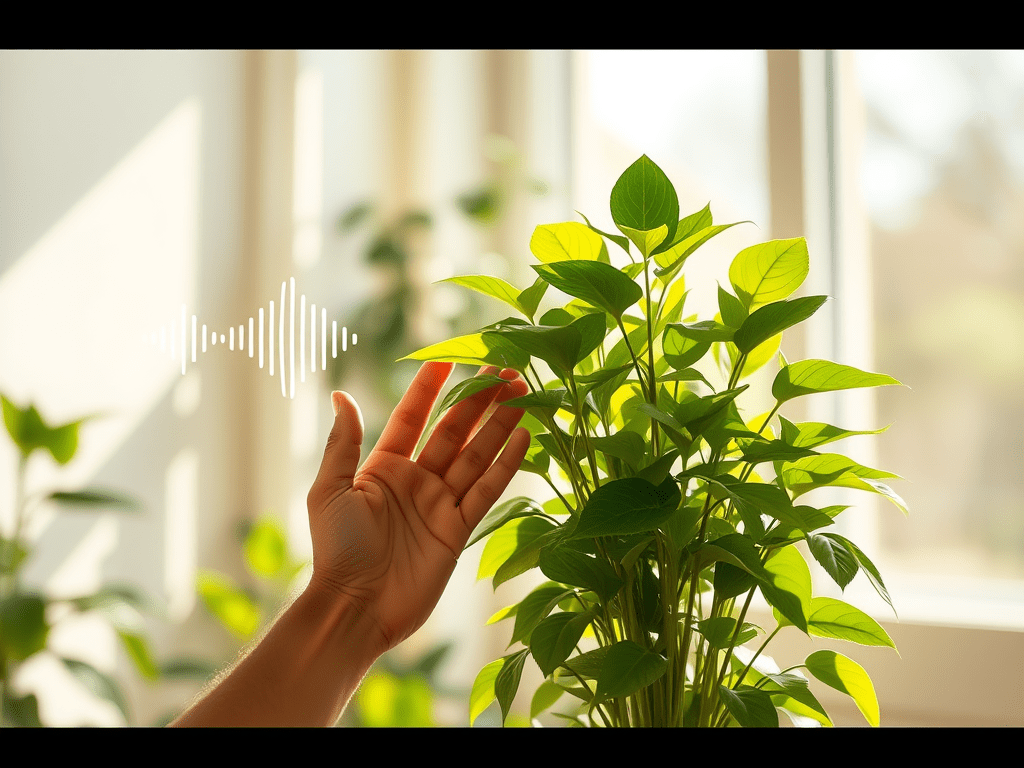

Many people have heard the idea that talking to plants helps them grow. While this may sound like a superstition, scientific research suggests there’s truth behind it. Plants may not have ears or a brain, but they do respond to environmental stimuli—including sound and carbon dioxide from human speech.
1. Carbon Dioxide Boost
When we speak, we naturally release carbon dioxide (CO₂). Plants absorb CO₂ during photosynthesis—the process by which they create their own food using sunlight, water, and carbon dioxide. If you talk to your plants often, they may receive slightly more CO₂ than plants in silence, giving them a small but meaningful growth advantage. This is especially true in enclosed spaces, where air circulation is limited.
2. Sound Vibrations and Plant Cells
Besides CO₂, the sound waves produced by talking can affect plant growth. Research shows that certain sound frequencies can stimulate microscopic plant structures, promoting stronger stems and faster development. Vibrations may influence how plant cells move water and nutrients, acting almost like a gentle massage that boosts circulation.
3. Music and Emotional Care
Playing soft music or simply speaking kindly to plants doesn’t just benefit them physically—it can also change how humans care for them. When we treat plants like living companions, we pay more attention to their water, light, and soil needs. This increased care can indirectly support healthier growth.
4. A Two-Way Relationship
While plants don’t “hear” us in the way animals do, they do interact with their environment constantly. Talking to them can create a mindful, nurturing routine that benefits both plant and caretaker. This relationship encourages humans to slow down, observe, and connect with nature—something that can reduce stress and improve overall well-being.
Multiple Choice Questions
1. What is one scientific reason why talking to plants can help them grow?
A. It gives them extra oxygen.
B. It provides extra carbon dioxide.
C. It helps them hear better.
D. It makes them smarter.
2. What role do sound vibrations play in plant growth?
A. They make the soil warmer.
B. They help plants photosynthesize faster.
C. They stimulate plant cells and support development.
D. They scare away insects.
3. How can playing music affect plant growth indirectly?
A. It attracts more sunlight.
B. It makes the gardener more attentive.
C. It increases the plant’s intelligence.
D. It changes the plant’s DNA.
4. Which of the following is not mentioned as a benefit of talking to plants?
A. Stress reduction for humans.
B. Improved plant cell structure.
C. Faster growth through sunlight absorption.
D. Increased attention to plant care.
5. What is the main idea of the essay?
A. Plants can understand language.
B. Talking to plants has no real effect.
C. There is both scientific and emotional value in talking to plants.
D. Plants grow only when you sing.
Critical Thinking Questions
- Do you think the effect of talking to plants is more scientific or psychological? Defend your answer with examples.
- Imagine you are designing an experiment to test whether talking to plants truly makes a difference. What variables would you control, and what would your procedure look like?
- How might regularly talking to plants change a person’s relationship with nature over time?
✅ Answers
- B
- C
- B
- C
- C
 Unleashed Learning Gateway
Leave a comment