Stem Reading
When we look at fall leaves, most of us notice their bright colors — deep reds, golden yellows, and warm oranges. But if we take a closer look, we can also find something just as beautiful hidden beneath the surface: patterns. Nature is full of repeating designs, shapes, and structures that follow mathematical rules. These patterns are called fractals and symmetry, and they reveal how deeply connected science, math, and art truly are.
The Beauty of Fractals
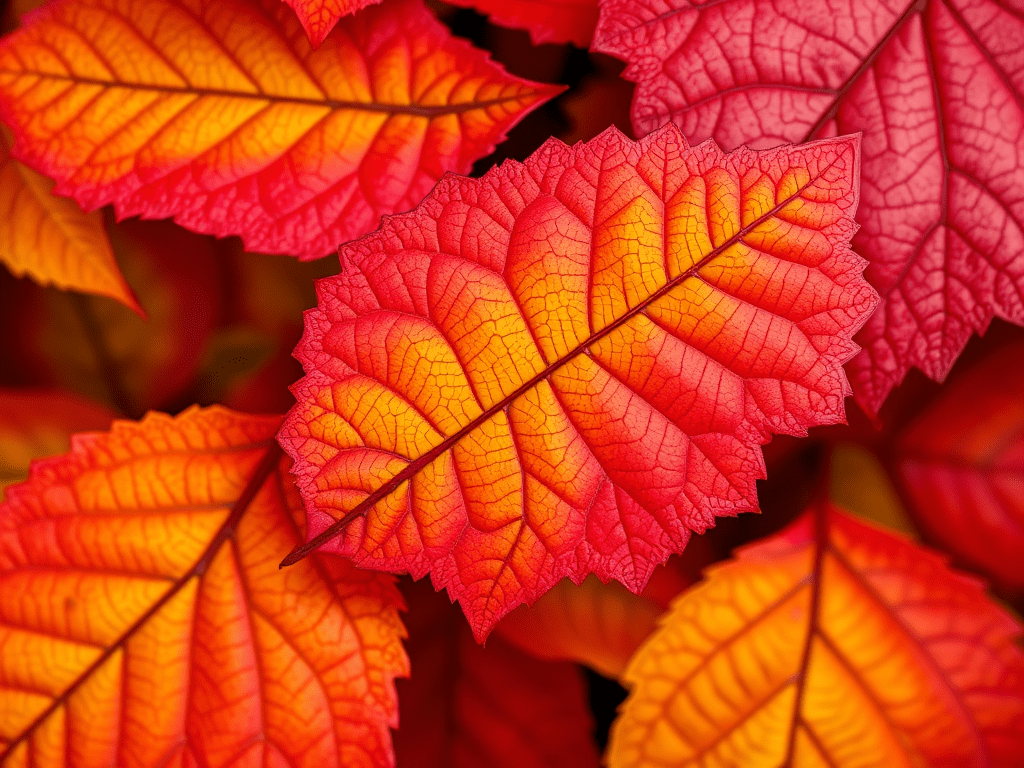
A fractal is a pattern that repeats itself over and over, no matter how closely you look. Think of a fern leaf — each small leaflet looks like a tiny copy of the whole plant. The same is true for trees: a single branch has smaller branches that grow in the same pattern as the entire tree. Even the veins in a leaf form a fractal pattern, branching again and again to carry water and nutrients through the leaf.
Fractals show us how plants grow efficiently and beautifully at the same time. Nature uses these repeating shapes as a kind of blueprint for survival, helping plants absorb sunlight and transport energy effectively. When students notice these shapes in leaves, snowflakes, or river systems, they’re seeing mathematics come alive in the natural world.
The Balance of Symmetry
Another hidden pattern in leaves is symmetry — when one half of something mirrors the other. Many leaves are nearly symmetrical, with a central vein dividing two sides that are almost identical. Symmetry isn’t just pleasing to the eye; it’s also practical. Balanced shapes help plants grow evenly and distribute light and water efficiently.
In math, symmetry is studied through geometry and reflections, but in nature, it appears in living color. When we trace the outline of a maple leaf or a butterfly’s wings, we’re exploring the same mathematical idea that artists use to create harmony and balance in their designs.
Where Math Meets Art
Exploring fractals and symmetry helps us see that math and art aren’t separate subjects — they often describe the same beauty in different ways. Artists use repeating patterns, proportions, and balance to create stunning visuals, just as nature does. When students sketch leaves, design snowflakes, or use digital tools to create fractal art, they are practicing both mathematical thinking and creative expression.
Seeing the World Differently
Studying patterns in nature helps us understand the hidden order behind what seems random. It reminds us that science and art both begin with the same skill: observation. Whether we’re collecting leaves, drawing their shapes, or calculating their symmetry, we’re connecting with the language of nature — a language written in numbers, lines, and curves.
So next time you take a walk outside, look beyond the color of the leaves. Look for their structure, balance, and repetition. In those patterns, you’ll discover the remarkable truth that math isn’t just something we learn in class — it’s something we can see and feel all around us.
STEM Reflection Activity: Discovering the Hidden Patterns of Nature
Objective
To observe and analyze fractals and symmetry in leaves, connecting patterns found in nature to concepts in math and art.
Materials Needed
- A few different fall leaves (from your yard, park, or school)
- Ruler or measuring tape
- Pencil and colored pencils or markers
- Paper or science journal
- Optional: magnifying glass or smartphone camera
Activity Steps
1. Observe and Sketch
- Choose one leaf and place it on your paper.
- Look closely at the veins and edges.
- Sketch the leaf, showing its overall shape and main vein structure.
2. Find the Fractals
- Notice how the smaller veins branch off from larger ones — do they repeat a pattern?
- Label or color the branching veins to show this repeating structure.
- Write one or two sentences describing how these patterns remind you of other fractals in nature (trees, rivers, or lightning).
3. Measure the Symmetry
- Fold your leaf gently down the center vein.
- Are both sides the same? Measure from the middle vein to the edge at three different points.
- Record your measurements and compare: are they close or very different?
- Write: “My leaf is mostly symmetrical / not symmetrical because…”
4. Math Meets Art
- Use colored pencils to highlight different patterns or sections of your leaf (green for main veins, orange for smaller veins, etc.).
- Add shapes or lines to emphasize the symmetry — this turns your observation into a piece of mathematical art!
Reflection Questions
- What repeating patterns or fractals did you notice in your leaf?
- How does the leaf’s symmetry help it function in nature?
- How is finding patterns in nature similar to solving math problems?
- What did you learn about how art and science can work together?
Extension Idea
Try this again with different types of leaves or other natural objects (like shells, flowers, or snowflakes). Compare your drawings — do all of them show fractals or symmetry in some way?
 Unleashed Learning Gateway