Reflect • Reset • Grow Together
January is a fresh start—but that doesn’t mean rushing into new books or strict schedules. For homeschool families, the best place to begin is by looking back, talking together, and setting simple intentions.
This first week is about helping your child understand:
- what they’ve already learned
- how learning feels
- what they want to work on next
You don’t need anything fancy. Just time, conversation, and a little honesty.
Why We Start with Reflection
Before setting goals, kids need to understand themselves.
When children talk about what went well and what felt hard, they:
- feel heard
- gain confidence
- learn that struggle is normal
Reflection teaches kids that learning isn’t about being perfect—it’s about trying again.
Example:
Instead of saying, “We’re behind in math,”
you might say,
“Math was tricky last year. What part felt hardest?”
That small shift builds trust and growth.
What This Week Is About (In Simple Terms)
This week helps your child:
- think about last year
- learn that mistakes are okay
- set small goals
- understand your family’s learning values
🗓️ Week 1: Day-by-Day Parent Guide
You can do these in 20–30 minutes a day. Skip a day if needed—this week is about connection, not perfection.
Day 1: Talk About Last Year
Goal: Help your child reflect.
What to Do:
- Sit together and talk.
- Ask a few questions.
- Let them answer honestly.
Example Questions:
- “What was fun to learn last year?”
- “What felt hard?”
- “What are you proud of?”
Optional Activity:
- Draw a picture of their favorite learning moment.
Day 2: Teach a Growth Mindset
Goal: Show your child that learning takes time.
How to Explain It:
“Your brain grows when you practice—just like muscles.”
What to Do:
- Teach the word “yet”
- Practice saying:
- “I can’t do this…yet.”
- “I’m still learning.”
Example:
If your child says, “I’m bad at reading,”
respond with:
“You’re learning. That means your brain is growing.”
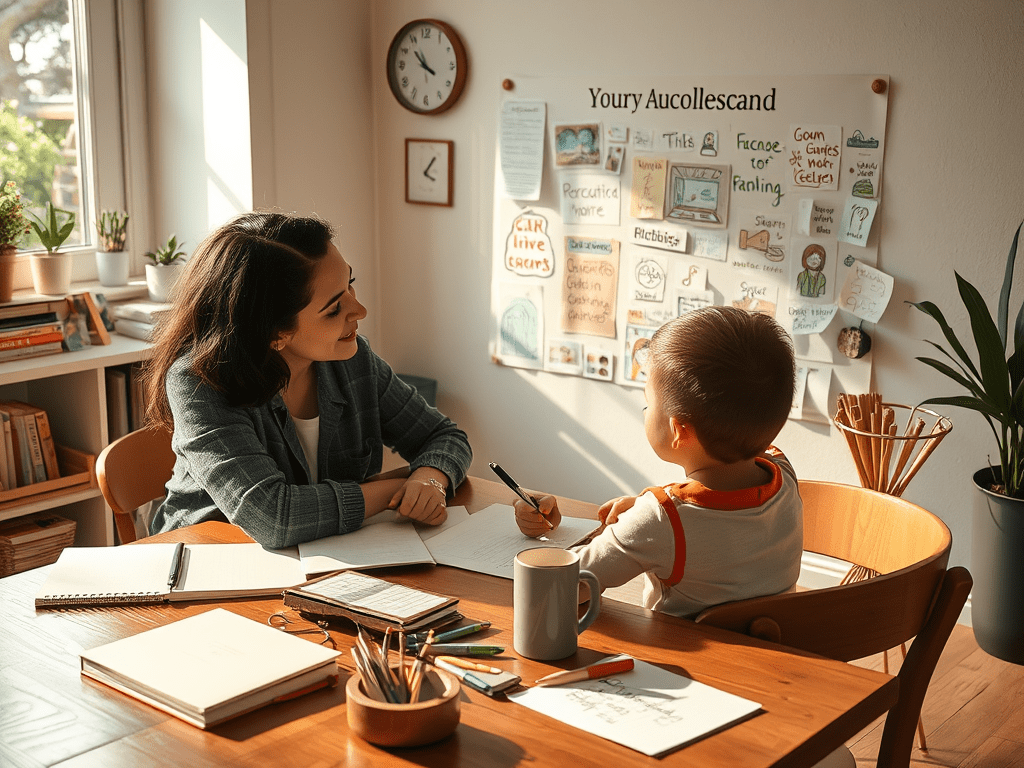
Day 3: Create a Simple Vision Board
Goal: Let your child imagine the year ahead.
What to Do:
- Use paper, markers, or magazines.
- Let your child draw or write.
Include:
- Something they want to learn
- Something they want to get better at
- Something that makes learning fun
Example:
A child might draw:
- books
- art supplies
- playing outside
- feeling happy while learning
Day 4: Set Simple Learning Goals
Goal: Help kids choose small, realistic goals.
What to Do:
Ask your child:
- “What is one thing you want to learn?”
- “What is one thing you want to practice?”
Examples of Kid Goals:
- “Read longer books.”
- “Get better at writing.”
- “Try math without getting upset.”
Parent Tip:
One goal is enough.
Day 5: Set a Family Learning Intention
Goal: Decide how your family wants learning to feel.
What to Do:
Talk together and choose one family goal.
Examples:
- “We will be kind when learning feels hard.”
- “We will read together every day.”
- “We will take breaks when we need them.”
Write it down and keep it visible.
Parent Reminder (Keep This Simple)
You are not behind.
Your child does not need a perfect plan.
A calm, thoughtful start builds confidence—for you and your child.
Small steps matter.
Week 1 Resources You Can Use
- Reflection journal pages
- Vision board templates
- “My Learning Goals” worksheet
- Growth mindset affirmations
 Unleashed Learning Gateway