

National Bird Day is a wonderful opportunity to slow down, look around, and learn more about the birds that share our world. From the birds in our backyards to those living in forests, oceans, and deserts, birds play an important role in nature — and they give children a fun way to explore science, observation, and curiosity.
🌍 Why Are Birds Important?
Birds do much more than fly and sing. They help keep ecosystems healthy by:
- Spreading seeds that help plants grow
- Controlling insects and pests
- Pollinating flowers
- Serving as indicators of environmental health
When birds thrive, it often means the environment around them is healthy too.
🧠 What We Can Learn From Birds
Studying birds helps children build important skills, including:
- Observation skills – noticing colors, shapes, and behaviors
- Science thinking – learning about habitats, life cycles, and adaptation
- Environmental awareness – understanding how living things depend on one another
- Curiosity and patience – watching birds encourages slowing down and paying attention
Bird learning can be as simple as watching birds outside a window or as detailed as researching birds from around the world.
🐦 Common Bird Parts We Should Know
Birds may look different, but most share the same basic parts:
- Beak – used for eating, building nests, and protection
- Wings – help birds fly or glide
- Feathers – keep birds warm and help with flight
- Feet and claws – help birds perch, walk, or hunt
- Tail – helps with balance and steering
Learning these parts builds early biology knowledge in a hands-on way.
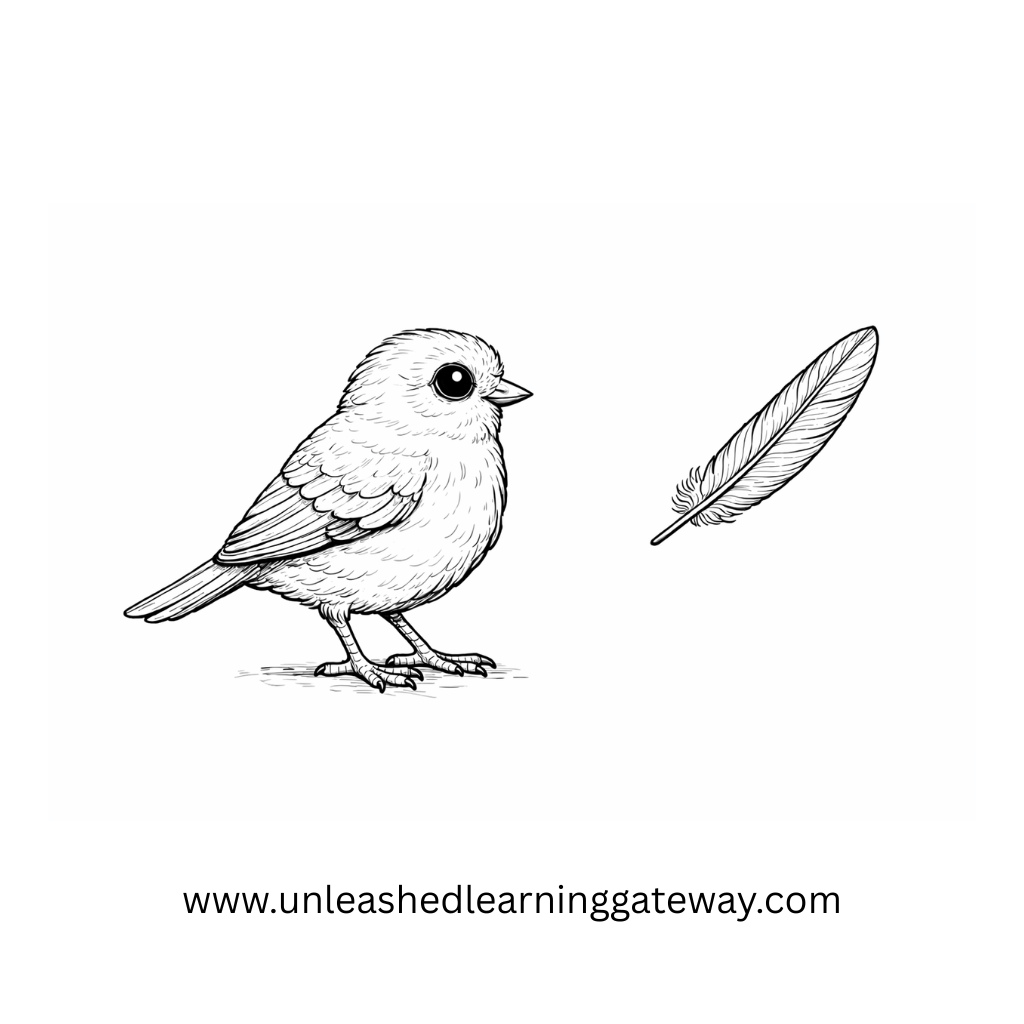
Understanding Birds and Their Body Parts
Birds are one of the most successful groups of animals on Earth. They live on every continent and have adapted to many different environments, from forests and grasslands to deserts and cities. National Bird Day is a great time to learn how birds are built and how each part of their body helps them survive.
🧠 Why Study Birds?
Studying birds helps us understand:
- How animals adapt to their environments
- How body structures support survival
- How ecosystems stay balanced
Birds also serve as environmental indicators, meaning changes in bird populations can signal changes in the health of the environment.
🧩 Major Parts of a Bird and Their Functions

Eye
Birds have excellent eyesight. Their eyes are large compared to their head size, which allows them to see details from far away. Many birds can detect movement quickly, helping them avoid predators or locate food. The pupil controls how much light enters the eye, allowing birds to see in different lighting conditions.

Beak
A bird’s beak is shaped based on what it eats. Unlike mammals, birds do not have teeth. Instead, their beaks help them:
- Pick up seeds
- Tear meat
- Sip nectar
- Catch insects
For example, birds that eat seeds often have short, strong beaks, while birds that eat insects may have thin, pointed beaks.
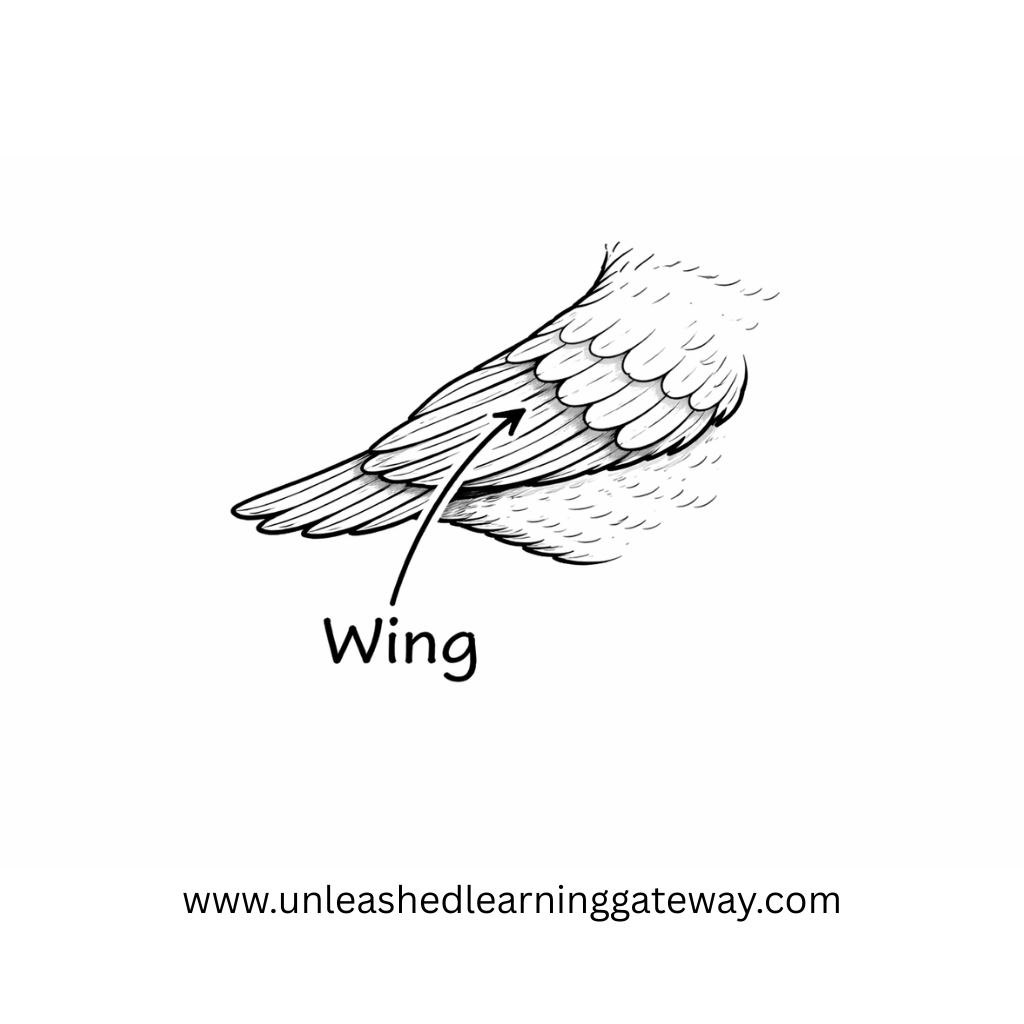
Wing
The wing is attached at the shoulder and includes muscles, bones, and feathers. Wings allow birds to:
- Fly or glide
- Balance while walking or landing
- Regulate body temperature
Even birds that do not fly still have wings, which may help with balance or display.
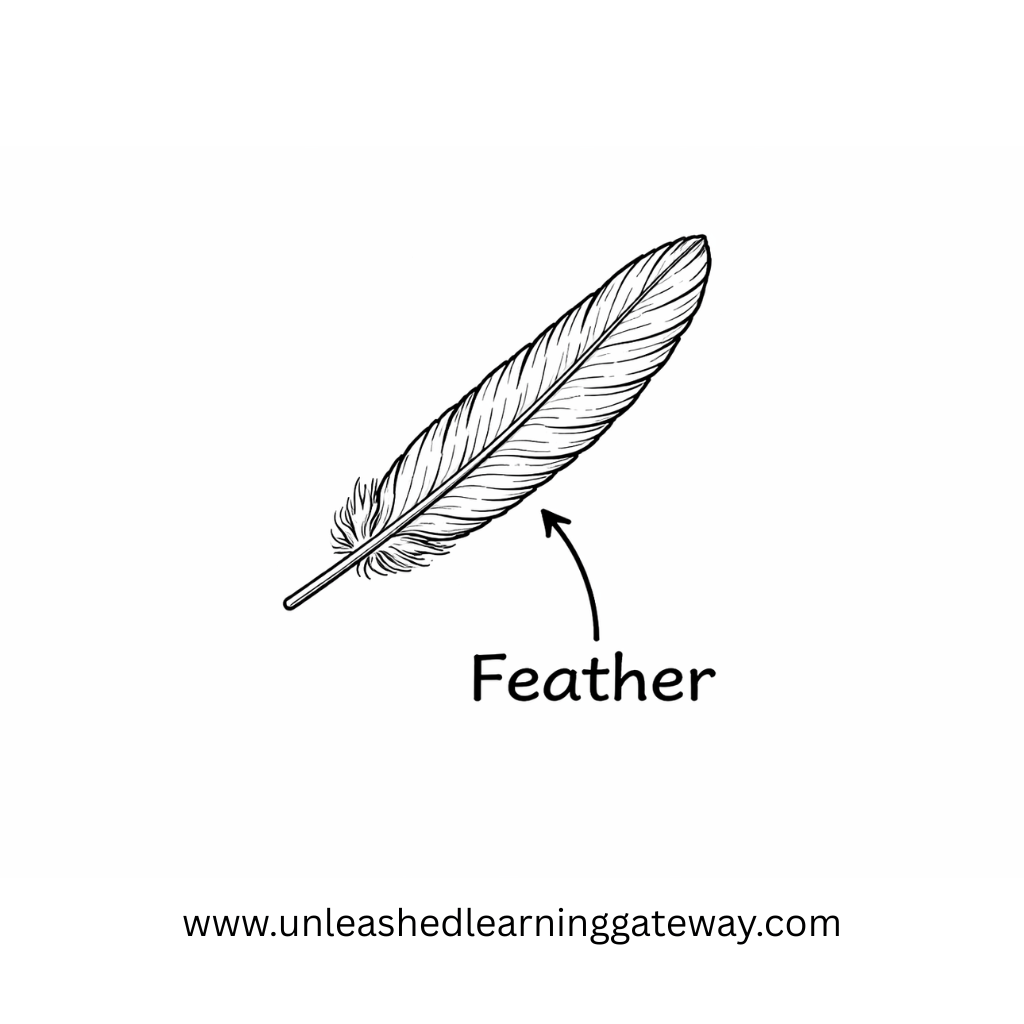
Feather
Feathers are unique to birds. They serve several important purposes:
- Help birds fly
- Keep birds warm
- Protect skin
- Display colors for communication or camouflage
Feathers are lightweight but strong, making flight possible.
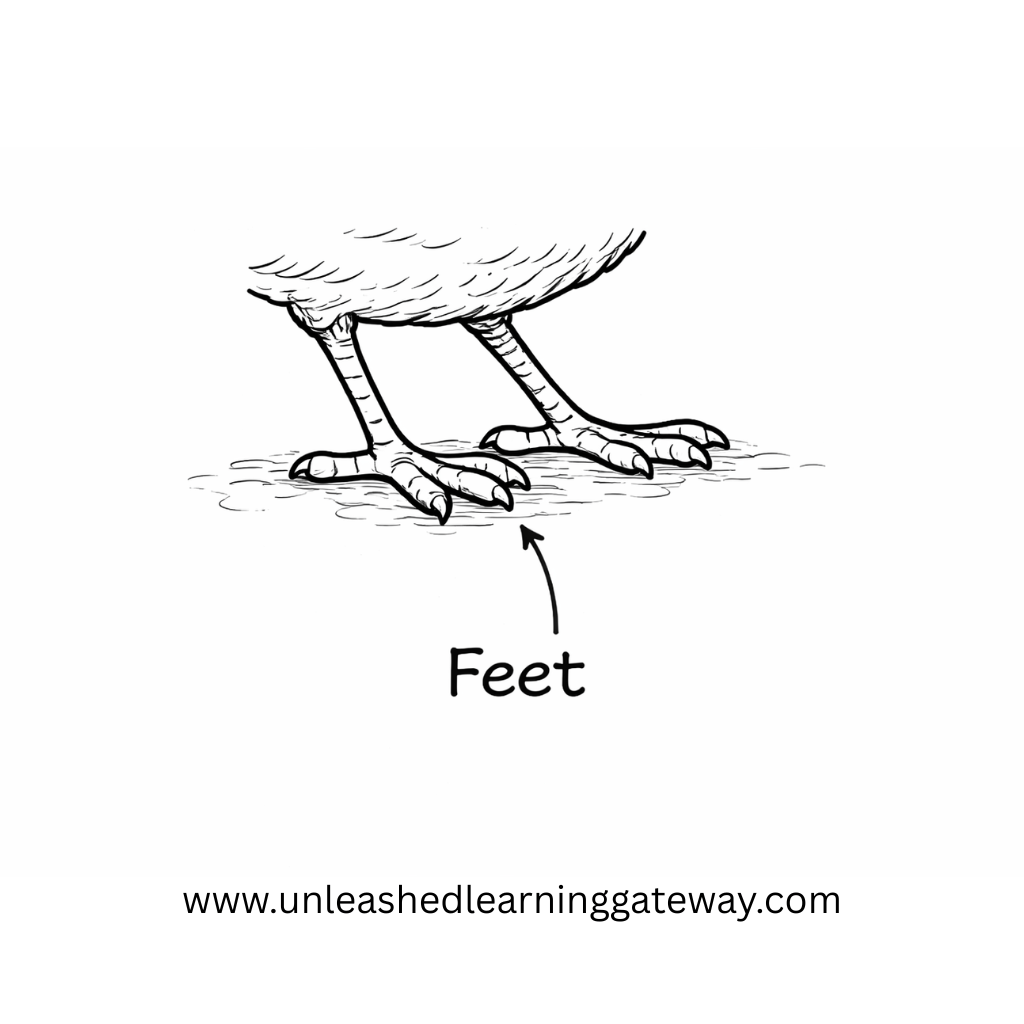
Feet
Bird feet are adapted to their lifestyle. Some birds have:
- Strong claws for catching prey
- Webbed feet for swimming
- Gripping toes for perching
Feet help birds move, hunt, and rest safely.
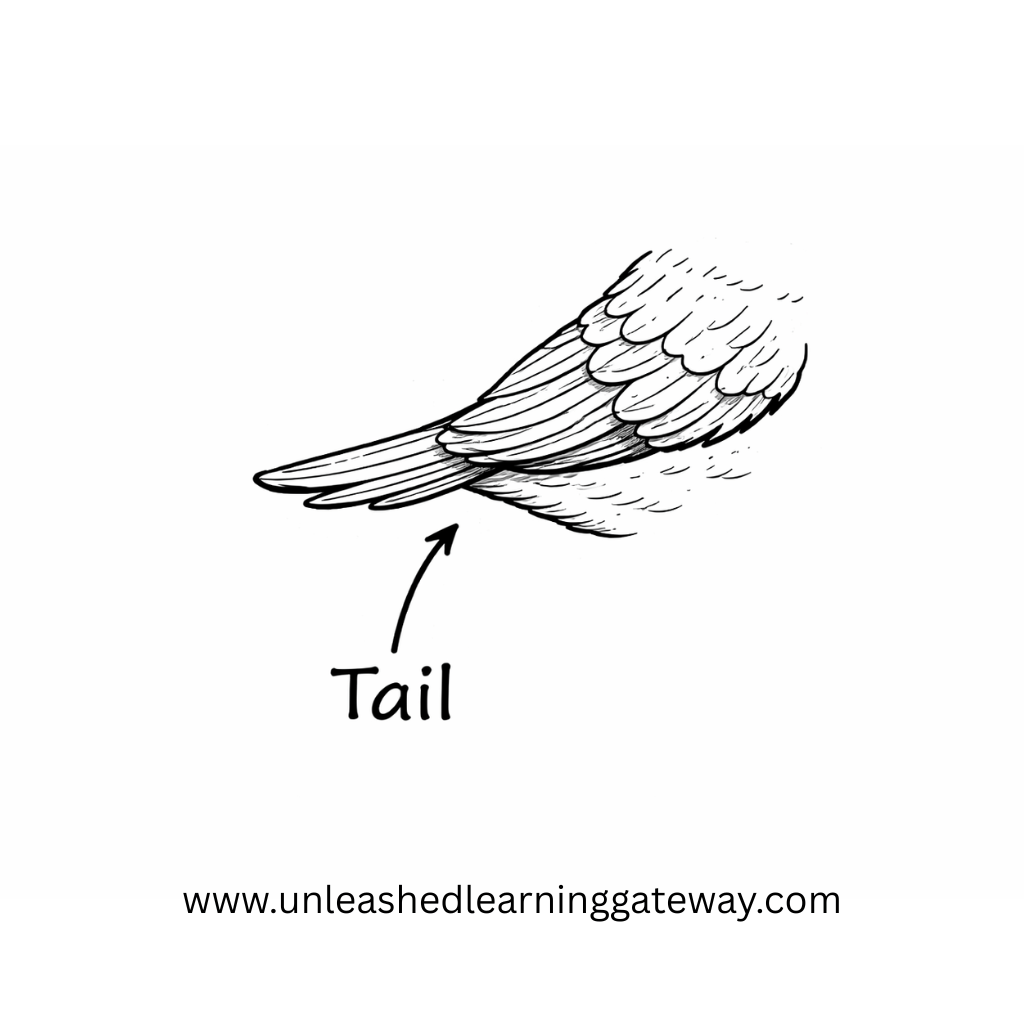
Tail
The tail helps birds:
- Steer during flight
- Balance while perched
- Brake when landing
Tail feathers play an important role in controlling movement in the air.
🌍 Why Birds Matter to Ecosystems
Birds help ecosystems by:
- Controlling insect populations
- Spreading seeds
- Pollinating plants
- Serving as food for other animals
Without birds, many ecosystems would struggle to stay balanced.
✏️ Bird Anatomy & Adaptations Assignment
Part 1: Labeling
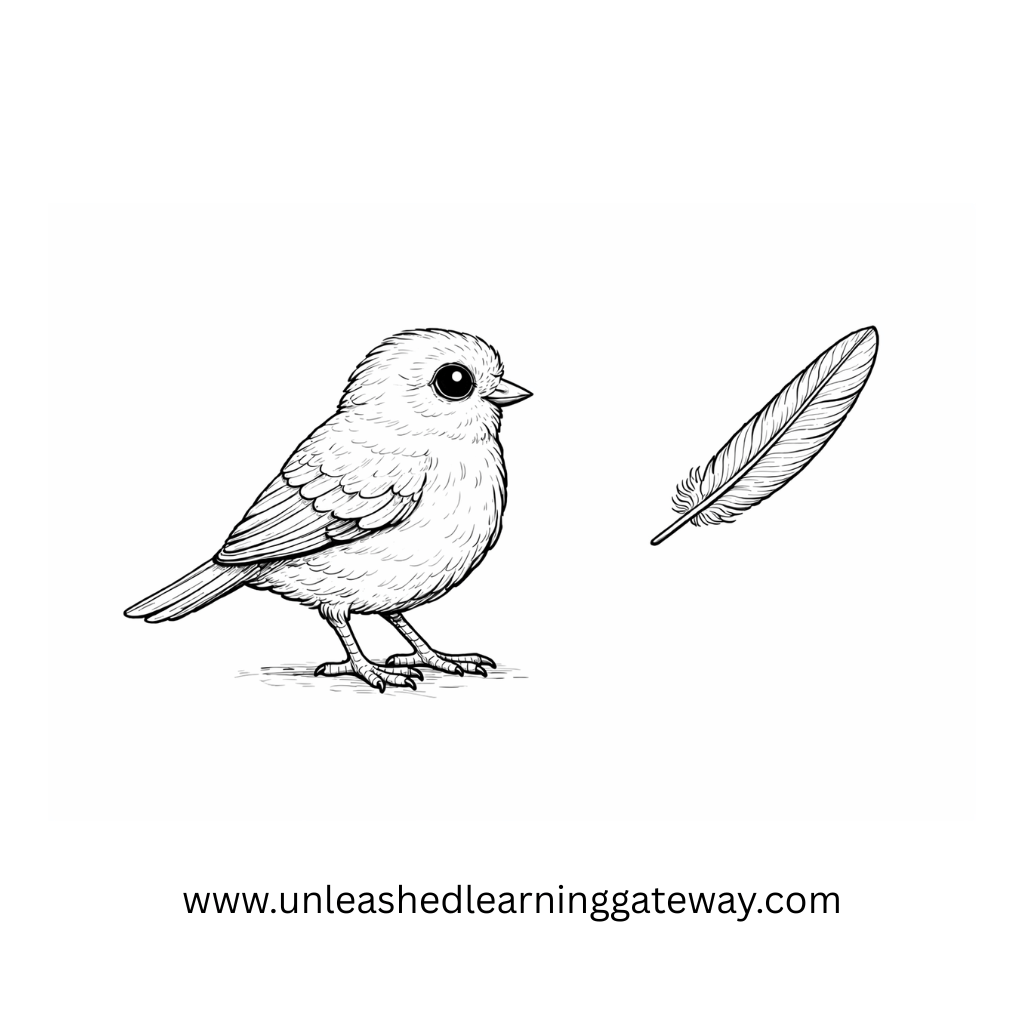
Using the bird diagram provided:
- Label the following parts:
Eye, Beak, Wing, Feather, Feet, Tail
Part 2: Short Answer
Answer in complete sentences.
- Why is good eyesight important for birds?
- How does a bird’s beak help it survive?
- What are two jobs feathers do for birds?
Part 3: Critical Thinking
Choose one bird (real or familiar, such as a robin, eagle, duck, or pigeon).
Answer the following:
- What type of beak does this bird have?
- What do you think it eats?
- How do its wings or feet help it live in its environment?
 Unleashed Learning Gateway