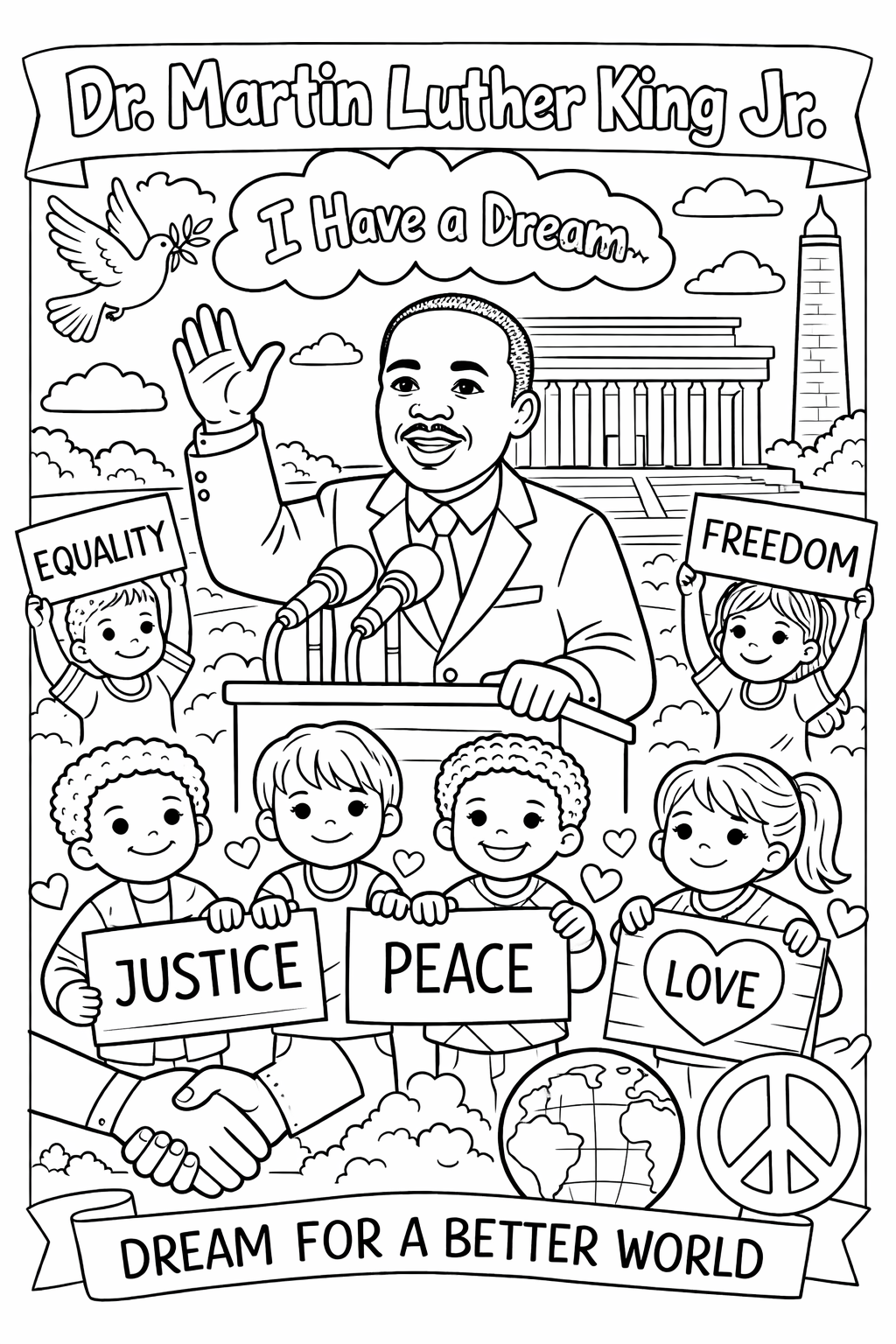
Dr. Martin Luther King Jr. was one of the most important leaders in American history. He was born on January 15, 1929, in Atlanta, Georgia, during a time when segregation laws separated people based on race. These laws were unfair and meant that Black Americans were often denied the same schools, jobs, and public spaces as white Americans. Even as a child, Dr. King noticed this injustice.
Did you know that when he was only six years old, one of his white friends was no longer allowed to play with him simply because of the color of his skin? That painful experience stayed with him and helped shape his belief in equality and justice.
Dr. King grew up in a family of pastors, and he later became a pastor himself. He believed that faith should be connected to action. Instead of staying silent, he chose to speak out. He studied hard, earning a college degree and later a doctorate, which is why we call him “Dr.” King.
Did you know that he was only 26 years old when he became a major leader in the Civil Rights Movement? Even at a young age, people listened to him because his words were powerful, calm, and filled with hope.
One of Dr. King’s strongest beliefs was in nonviolence. This meant standing up to unfairness without using hatred, revenge, or physical harm. He taught that peaceful protest could be more powerful than violence because it showed dignity and courage. During the Montgomery Bus Boycott, thousands of Black citizens refused to ride city buses after Rosa Parks was arrested for not giving up her seat. Dr. King helped lead this movement, encouraging people to walk instead of ride for over a year. Their determination worked, and the Supreme Court ruled that segregated buses were unconstitutional.
Did you know this boycott lasted 381 days and completely changed public transportation laws?
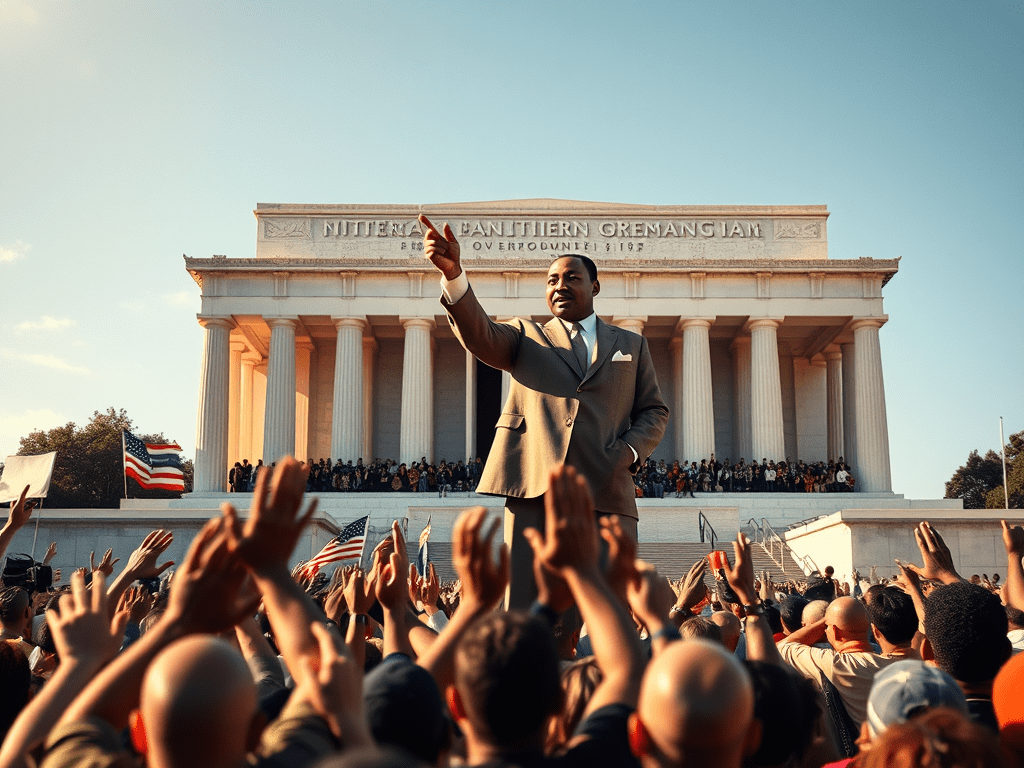
Dr. King traveled across the country giving speeches and organizing marches. He believed that change happened when ordinary people worked together. His most famous moment came in 1963 during the March on Washington, where more than 250,000 people gathered peacefully. Standing in front of the Lincoln Memorial, Dr. King delivered his legendary “I Have a Dream” speech. In it, he shared his dream of a nation where children would be judged by their character, not their skin color. Part of this speech was not written in his notes? A singer in the crowd called out, “Tell them about the dream,” and Dr. King began speaking from his heart.
Dr. King’s leadership helped lead to powerful new laws. The Civil Rights Act of 1964 made discrimination illegal in many public places and jobs. The Voting Rights Act of 1965 protected the right of Black Americans to vote. These were major steps toward fairness, but Dr. King reminded people that laws alone could not change hearts. He believed that true freedom meant choosing kindness, respect, and understanding every day.
Because of his peaceful work, Dr. King was awarded the Nobel Peace Prize in 1964. He was only 35 years old, making him one of the youngest people ever to receive it. Instead of seeing it as a personal achievement, he said the award belonged to the entire movement.
Dr. Martin Luther King Jr. was assassinated in 1968, but his message did not end. His words, actions, and example continue to inspire people all over the world. He showed that real strength is not found in anger, but in courage. He taught that one voice, when joined with others, can help bend history toward justice.
Key Vocabulary
- Segregation – separating people based on race
- Civil Rights Movement – the struggle to end discrimination
- Nonviolence – peaceful resistance without harm
- Equality – being treated fairly and with respect
- Justice – what is right and fair
- Freedom – the right to live without unfair limits
- Peaceful protest – standing up for change without violence
Critical Thinking Question
Why do you think Dr. King believed changing people’s hearts was just as important as changing laws? Can a society truly change without both?
Multiple Choice Questions
1. What unfair system existed during Dr. King’s childhood?
A. Internet control
B. Segregation
C. Space laws
D. School uniforms
2. How old was Dr. King when he became a Civil Rights leader?
A. 18
B. 40
C. 26
D. 60
3. What did Dr. King believe was the most powerful way to create change?
A. Violence
B. Silence
C. Nonviolence
D. Competition
4. What was the Montgomery Bus Boycott about?
A. Ticket prices
B. Bus safety
C. Segregation on buses
D. New bus routes
5. What famous speech did Dr. King give in 1963?
A. “Freedom Now”
B. “We Will Win”
C. “I Have a Dream”
D. “Justice Today”
6. Which laws were influenced by Dr. King’s leadership?
A. Recycling laws
B. Civil Rights and Voting Rights Acts
C. Transportation laws only
D. Military laws
Learning Activity: “Dream Builders Project”
Students will design their own dream for a better world.
- Write a short paragraph starting with:
👉 “My dream is…” - Include at least three values (kindness, fairness, courage, respect, honesty, unity).
- Draw a detailed picture showing what the world would look like if this dream came true.
- Share and discuss how small actions today can support big dreams.
(This pairs beautifully with your Dr. King coloring page or a peace-and-unity themed design.)
Additional Learning Resources & Historic Events
Key Events to Research
- Montgomery Bus Boycott
- March on Washington
- Birmingham Campaign
- Selma to Montgomery Marches
- Civil Rights Act of 1964
- Voting Rights Act of 1965
Student-Friendly Learning Resources
- National Civil Rights Museum virtual tours
- Scholastic Kids Civil Rights articles
- BrainPOP: Martin Luther King Jr.
- Ducksters History for Kids
- National Geographic Kids biographies
- Library picture books and documentaries
✅ Answer Key
- B – Segregation
- C – 26
- C – Nonviolence
- C – Segregation on buses
- C – “I Have a Dream”
- B – Civil Rights and Voting Rights Acts
 Unleashed Learning Gateway