

Grade Range: Upper elementary – middle school
Subjects Integrated: Science • Math • English/Language Arts • Social Studies • SEL
The Science of Snow
Snow is a type of precipitation, which means water that falls from the atmosphere to Earth. Other kinds of precipitation include rain, sleet, and hail. Snow forms when water vapor in clouds changes directly into ice crystals instead of becoming liquid first. This process is called deposition.
Snow forms inside cold clouds when temperatures are at or below 32°F (0°C). Tiny particles in the air, such as dust or pollen, act as nuclei (centers) where water vapor can freeze. As more water vapor sticks to the ice crystal, it grows larger and heavier. When it becomes heavy enough, it falls to Earth as snow.
Every snowflake begins the same way, but no two snowflakes are exactly alike. That is because temperature, humidity, and wind change how ice crystals grow. This creates different types of snow.
🌨️ Types of Snow
- Powder snow: Light, fluffy, and dry. Often falls when temperatures are very cold.
- Wet snow: Heavier snow that sticks together easily. Good for building snowmen.
- Sleet: Ice pellets that form when snow melts and refreezes before reaching the ground.
- Graupel: Soft ice pellets formed when supercooled water freezes onto snowflakes.
- Hail: Hard balls of ice that form inside strong thunderstorms (not true snow, but frozen precipitation).
Let’s take a look at them below:
Hail
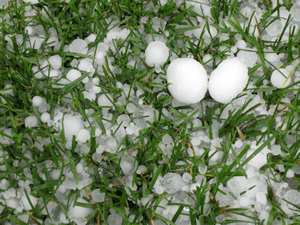
Hail looks like hard balls or lumps of ice that fall from storm clouds. Unlike snow, which is soft and fluffy, hail is solid, heavy, and firm to the touch.
Hailstones are usually round or slightly bumpy, and many have a layered appearance, almost like rings inside a tree. This happens because hailstones are lifted up and down inside powerful thunderstorms, collecting new layers of ice each time.
Hail can be very small, like tiny beads or marbles, or very large, like golf balls or even bigger. Some hailstones are smooth, while others look rough or spiky because of the way ice freezes onto them.
Hail is often clear, cloudy white, or a mix of both, depending on how quickly it froze. When hail hits the ground, it usually bounces, makes loud tapping sounds, and can dent cars, break plants, or crack windows.
Graupel
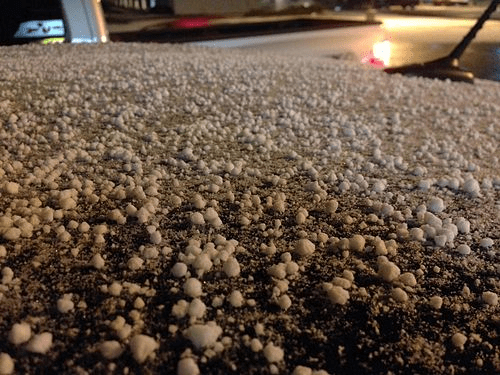
Graupel looks like tiny, soft balls of snow-covered ice. Instead of having sharp snowflake shapes, graupel falls as small, round pellets that look a little like mini snowballs, Styrofoam beads, or tiny puffs of ice.
Graupel is usually white and cloudy, not clear. The surface looks bumpy, fuzzy, or frosted, because graupel forms when supercooled water droplets freeze onto a falling snowflake. This coats the snowflake and hides its crystal shape.
Graupel pellets are typically very small, about the size of grains of rice or peppercorns. They are soft and crumbly, not hard like hail. When graupel hits the ground, it usually does not bounce and can crush easily between your fingers.
Graupel often falls quietly and may look like tiny white beads rolling or piling up on the ground.
Sleet
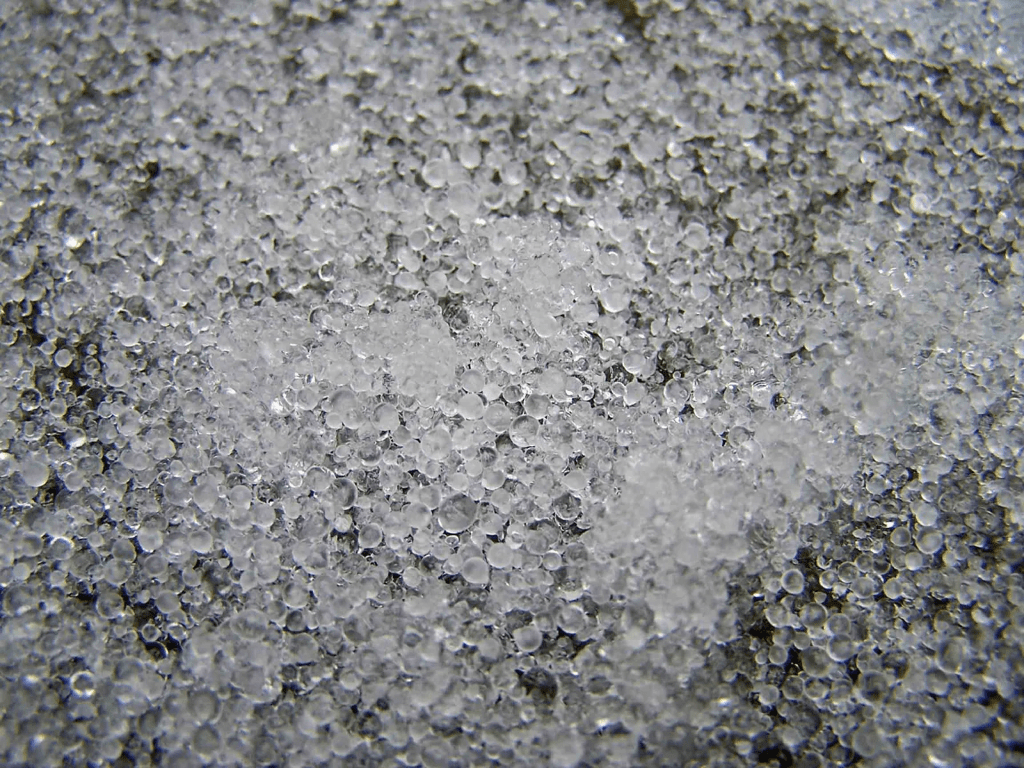
Sleet looks like tiny, clear or cloudy balls of ice that fall from the sky. Instead of soft flakes like snow, sleet falls as small, hard pellets, similar to mini marbles, beads, or fish-tank gravel.
Sleet pellets are usually round and smooth. They can be transparent (see-through) or slightly white, depending on how they froze. Because sleet is solid ice, it often bounces when it hits the ground and makes a ticking or tapping sound on windows, cars, and sidewalks.
Sleet is much smaller than hail and harder than graupel. It does not feel soft or crumbly. When you hold sleet, it feels like a tiny piece of ice, not packed snow.
On the ground, sleet can look like a layer of little ice beads covering surfaces, sometimes mixed with rain or snow.
Wet Snow
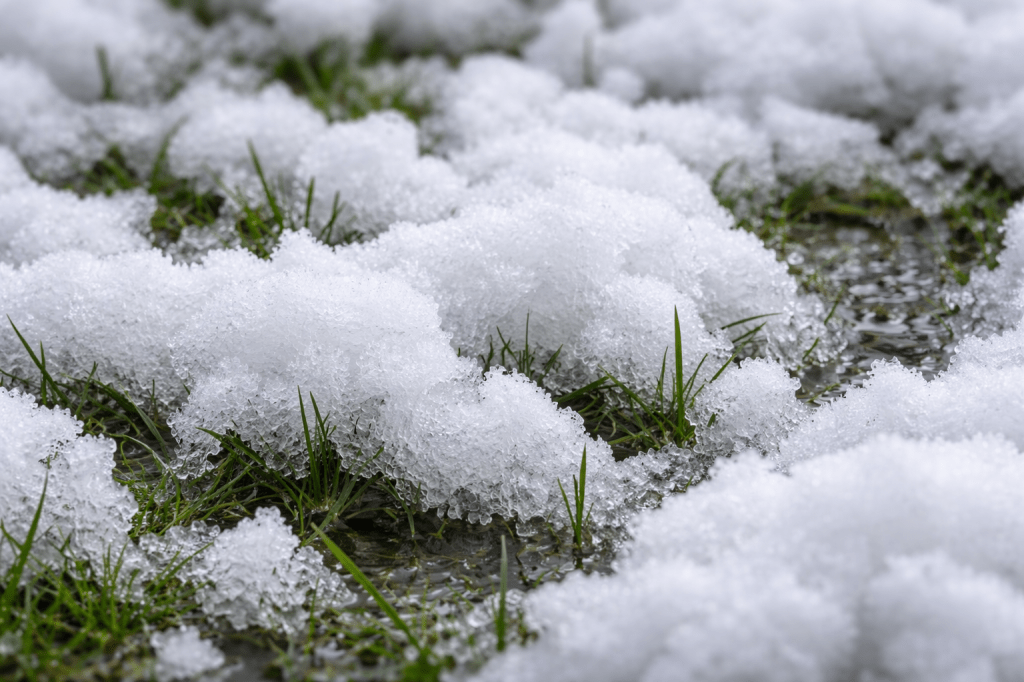
Wet snow looks heavy, thick, and clumpy. Instead of being light and fluffy, wet snow appears dense and packed together. The snowflakes partially melt as they fall, so they stick to one another and form large, soft clumps.
Wet snow often looks shiny or slushy because it contains a lot of liquid water. You may see puddles, dripping water, or glossy surfaces around it. It sticks easily to trees, power lines, cars, sidewalks, and clothing.
On the ground, wet snow may look like lumpy piles instead of powdery drifts. It can be scooped and shaped easily, which is why it is perfect for building snowmen and snowballs.
When you walk through wet snow, it usually feels thick and heavy, not light or dusty. It may squish under your feet instead of crunching.
Powder Snow
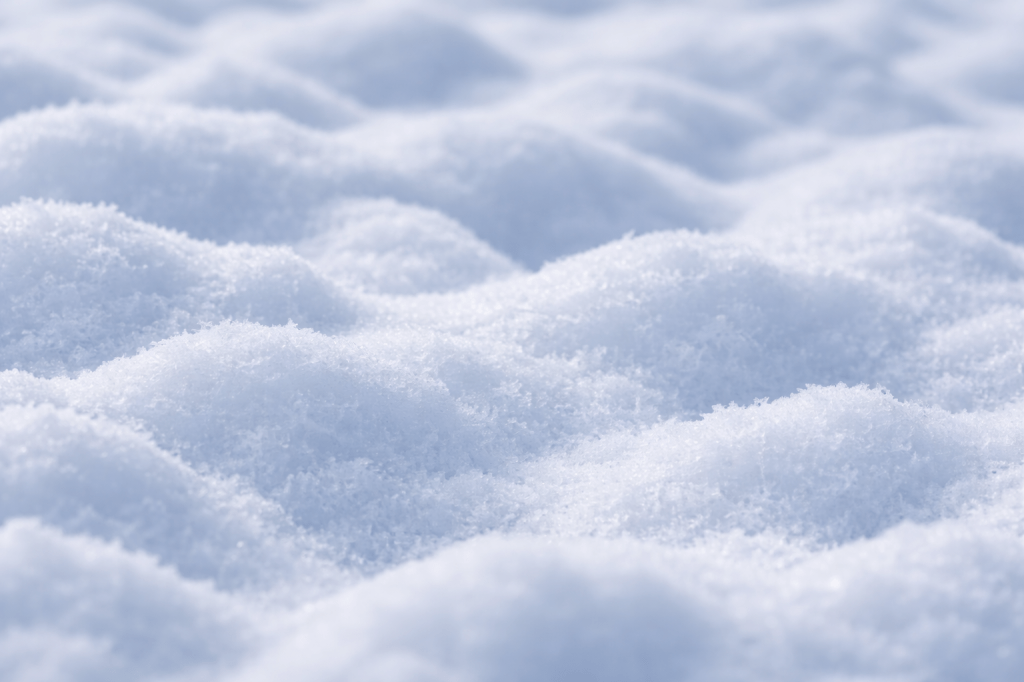
Powder snow looks light, fluffy, and soft. It often forms a thin, airy blanket on the ground that can be easily blown by the wind. Instead of clumping together, powder snow falls apart easily when touched.
Powder snow usually looks bright white and dry. The snowflakes are often small and loosely packed, which gives powder snow its soft, dusty appearance. When you walk through powder snow, it may puff up into the air instead of squishing.
Powder snow does not stick together well. If you try to make a snowball with powder snow, it often crumbles or falls apart. On very cold days, powder snow can even squeak or crunch under your boots.
In nature, powder snow may look like:
- A soft white coating on trees and grass
- Light drifts shaped by the wind
- Fine, sparkly snow on the ground
🌍 Where Does Snow Fall?
Snow does not fall everywhere on Earth. It falls in places where the temperature is cold enough and where there is moisture in the air. Some regions see snow often, some only rarely, and some almost never.
🧊 1. Polar Regions (Very Cold Climates)
These areas are near the North Pole and South Pole.
Examples include:
- Antarctica
- Greenland
- Northern Canada
- Arctic regions
In these places:
- Temperatures are cold most of the year
- Snow can fall many months in a row
- Some snow never melts and forms glaciers and ice sheets
Snowfall here is very frequent and often permanent.
🏔️ 2. Mountain Regions (High Elevation Areas)
Snow often falls in mountains even when nearby cities are warm.
Examples include:
- The Rocky Mountains
- The Alps
- The Himalayas
- The Andes
This happens because:
- Temperature drops as elevation increases
- Air becomes colder higher in the atmosphere
In these places:
- Snow can fall year-round at high peaks
- Heavy snowfall often happens in winter
- Melted snow supplies rivers and drinking water
Snowfall here is seasonal to frequent, depending on height.
🌎 3. Temperate Regions (Seasonal Snow)
These areas have four seasons.
Examples include:
- Northern United States
- Southern Canada
- Europe
- Northern Asia
In these regions:
- Snow usually falls in late fall, winter, and early spring
- Summers are warm and snow disappears
- Snowfall may happen several times a year
Snowfall here is regular but seasonal.
🌦️ Regions Where Snow Is Rare
🌴 Tropical Regions
Places near the equator usually do not get snow.
Examples:
- Africa (lowlands)
- Central America
- Amazon rainforest
- Southeast Asia
These areas:
- Stay warm year-round
- Do not get cold enough for snow
The only exception is very tall mountains in tropical regions, where snow can fall at the peaks.
Snowfall here is rare or never.
❄️ When does it snow?
Snow happens when clouds are filled with moisture and the air temperature is cold enough for that moisture to freeze instead of turning into rain.
For snow to form:
1. The air must be cold enough
Snow forms when temperatures in the clouds are at or below 32°F (0°C). At these temperatures, water vapor changes directly into ice crystals instead of liquid drops.
Cold air is important because warm air melts snow before it reaches the ground. If the air near Earth’s surface is too warm, snow will fall as rain instead.
2. Moisture must be present in clouds
Clouds are made of tiny drops of water and water vapor. When warm, moist air rises into the sky, it cools. As it cools, the water vapor begins to freeze onto tiny particles like dust or pollen. These become the centers of snow crystals.
Without moisture, snow cannot form.
3. Ice crystals must grow heavy enough to fall
As more frozen water sticks to the crystal, it grows larger and heavier. When gravity pulls it down and the air can no longer hold it up, it falls to Earth as snow.
This is precipitation — water returning from the atmosphere to the ground.
🌍 Why is snow important?
Snow is not just something that changes how the ground looks. It plays an important role in Earth’s systems and in human life.
🌱 Snow supports ecosystems
- Snow acts like a blanket for plants and animals, protecting the soil from extreme cold.
- When snow melts, it slowly releases water into the ground, helping plants grow.
- Many animals depend on snow-covered environments for shelter, camouflage, and survival.
🚰 Snow supplies drinking water
In many places, melted snow from mountains fills rivers, lakes, and reservoirs. This water is used for:
- Drinking
- Farming and irrigation
- Producing electricity (hydropower)
Snow is a major natural freshwater storage system.
🚗 Snow affects how people live
Snow changes how people:
- Travel (roads, airports, transportation safety)
- Build homes (insulation, roofs, heating)
- Farm (growing seasons, soil moisture)
- Work and go to school
Some communities depend on snow for tourism and winter sports. Others must prepare for snow to protect people, animals, and resources.
🔄 Snow and Earth’s natural balance
Snow is part of Earth’s water cycle. It forms from water vapor, falls as precipitation, melts into liquid water, and returns to rivers, soil, and eventually back into the air.
Snow also helps control Earth’s climate system:
- Snow reflects sunlight back into space, helping keep Earth cooler.
- Large snow-covered areas affect air movement and weather patterns.
🔍 Key Scientific Vocabulary
Precipitation • Water vapor • Deposition • Ice crystals • Atmosphere • Nuclei • Temperature • Climate • Water cycle • Elevation
🧠 Critical Thinking: Multiple-Choice Questions
- Snow is different from rain because snow forms when water vapor changes directly into ______.
A. Liquid droplets
B. Ice crystals
C. Clouds
D. Steam - Why are no two snowflakes exactly alike?
A. They fall from different clouds
B. They melt at different speeds
C. They grow under different temperature and moisture conditions
D. They are made from different types of water - Which condition is most necessary for snow to form?
A. Warm air
B. Strong sunlight
C. Cold temperatures
D. Heavy winds - Which type of snow would be best for building a snowman?
A. Powder snow
B. Wet snow
C. Graupel
D. Hail - How does snow help Earth’s environment?
A. It blocks all sunlight
B. It stores fresh water and reflects heat
C. It increases pollution
D. It only affects animals - Which system is snow a part of?
A. Rock cycle
B. Food chain
C. Water cycle
D. Moon phases - Why might snow affect how people live?
A. It changes fashion trends
B. It controls earthquakes
C. It impacts travel, water supply, and farming
D. It stops seasons
🧪 Cross-Curricular Activity: Research & Poster Project
❄️ “The Life of Snow” Science Poster
Research and create a poster board presentation that includes:
Required sections:
- What is snow? (science explanation)
- Where does snow fall in the world? Use magazines, newspapers, drawings, or computer images to cut and paste onto your poster as reference (map or regions)
- Types of snow (with drawings or images)
- How snow is measured (inches, temperature, snowfall data)
- How snow affects people, animals, and the environment
Must include:
- At least 5 scientific vocabulary words
- One math connection (example: average snowfall, temperature chart, or graph)
- One real-world impact (transportation, water supply, school, homes, wildlife)
Presentation option:
Explain your poster to the class or family, practicing clear speaking and scientific language.
Below are more snow videos:
📐Math Integration
How Scientists Measure Snow
🎯 Learning Goals
Students will learn how to:
- Use a ruler correctly
- Measure in inches or centimeters
- Record data clearly
- Compare measurements
- Explain what their measurements mean
🧭 Step-by-Step: How to Measure Snow
❄️ Step 1: Choose the right tool
Scientists use:
- Rulers
- Meter sticks
- Snow gauges
In class, students will use a ruler.
Explain:
A ruler is a tool that measures length (height or depth).
❄️ Step 2: Start at ZERO
Show students that measurement always begins at the 0 mark, not the edge of the ruler.
Teach this explicitly:
✔ Line the bottom of the ruler up with the surface.
✔ The snow should touch the 0.
✔ Read the number where the snow ends.
Critical thinking check:
Why would starting at 1 instead of 0 give the wrong answer?
❄️ Step 3: Measure straight up and down
Students place the ruler vertically into the snow or snow substitute.
They observe:
- How tall
- How deep
- How thick
They record the measurement in:
- inches (in) or
- centimeters (cm)
❄️ Step 4: Read the scale
Teach students to look carefully at:
- Whole numbers
- Half inches or millimeters
- The unit of measure
Example:
“This snow is 3 ½ inches deep.”
❄️ Step 5: Record and label
Students write:
“The snow depth is ____ inches (cm).”
They learn:
✔ numbers
✔ units
✔ labels
✔ neat data collection
For more visual reference, use the following videos as a reference for measuring:
🧪 Guided Practice Activity
“Be a Snow Scientist”
Provide 3 containers of “snow” (cotton, rice, flour, paper shreds). You will need to fill each container. Each container show have varying amounts (not the same amounts in each container). Label each container, Station A, Station B, and Station C.
Students rotate through stations.
At each station they:
- Measure the depth
- Record the number
- Circle the unit
- Draw a quick sketch
| Station | Measurement | Inches or cm |
|---|---|---|
| A | ||
| B | ||
| C |
Students answer:
- Which container had the deepest snow?
- Which had the least?
- How much more did one have than another?
- If they melted, which would make the most water?
🧠 Measurement Word Problems
- One pile measured 2 inches. Another measured 6 inches.
How many more inches is the second pile? - A ruler shows snow is 4 inches deep. Another shows 4½ inches.
Which is deeper? How can you tell? - Scientists measured snow in three places: 3 in, 5 in, 7 in.
What is the total? What is the average?
Math Integration Ideas
- Measure “mock snowfall” using cotton or paper strips
- Compare snowfall amounts between two cities
- Create a simple bar graph of monthly winter snowfall
- Convert temperatures between Fahrenheit and Celsius
📖 English Language Arts Integration
❄️ The Hidden Stories of Snow
Snow is more than frozen water falling from the sky. It changes sound, light, movement, and even the way people communicate. When snow covers the ground, the world often becomes quieter. This happens because snow traps air between its layers, and that trapped air absorbs sound. That is why snowy days often feel calm and peaceful.
Snow also affects how light moves. Fresh snow can reflect most of the sunlight that hits it. This reflection makes snowy places look bright, even on cloudy days. Scientists call this effect albedo, and it plays an important role in Earth’s climate. When large areas are covered in snow, more sunlight is reflected back into space, helping keep temperatures cooler.
Throughout history, people have depended on snow in surprising ways. Ancient communities stored snow in underground pits to preserve food long before refrigerators existed. Some cultures built homes from snow, carefully shaping blocks to trap warm air inside. Others learned to read snow patterns to predict weather and travel safely across frozen land.
Snow has also inspired writers, scientists, and artists. Some languages spoken in snowy regions have many words to describe different snow conditions because survival depended on recognizing small changes. Today, scientists study snow to understand climate patterns, water supply, and environmental change.
Even after it falls, snow continues to work quietly—reflecting sunlight, insulating the ground, feeding rivers, shaping landscapes, and influencing how humans and animals live.
Snow is not only weather. It is a storyteller, carrying messages about Earth’s past, present, and future.
Answer the questions below from the article.
1. What is the main idea of the article?
A. Snow only forms in cold places
B. Snow is dangerous and destructive
C. Snow has many hidden effects and meanings beyond weather
D. Snow always means winter
2. Why does the article say snowy days often feel quieter?
A. People stay inside
B. Snow traps air that absorbs sound
C. Wind stops blowing
D. Animals leave the area
3. What does the word “albedo” mean as used in the article?
A. How fast snow melts
B. How much light snow reflects
C. How cold snow becomes
D. How deep snow is
4. Why does the author include examples of how people used snow in history?
A. To explain how snowstorms form
B. To show that snow has influenced human life in many ways
C. To teach survival skills
D. To compare snow to rain
5. What tone best describes the article?
A. Fearful and warning
B. Playful and silly
C. Informative and thoughtful
D. Angry and persuasive
🌍 Social Studies Integration
🔍 Guided Research Activity (With a Teacher or Family Member)
With the help of a teacher, parent, or trusted family member, research how snow affects people around the world.
⚠️ Important Safety Rule:
Only use websites and videos approved by your teacher or family member.
Do not click on random or unfamiliar links.
For videos, it is strongly suggested to use YouTube Kids or other school-approved platforms.
📘 What to Research
With your adult helper, explore:
❄️ Snowy regions of the world
Look at places such as the Arctic, Antarctica, mountains, and northern countries.
🌍 How different cultures adapt to snowy climates
Find out how people dress, build homes, travel, work, and go to school in snowy environments.
🏠🚗🌾 How snow impacts daily life
Discuss how snow affects:
- Transportation
- Housing
- Jobs and work life
🔑 Helpful Key Terms & Search Words
(Use these with your teacher or family member)
- snowy regions of the world
- life in cold climates
- how people survive winter
- homes in snowy places
- transportation in snow
- winter jobs around the world
- Arctic communities
- mountain villages snow
- adapting to cold weather
- kids winter life around the world
🧠 Student Reflection
After researching, talk with your teacher or family member about what you learned.
Think about how life in snowy regions is similar to or different from your own.
💛 SEL Journal Prompt
“Snow can slow things down, quiet the world, and change how people move and feel. Think about a time when something in your life forced you to slow down or adjust. How did you feel at first? What did you learn about yourself during that time?”
 Unleashed Learning Gateway