
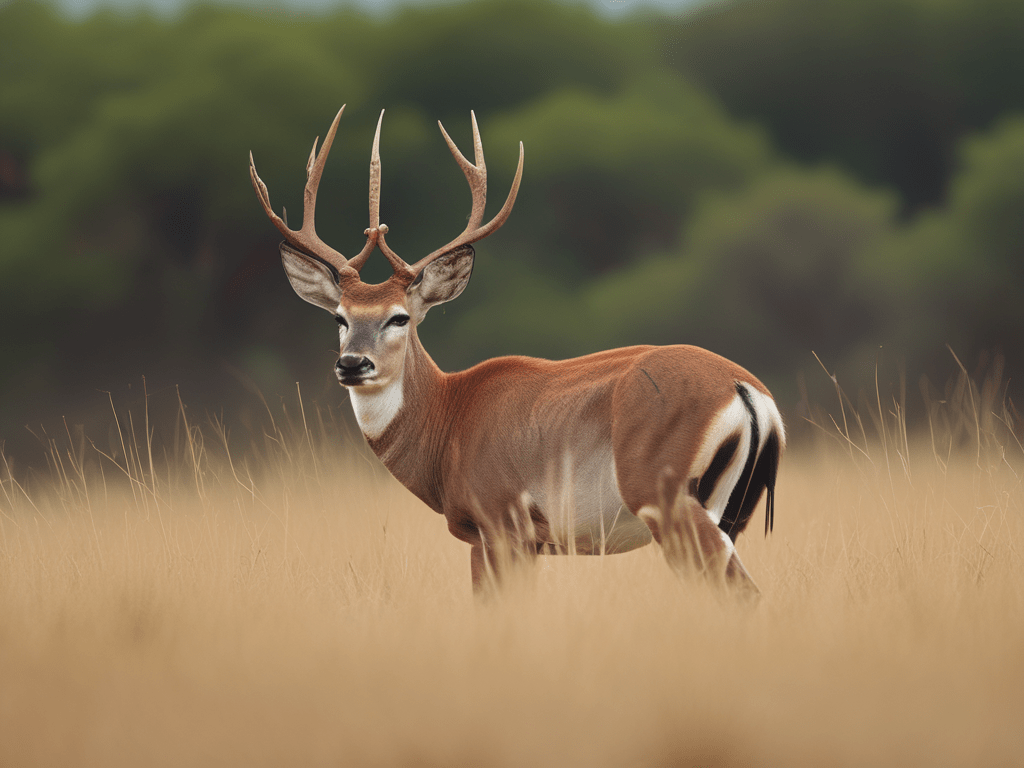
The hirola, also known as the “four-eyed antelope,” is a critically endangered species native to the border region between Kenya and Somalia. Known scientifically as Beatragus hunteri, this unique antelope is distinguished by the dark, preorbital glands beneath its eyes, giving the illusion of having four eyes. Hirola are grazers, primarily consuming grasses and other vegetation, and are well-adapted to the arid and semi-arid environments of their range.

Food
Hirola primarily feed on grasses, herbs, and occasional shrubs. They prefer fresh, green vegetation, which they graze on during the early morning and late afternoon to avoid the midday heat. During dry seasons, when green vegetation is scarce, they may resort to feeding on dry grasses and browse from bushes. They get most of their food by grazing in open savannas and grasslands, moving to areas where recent rains have stimulated plant growth.
Water
Hirola rely on the moisture content of the vegetation they consume and can survive with limited access to water. However, they still need to drink water when available, especially during the dry season. They find water sources in natural depressions, seasonal rivers, and artificial water points created by conservation efforts.
Shelter
Hirola do not build shelters but seek protection from the harsh sun and predators by using natural features in their environment. They rest in the shade provided by trees, bushes, and tall grasses. These shaded areas also offer some camouflage, helping them avoid predators like lions and hyenas.
Space and Habitat
Hirola require open grasslands and savannas for grazing, typically preferring areas with short grasses. They need large territories due to their nomadic nature, constantly moving in search of fresh grazing grounds. This space is crucial for avoiding overgrazing and ensuring access to sufficient food resources.
Air and Climate Needs
Hirola are adapted to hot, arid, and semi-arid climates. They thrive in regions with sparse rainfall, where temperatures can be extreme. The air quality is generally good in these regions, with low humidity levels. Their physiological adaptations allow them to conserve water and regulate body temperature in these harsh conditions.
Care for Young
Female hirola give birth to a single calf after a gestation period of about 7-8 months. Calving usually occurs during the rainy season when food and water are more abundant. Mothers are highly protective of their young, hiding them in tall grass to avoid predators. The calf remains hidden for the first few weeks of life, during which the mother visits frequently to nurse. As the calf grows stronger, it begins to follow its mother and integrate into the herd.
Meet Harry the Hirola!

“Did you know? I’m often called the ‘four-eyed antelope’ because of the dark glands under my eyes! I can go for days without drinking water, getting most of my hydration from the juicy plants I munch on! I live in some of the hottest places, but my light coat helps me stay cool.My calves are experts at hide and seek! They hide in the tall grass to stay safe from predators.Though we may look like common antelopes, we are actually quite rare and special!”
Vocabulary Words
- Grazing: The act of feeding on grass and other low vegetation.
- Arid: Extremely dry, often describing a climate with little rainfall.
- Nomadic: Moving from place to place rather than staying in one area.
- Preorbital Glands: Glands located near the eyes of certain animals, often used for marking territory.
- Camouflage: The use of color or patterns to blend in with the surroundings.
What is the primary diet of hirola?
a) Insects
b) Grasses and herbs
c) Fish
d) Fruits
Where are hirola mainly found?
a) South Africa
b) Kenya and Somalia border
c) Egypt
d) Madagascar
How do hirola obtain most of their water?
a) Drinking from rivers
b) Consuming plants with high moisture content
c) Licking dew from leaves
d) Digging wells
What is a unique feature of the hirola’s appearance?
a) Stripes like a zebra
b) Spots like a leopard
c) Dark preorbital glands under the eyes
d) A hump on their back
What do hirola use for shelter?
a) Nests made of twigs
b) Dens dug into the ground
c) Shade from trees and bushes
d) Caves
How do hirola mothers protect their young?
a) By building nests
b) By hiding them in tall grass
c) By carrying them in pouches
d) By staying underground
During which season do hirola typically give birth?
a) Dry season
b) Rainy season
c) Winter
d) Summer
What adaptation helps hirola survive in hot climates?
a) Thick fur
b) Light coat
c) Webbed feet
d) Long ears
What does the term ‘nomadic’ mean in relation to hirola?
a) They stay in one place
b) They travel frequently in search of food
c) They hibernate during winter
d) They live in water
Why is the hirola also known as the ‘four-eyed antelope’?
a) Because it has four eyes
b) Due to the presence of dark glands under their eyes
c) Because it can see in four directions at once
d) Because of a myth that it has double vision
Answers
What is the primary diet of hirola?
b) Grasses and herbs
Where are hirola mainly found?
b) Kenya and Somalia border
How do hirola obtain most of their water?
b) Consuming plants with high moisture content
What is a unique feature of the hirola’s appearance?
c) Dark preorbital glands under the eyes
What do hirola use for shelter?
c) Shade from trees and bushes
How do hirola mothers protect their young?
b) By hiding them in tall grass
During which season do hirola typically give birth?
b) Rainy season
What adaptation helps hirola survive in hot climates?
b) Light coat
What does the term ‘nomadic’ mean in relation to hirola?
b) They travel frequently in search of food
Why is the hirola also known as the ‘four-eyed antelope’?
b) Due to the presence of dark glands under their eyes
 Unleashed Learning Gateway