
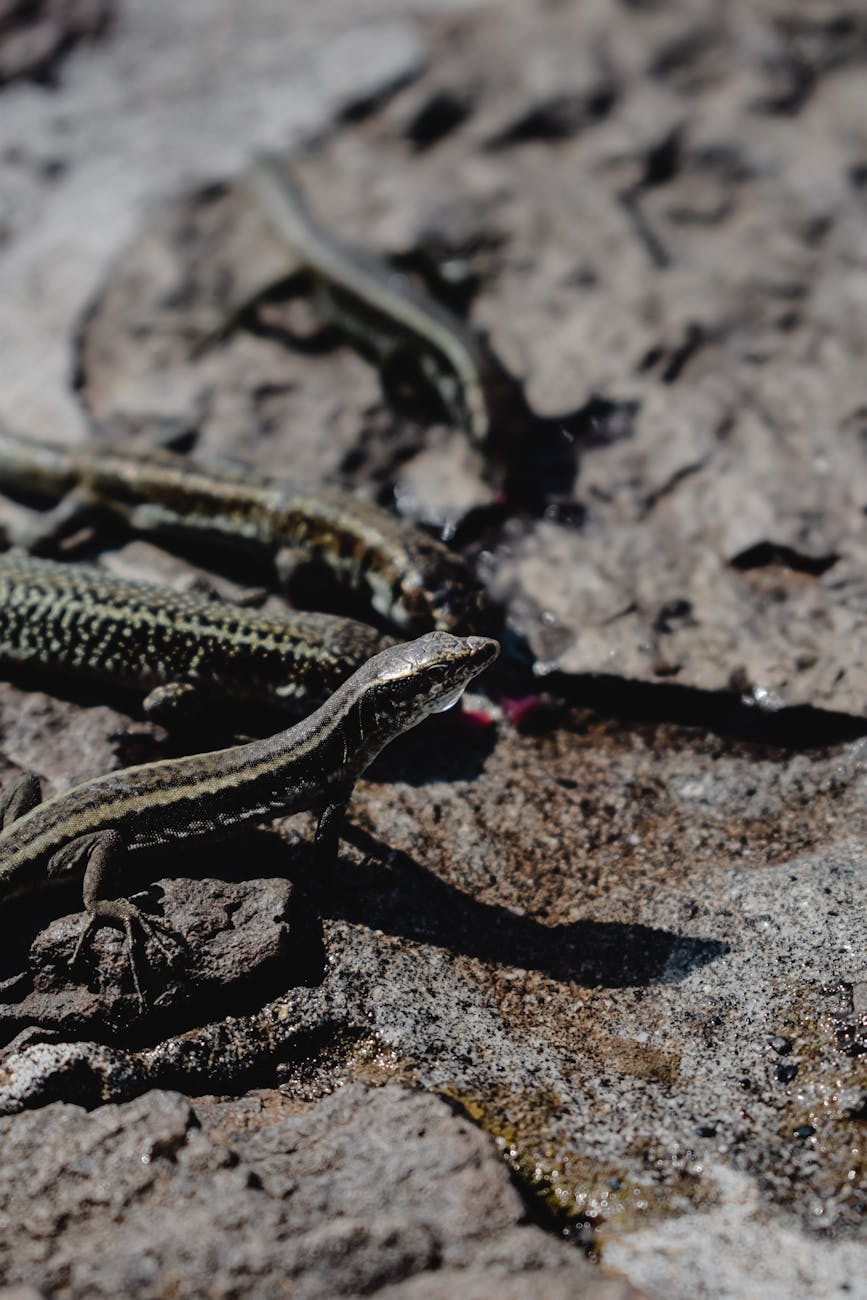
The Fascinating World of Lizards

Lizards are a diverse group of reptiles found on every continent except Antarctica. They belong to the order Squamata, which also includes snakes. There are over 6,000 species of lizards, each adapted to various environments and lifestyles. In this article, we will explore the diet, water needs, shelter, space, air requirements, and care for young of these remarkable creatures.
Diet and Food Acquisition
Lizards have varied diets depending on their species. Some are carnivorous, some herbivorous, and others omnivorous. Carnivorous lizards, such as the monitor lizard, prey on insects, small mammals, birds, and other reptiles. Herbivorous lizards, like the iguana, feed on leaves, fruits, and flowers. Omnivorous lizards, such as the bearded dragon, consume a mix of plants and animals.
Lizards typically hunt using their keen sense of sight and smell. They may use their tongues to detect chemical cues in the environment, which helps them locate prey. Some lizards, like the chameleon, have specialized tongues that can rapidly extend to catch insects.
Water Needs
Lizards obtain water from various sources, including the food they eat and direct drinking. Desert species, such as the desert iguana, can survive on minimal water by obtaining moisture from their food. Many lizards drink from water sources such as ponds, streams, and dew collected on plants. They may also absorb moisture through their skin in humid environments.
Shelter and Habitat
Lizards find shelter in a variety of places to protect themselves from predators and extreme weather. Common shelters include burrows, crevices in rocks, under logs, and within dense vegetation. Some lizards, like the gecko, can climb and find refuge in trees and buildings. Lizards do not typically build shelters but instead utilize natural features in their environment.
Space and Territory
Lizards require adequate space to hunt, mate, and bask in the sun. Territorial species, like the anole, will defend their space from intruders. The size of a lizard’s territory can vary widely, from a few square meters to several hectares, depending on the species and availability of resources.
Air and Respiration
Lizards breathe air through their lungs. They have well-developed respiratory systems that allow efficient gas exchange. Lizards are ectothermic (ec·to·therm), meaning they rely on external heat sources to regulate their body temperature. Basking in the sun helps them maintain the necessary body temperature for optimal metabolic function.
Care for Young
Most lizards lay eggs, though some give birth to live young. Parental care varies among species. In many cases, lizards do not provide care for their offspring after laying eggs. However, some species, like the skink, exhibit protective behavior towards their eggs, guarding them from predators. Once hatched, young lizards are generally independent and must fend for themselves.
Did you know?
There are over 6,000 species of lizards. Some well-known species include:
Green Iguana
Komodo Dragon
Leopard Gecko
Crested Gecko
Bearded Dragon
Fun Facts 
“Did you know I can regrow my tail if it gets bitten off? It’s like magic!”
“I can change my color to blend in with my surroundings. I’m a master of disguise!”
“Some of us can run on water! They call me the ‘Jesus Lizard’ because of that cool trick.”
“My tongue is super sticky. I use it to catch tasty insects from afar.”
“I don’t need to drink water every day. I get most of my moisture from the food I eat.”
Vocabulary Words
Ectothermic: Animals that rely on external heat sources to regulate their body temperature.
Metabolic: Related to the chemical processes that occur within a living organism to maintain life.
Territorial: Behavior related to defending an area against intruders, especially of the same species.
Respiration: The process of inhaling oxygen and exhaling carbon dioxide.
Predator: An animal that naturally preys on others.
Hectares- a metric unit of area measurement used in both scientific and everyday contexts. It is defined as a square with sides of 100 meters in length. Consequently, a hectare is equivalent to 10,000 square meters or 0.01 square kilometers.
Let’s Take a Look!


Multiple Choice Worksheet for Critical Thinking
What do carnivorous lizards primarily eat?
a) Leaves
b) Fruits
c) Insects and small animals
d) Flowers
How do desert lizards obtain most of their water?
a) Drinking from ponds
b) Absorbing moisture through their skin
c) From the food they eat
d) Drinking dew from plants
Where do most lizards find shelter?
a) Building nests
b) Using natural features like rocks and logs
c) Climbing trees exclusively
d) Digging deep burrows
What is the primary way lizards regulate their body temperature?
a) Shivering
b) Basking in the sun
c) Drinking hot water
d) Running quickly
What is unique about a lizard’s tail?
a) It can speak
b) It can regrow if lost
c) It can produce venom
d) It can be used to fly
Which of the following is NOT a well-known lizard species?
a) Green Iguana
b) Komodo Dragon
c) Polar Bear
d) Bearded Dragon
How do lizards breathe?
a) Through gills
b) Through lungs
c) Through their skin
d) Through their eyes
Which lizard is known for running on water?
a) Leopard Gecko
b) Bearded Dragon
c) Green Iguana
d) Basilisk Lizard
What does “ectothermic” mean?
a) Generates heat internally
b) Relies on external heat sources
c) Does not need heat
d) Can fly
What kind of parental care do most lizards exhibit?
a) Feeding their young
b) Guarding their eggs
c) Teaching their young to hunt
d) None, young lizards are independent
Research Project
Research Project: Exploring the Diversity of Lizards
Objective: Students will choose a type of lizard to research and present their findings.
Instructions:
Choose a Lizard Species: Select one species of lizard to research. Some options include the Green Iguana, Komodo Dragon, Leopard Gecko, Crested Gecko, or Bearded Dragon.
Research Areas:
Habitat: Describe the natural habitat of the lizard. Where does it live?
Diet: What does this lizard eat? How does it obtain its food?
Physical Characteristics: Describe its appearance. What are some unique features?
Behavior: How does this lizard behave? Is it territorial? Does it have any special behaviors?
Reproduction: How does this lizard reproduce? Does it lay eggs or give birth to live young?
Conservation Status: Is this species endangered or threatened? What are some conservation efforts in place?
Presentation: Prepare a presentation to share your findings with the class. You can use visual aids like posters, slideshows, or models.
Reflection: Write a short reflection on what you found most interesting about your lizard and why.
Evaluation Criteria:
Accuracy and depth of research
Clarity and creativity in presentation
Understanding of the lizard’s ecology and behavior
Quality of reflection
Research Practice: Multiple Choice Questions
Instructions: Use a computer, book, or etc. to answer the questions below.
What is the primary diet of a Green Iguana?
a) Insects
b) Leaves and fruits
c) Small mammals
d) Fish
Which lizard is known for its ability to change color?
a) Komodo Dragon
b) Gecko
c) Chameleon
d) Anole
How do lizards primarily detect their prey?
a) Using their sense of hearing
b) Using their sense of sight and smell
c) By feeling vibrations
d) By taste
What type of habitat do Leopard Geckos prefer?
a) Rainforests
b) Deserts
c) Mountains
d) Oceans
Which lizard is known for its powerful bite and large size?
a) Komodo Dragon
b) Green Iguana
c) Crested Gecko
d) Bearded Dragon
How do lizards generally obtain moisture in arid environments?
a) By drinking from lakes
b) Absorbing dew from plants
c) From their prey
d) By digging for underground water
What is the scientific term for animals that rely on external heat sources?
a) Endothermic
b) Homothermic
c) Ectothermic
d) Exothermic
Which of the following is a common method lizards use for protection?
a) Camouflage
b) Flying
c) Swimming
d) Vocalizing loudly
What type of parental care do Skinks exhibit?
a) Feeding their young
b) Protecting their eggs
c) Teaching hunting skills
d) None, they abandon
Answers to Multiple Choice Worksheet for Critical Thinking
What do carnivorous lizards primarily eat?
Answer: c) Insects and small animals
How do desert lizards obtain most of their water?
Answer: c) From the food they eat
Where do most lizards find shelter?
Answer: b) Using natural features like rocks and logs
What is the primary way lizards regulate their body temperature?
Answer: b) Basking in the sun
What is unique about a lizard’s tail?
Answer: b) It can regrow if lost
Which of the following is NOT a well-known lizard species?
Answer: c) Polar Bear
How do lizards breathe?
Answer: b) Through lungs
Which lizard is known for running on water?
Answer: d) Basilisk Lizard
What does “ectothermic” mean?
Answer: b) Relies on external heat sources
What kind of parental care do most lizards exhibit?
Answer: d) None, young lizards are independent
Answers to 10 Multiple Choice Questions
What is the primary diet of a Green Iguana?
Answer: b) Leaves and fruits
Which lizard is known for its ability to change color?
Answer: c) Chameleon
How do lizards primarily detect their prey?
Answer: b) Using their sense of sight and smell
What type of habitat do Leopard Geckos prefer?
Answer: b) Deserts
Which lizard is known for its powerful bite and large size?
Answer: a) Komodo Dragon
How do lizards generally obtain moisture in arid environments?
Answer: c) From their prey
What is the scientific term for animals that rely on external heat sources?
Answer: c) Ectothermic
Which of the following is a common method lizards use for protection?
Answer: a) Camouflage
What type of parental care do Skinks exhibit?
Answer: b) Protecting their eggs
What is the primary function of a lizard’s keen sense of sight and smell?
Answer: b) To locate prey
 Unleashed Learning Gateway