
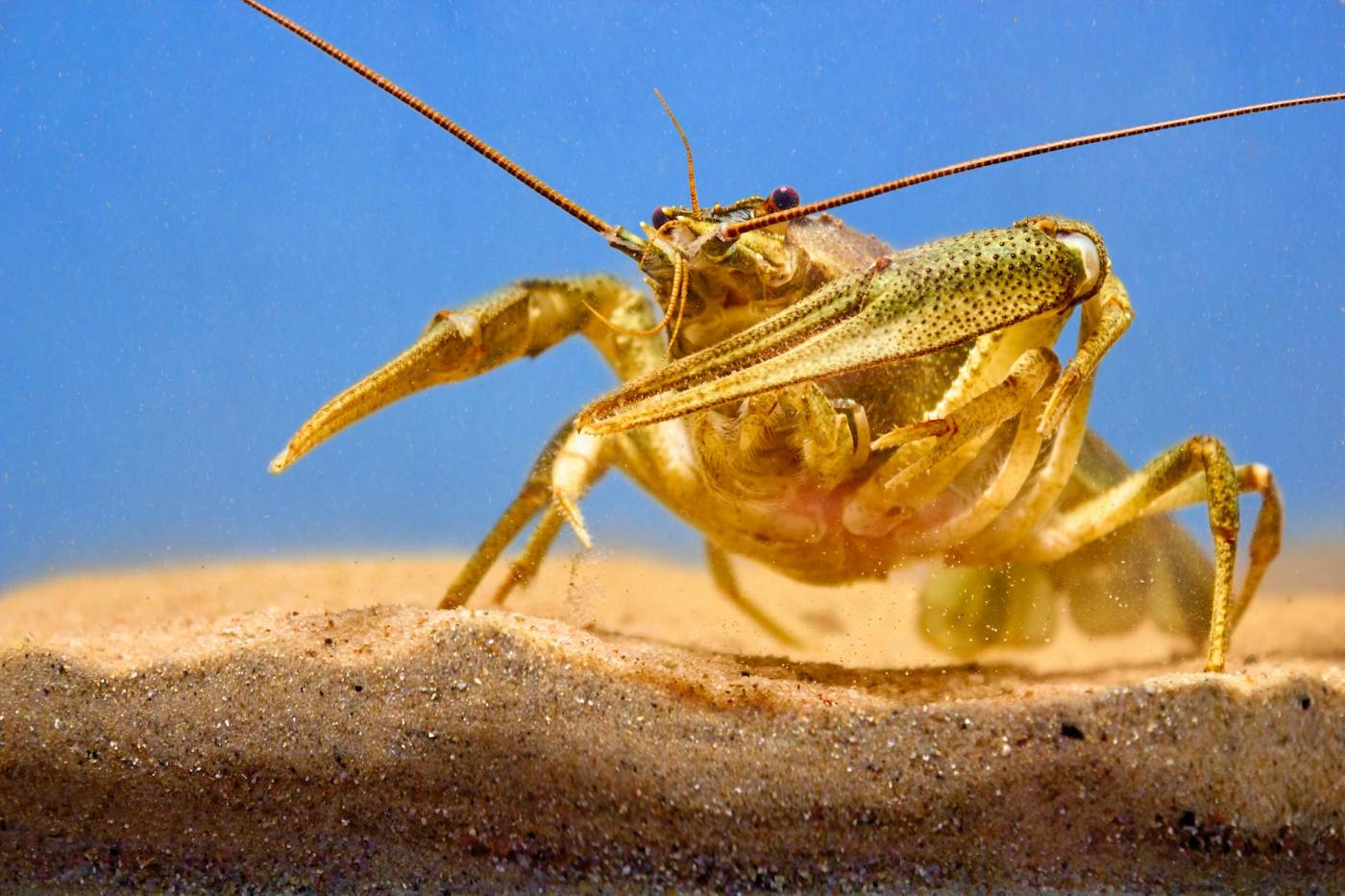
Crawfish: The Tiny Warriors of the Water
Crawfish, also known as crayfish or crawdads, are fascinating freshwater crustaceans that look like miniature lobsters. These little creatures are packed with interesting behaviors and adaptations that help them survive and thrive in their watery homes. Let’s dive into the world of crawfish to learn more about their life stages, care for their young, habitats, diets, and defense mechanisms.
Life Stages of Crawfish
Crawfish go through several stages of life, starting as tiny eggs. The eggs are usually carried by the female under her tail until they hatch. Once hatched, the baby crawfish, called larvae, cling to their mother’s swimmerets (tiny legs under the tail) for protection and nourishment. As they grow, they molt, shedding their exoskeleton to form a new, larger one. This process continues until they reach adulthood, usually within a few months.
Caring for Their Young
Crawfish mothers are very protective of their eggs and larvae. They carry their eggs and later their young under their tails, keeping them safe from predators and strong currents. The young crawfish stay attached to their mother for a few weeks until they are big enough to venture out on their own. During this time, the mother provides them with the protection they need to survive in the wild.
Where Do Crawfish Live?
Crawfish are typically found in freshwater environments like rivers, streams, lakes, and ponds. Some species even live in burrows they dig near water sources, where they can stay moist and safe. These burrows also serve as a refuge during dry seasons or when water levels drop. Crawfish prefer habitats with plenty of hiding places like rocks, vegetation, and debris where they can seek shelter from predators.
What Do Crawfish Eat and How Do They Obtain Their Food?
Crawfish are omnivores, meaning they eat both plants and animals. Their diet includes algae, plant matter, small fish, insects, and detritus (dead plant and animal material). Crawfish are scavengers, meaning they often feed on whatever they can find. They use their pincers to grab food and break it into smaller pieces. They are also known to use their sensitive antennae to detect food sources in the dark or murky waters where they live.
How Do Crawfish Stay Hidden from Predators?
Crawfish are masters of camouflage. Their bodies are usually brown, green, or gray, which helps them blend in with the mud, rocks, and plants in their environment. They often hide under rocks, in crevices, or among aquatic plants to avoid being seen by predators. Some crawfish also dig burrows to hide in, especially during daylight hours when they are most vulnerable.
What Is Their Defense Mechanism?
When threatened, crawfish have several defense mechanisms. First, they use their powerful pincers to grab and pinch predators. If that doesn’t work, they can swim backward quickly by flicking their tail, a movement known as tail-flipping, to escape. Crawfish are also known to release a burst of speed when fleeing, making it hard for predators to catch them.
10 Fun Facts About Crawfish
- Crawfish can regenerate lost limbs, including their pincers!
- There are over 500 species of crawfish in the world.
- Some crawfish can dig burrows up to 3 feet deep!
- Crawfish are related to lobsters, crabs, and shrimp.
- In some cultures, crawfish are considered a delicacy and are often boiled with spices.
- Crawfish have ten legs, including their pincers.
- They can live in both clear and muddy waters.
- Crawfish are nocturnal and do most of their feeding at night.
- They communicate with each other by using chemical signals in the water.
- The largest crawfish species, the Tasmanian giant crayfish, can grow up to 6 pounds!
Vocabulary Words
Larvae: The early stage of a crawfish after it hatches from an egg.
Swimmerets: Small appendages under a crawfish’s tail used for carrying eggs and swimming.
Molting: The process of shedding an old exoskeleton to grow a new one.
Omnivores: Animals that eat both plants and animals.
Camouflage: The ability to blend in with the environment to avoid predators.
Multiple Choice Questions
What is the first stage of a crawfish’s life?
a) Egg
b) Larvae
c) Adult
d) Pincer
Where do crawfish typically live?
a) Desert
b) Freshwater environments
c) Saltwater oceans
d) Forests
What do crawfish primarily use to defend themselves?
a) Antennae
b) Pincers
c) Camouflage
d) Legs
What is molting?
a) Hiding under rocks
b) Shedding an old exoskeleton
c) Digging a burrow
d) Eating plants
What do crawfish eat?
a) Only plants
b) Only animals
c) Both plants and animals
d) Only insects
How do crawfish stay hidden from predators?
a) By changing colors
b) By swimming fast
c) By camouflaging with their environment
d) By making noises
What time of day are crawfish most active?
a) Morning
b) Afternoon
c) Night
d) All day long
How do crawfish escape quickly from predators?
a) Walking slowly
b) Tail-flipping to swim backward
c) Flying
d) Hopping
What body part do crawfish use to sense food in the water?
a) Pincers
b) Swimmerets
c) Antennae
d) Tail
How deep can some crawfish burrow?
a) 1 foot
b) 2 feet
c) 3 feet
d) 5 feet
Answers to Multiple Choice Questions
a) Egg
b) Freshwater environments
b) Pincers
b) Shedding an old exoskeleton
c) Both plants and animals
c) By camouflaging with their environment
c) Night
b) Tail-flipping to swim backward
c) Antennae
c) 3 feet
 Unleashed Learning Gateway