
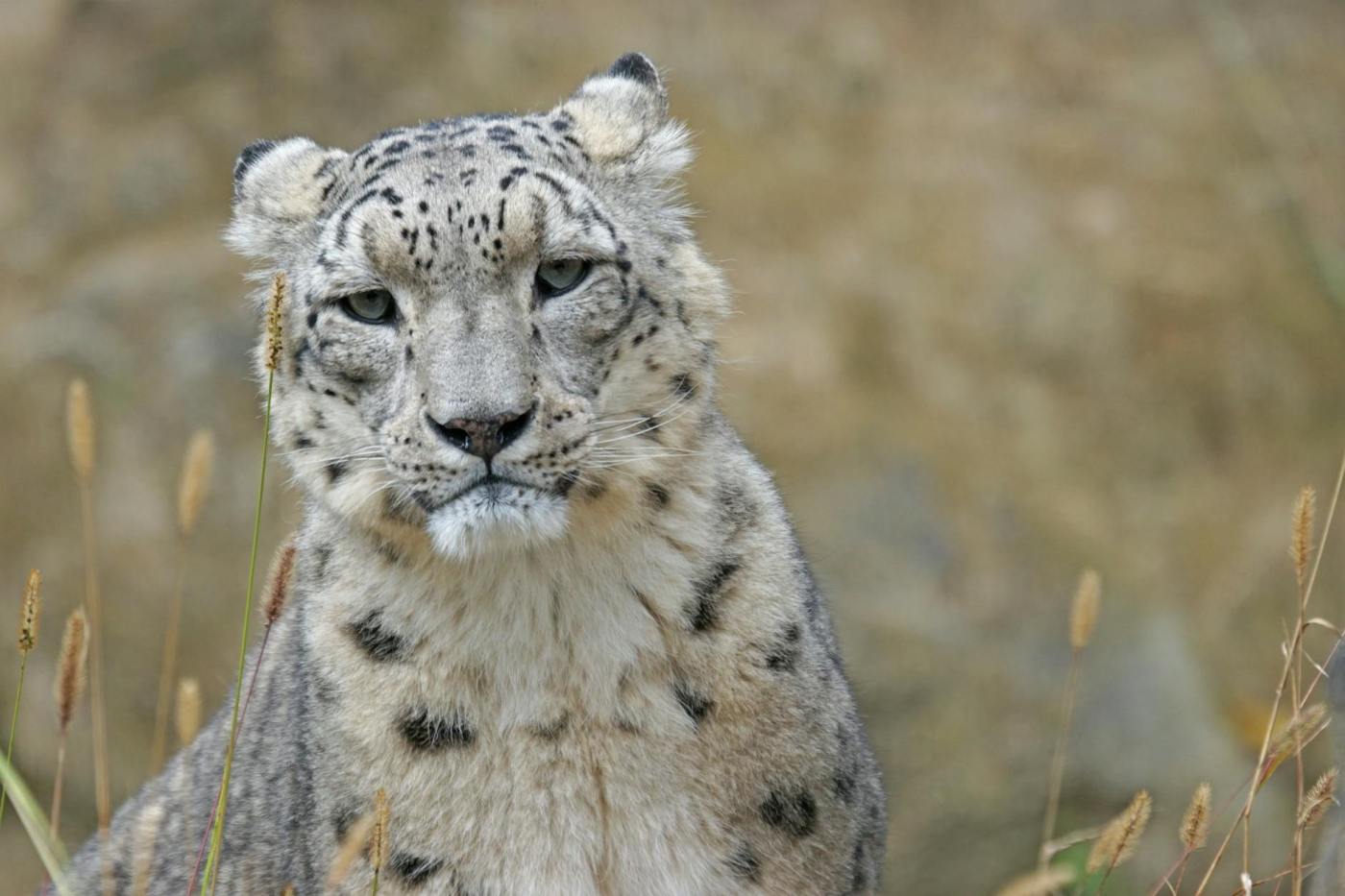

The snow leopard, also known as Panthera uncia, is a majestic and elusive big cat that roams the cold, rugged mountain ranges of Central and South Asia. Often called the “ghost of the mountains” due to its ability to blend seamlessly with its rocky surroundings, this magnificent animal is known for its solitary nature and powerful hunting skills. One unique characteristic of snow leopards is their long, thick tails, which they use not only for balance while navigating steep cliffs but also as a cozy wrap to stay warm in freezing temperatures.
Classification:
Kingdom: Animalia
Phylum: Chordata
Class: Mammalia
Order: Carnivora
Family: Felidae
Genus: Panthera
Species: Panthera uncia
Snow leopards are closely related to other big cats such as lions, tigers, and jaguars. However, they have unique adaptations that allow them to survive in extreme mountainous environments.
Habitat:
Snow leopards thrive in some of the harshest landscapes on Earth, including the cold, rocky mountain ranges of the Himalayas, the Tibetan Plateau, and the Altai Mountains in Russia and Mongolia. They inhabit alpine and subalpine zones, living between 9,800 and 14,800 feet (3,000 to 4,500 meters) above sea level. Their preferred habitat includes steep, craggy terrain where they can skillfully hunt and avoid predators. The climate in these areas is typically cold, with snowy winters and cool summers.

Physical Characteristics:
Snow leopards are medium-sized cats, standing about 22 inches (55 cm) tall at the shoulder and measuring up to 4.5 feet (1.35 meters) in length, excluding their tail, which can add another 3 feet (1 meter). They typically weigh between 60 and 120 pounds (27-55 kg). Their fur is thick and pale gray with black rosettes and spots, providing excellent camouflage against rocky terrain. One of their most notable adaptations is their large, powerful hind legs, which allow them to leap as far as 50 feet (15 meters) in a single bound. Their thick, long tails help with balance and provide warmth in cold conditions.
Diet:
Snow leopards are carnivores and primarily hunt herbivorous animals such as blue sheep (bharal), Himalayan tahr, and ibex. They are also known to prey on smaller mammals like marmots and hares when larger prey is scarce. Snow leopards are skilled hunters, using stealth and strength to ambush prey. They often rely on their excellent camouflage and agility to get close to their targets before delivering a powerful pounce. After a successful hunt, they may drag their kill to a secluded spot to eat in peace.
Life Cycle and Reproduction:
Snow leopards typically give birth to two or three cubs in a den made of rock crevices. The cubs are born blind and rely on their mother for food and protection. By the time they are about two months old, the cubs begin eating meat and learning how to hunt. They stay with their mother for up to 18-22 months before becoming independent. Snow leopards can live up to 15-18 years in the wild and slightly longer in captivity.
Behavior:
Snow leopards are solitary animals and are mostly active at dawn and dusk (crepuscular). They are highly territorial, marking their range with scent markings to avoid conflicts with other snow leopards. Unlike many other big cats, snow leopards are not known to roar; instead, they communicate through growls, yowls, and chuffing sounds. Although solitary, a snow leopard mother will be fiercely protective of her cubs until they are old enough to fend for themselves.
Defense Mechanisms:
To protect themselves from predators, snow leopards rely on their natural camouflage to stay hidden. Their light-colored, spotted fur blends into the rocky, snowy landscapes where they live. If threatened, they may use their powerful legs to leap to higher, inaccessible terrain to escape danger. Their stealth and agility make them elusive and hard to track.
Conservation Status:
The snow leopard is currently listed as “Vulnerable” by the International Union for Conservation of Nature (IUCN). Their population is threatened by habitat loss, poaching for their beautiful fur, and depletion of prey due to human activity. Additionally, conflicts with herders, who may kill snow leopards in retaliation for attacks on livestock, pose a significant threat. Fortunately, conservation organizations are working to protect snow leopard habitats, reduce human-wildlife conflict, and educate local communities about the importance of preserving this species.
Human Interaction:
Although snow leopards rarely come into contact with humans due to their remote habitat, they have cultural significance in many regions. They are featured in local folklore, and their elusive nature adds to their mystique. In recent years, snow leopards have also been a symbol for wildlife conservation efforts.
____________________________________________________________________________
In conclusion, Snow leopards are remarkable creatures, perfectly adapted to life in some of the harshest environments on Earth. Their elusive behavior, stunning appearance, and essential role as apex predators make them vital to the balance of their ecosystem. By protecting snow leopards and their habitats, we ensure the preservation of biodiversity in these remote mountain regions.
Videos
10 Fun Facts About Snow Leopards:
- Snow leopards cannot roar like other big cats but communicate through chuffing and yowling.
- Their tails are as long as their bodies and help them balance while leaping across rocky terrain.
- They can leap up to 50 feet in a single bound.
- Snow leopards have a unique nasal structure that warms cold air before it enters their lungs.
- Their thick fur is not only camouflage but also helps insulate them in freezing temperatures.
- Despite being solitary, they are known to play and be affectionate with their cubs.
- Snow leopards are called “ghosts of the mountains” because of their elusive nature.
- They are known to eat prey three times their size.
- Snow leopards have wide paws that act like snowshoes to help them walk in deep snow.
- They have been featured in many conservation programs and even in international diplomacy efforts.
Vocabulary Words:
Camouflage (kam-uh-flahj) – the ability to blend in with surroundings to avoid detection.
Crepuscular (kri-puhs-kyuh-lar) – active during twilight, around dawn and dusk.
Territorial (te-ri-tawr-ee-uhl) – relating to the defense of an area against others.
Solitary (sol-i-ter-ee) – living alone, without the company of others.
Vulnerable (vuhl-nuh-ruh-buhl) – at risk of harm or extinction.
Multiple Choice Questions:
What is the scientific name of the snow leopard?
a) Panthera leo
b) Panthera uncia
c) Panthera tigris
d) Felis catus
Where do snow leopards primarily live?
a) Tropical rainforests
b) Alpine mountain ranges
c) Deserts
d) Grasslands
What is one of the main prey animals for snow leopards?
a) Blue sheep (bharal)
b) Zebras
c) Deer
d) Elephants
How long can snow leopards leap in a single bound?
a) 10 feet
b) 20 feet
c) 50 feet
d) 5 feet
What is the main reason snow leopards are endangered?
a) Overpopulation
b) Poaching and habitat loss
c) Lack of food
d) Disease
What adaptation helps snow leopards survive in cold environments?
a) Sharp teeth
b) Thin fur
c) Thick fur and long tails
d) Short tails
How many cubs do snow leopards typically have in a litter?
a) 1-2
b) 2-3
c) 4-5
d) 5-6
What is the primary diet of snow leopards?
a) Plants
b) Fish
c) Large herbivores
d) Insects
How do snow leopards protect themselves from predators?
a) They use their camouflage
b) They burrow underground
c) They roar loudly
d) They form large groups
Snow leopards are mainly active during which time of day?
a) Daytime
b) Nighttime
c) Twilight (dawn and dusk)
d) Midday
 Unleashed Learning Gateway
Leave a comment