
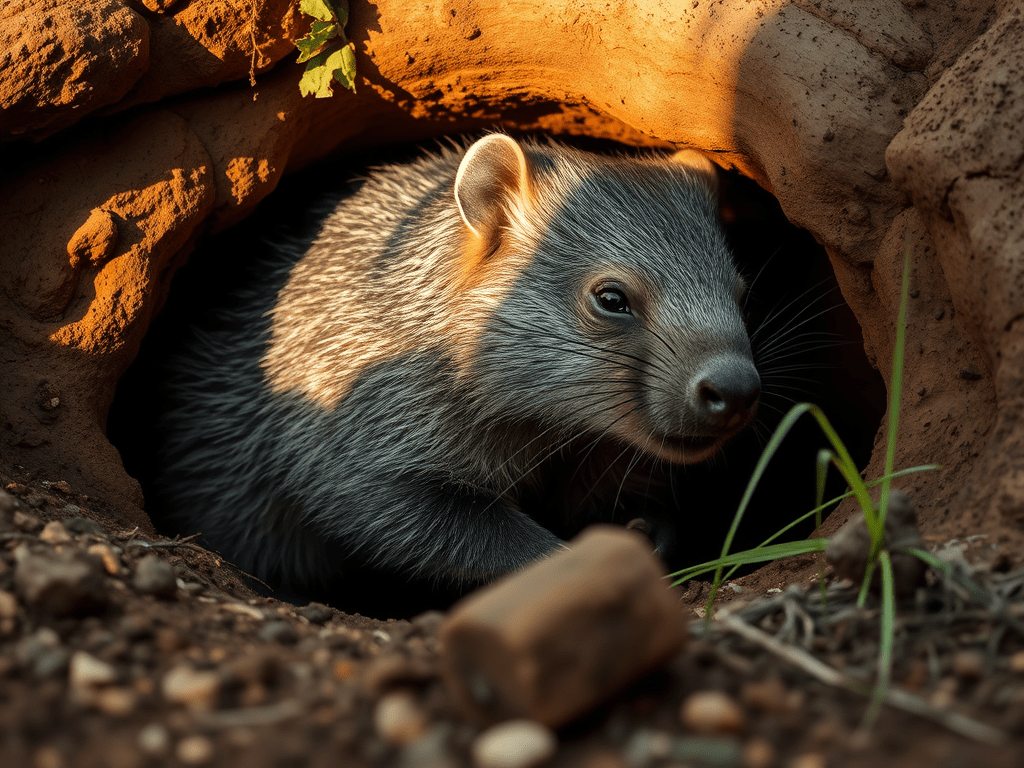
Wombats are one of Australia’s most fascinating and misunderstood creatures. These sturdy, short-legged marsupials may look like cuddly teddy bears, but they are powerful diggers, intelligent problem-solvers, and vital members of their ecosystem. Understanding the wombat gives us a deeper appreciation for how animals adapt to survive in their environments — and how every species, no matter how small, plays an important role in nature.
Physical Traits and Adaptations
Wombats are medium-sized mammals that usually weigh between 40 and 70 pounds. They have thick, muscular bodies, strong claws, and large front teeth similar to those of rodents. These features are perfect for their underground lifestyle. Unlike most marsupials, the wombat’s pouch faces backward. This adaptation protects their babies, known as joeys, from being covered in dirt when the mother digs. It’s a small but brilliant design that shows how animals evolve to fit their surroundings.
Their fur is typically brown or gray, blending well with the Australian bush. Wombats have a thick hide, especially on their backside — a feature that doubles as armor. When threatened by predators such as dingoes, a wombat can dive into its burrow and block the entrance with its tough rump, keeping itself safe.
Burrowing Lifestyle
Wombats are expert diggers and live in tunnel systems called burrows. These burrows can stretch over 100 feet long, with multiple entrances and chambers. They provide protection from predators and help regulate temperature, keeping wombats cool during Australia’s hot days and warm during chilly nights. Burrows also play an important role in the ecosystem — when unoccupied, they become shelters for other animals like lizards, rabbits, and small mammals.
Most wombats are nocturnal, meaning they are active at night. During the day, they rest inside their burrows, and at dusk, they emerge to feed on grasses, roots, and bark. Wombats are herbivores, and their slow metabolism allows them to survive on a diet that would not sustain many other animals. In fact, it can take up to two weeks for a wombat to completely digest one meal!
The Mystery of Cube-Shaped Poop
Perhaps the most famous fact about wombats is their cube-shaped poop. Scientists once thought it was just a curiosity, but research has shown that the shape serves a purpose. Because wombats mark their territory with piles of feces, the cube shape keeps the droppings from rolling away. This helps them communicate with other wombats by scent without losing their markings. The cube shape forms in the wombat’s intestines, where the muscle walls stretch unevenly, drying and compressing the waste into tidy little blocks. It’s an unusual but effective design that demonstrates the wonders of biology.
Species and Conservation
There are three living species of wombats: the Common Wombat, the Southern Hairy-Nosed Wombat, and the Northern Hairy-Nosed Wombat. The Northern Hairy-Nosed Wombat is one of the most endangered mammals in the world, with fewer than 300 individuals remaining in a small part of Queensland, Australia. Conservation groups are working hard to protect their habitats, reduce road accidents, and control diseases that threaten them.
Habitat loss, vehicle strikes, and climate change continue to pose dangers to wombats. As farmland expands and roads cut through their natural ranges, wombats are often forced to travel farther for food and water, putting them at risk. Supporting conservation efforts and respecting wildlife crossings are simple but powerful ways humans can help.
The Role of Wombats in Nature
Beyond their cute appearance, wombats serve as ecosystem engineers — animals that shape their environment in ways that benefit other species. Their burrows provide shelter for many creatures, helping entire ecosystems survive harsh conditions. By grazing on grasses and digging in the soil, wombats also help with nutrient cycling and soil aeration, which supports healthy plant growth.
Conclusion
The wombat may not be as famous as the kangaroo or koala, but it deserves just as much admiration. Every feature of its body — from its backward pouch to its cube-shaped poop — tells a story of survival, intelligence, and balance with nature. Wombats remind us that adaptation is one of life’s greatest strengths, and that even the smallest creature can make a big impact on the world around it. By learning about and protecting animals like the wombat, we not only preserve a unique piece of Australia’s wildlife but also nurture our connection to the natural world.
📘 Vocabulary Words
| Word | Definition |
|---|---|
| Marsupial | A mammal that carries and nurses its young in a pouch, like wombats, kangaroos, and koalas. |
| Burrow | A tunnel or hole dug by an animal for living or protection. |
| Herbivore | An animal that eats only plants. |
| Adaptation | A feature or behavior that helps an animal survive in its environment. |
| Ecosystem | A community of living things and their physical environment, all interacting together. |
🧠 Comprehension Questions
1. What makes wombats different from most other marsupials?
A. They live in trees instead of burrows
B. Their pouch faces backward to keep dirt out while digging
C. They eat meat as well as plants
D. They can fly short distances
→ Correct Answer: B
2. Why do wombats have cube-shaped poop?
A. Their food is shaped that way
B. To make it easier to build nests
C. So the poop stays in one place when marking territory
D. Because they sit on square rocks
→ Correct Answer: C
3. What do wombats mostly eat?
A. Insects and small animals
B. Fish and fruit
C. Grass, bark, and roots
D. Eggs and leaves
→ Correct Answer: C
4. Which of the following statements about wombat burrows is true?
A. They are small holes used only for sleeping
B. They are long tunnels that help wombats stay safe and cool
C. They are made by other animals and borrowed by wombats
D. They are built in trees above the ground
→ Correct Answer: B
5. What is one reason wombats are important to the ecosystem?
A. Their burrows provide shelter for other animals
B. They scare away larger predators
C. They plant new trees when digging
D. They clean rivers and streams
→ Correct Answer: A
 Unleashed Learning Gateway