
If you’re a teen reading this, you’re already ahead of most people your age. Why?
Because learning how to handle money now puts you on the fast track to freedom, confidence, and future success. Financial independence doesn’t mean paying all your bills today — it means learning how to control your money instead of letting money control you.
Let’s break down how to budget, make smart decisions, and build habits that set you up for an amazing future.
Why Financial Independence Matters for YOU
It’s simple:
When you understand money, you gain power.
Financial independence means you can:
- Buy things you actually want (not just whatever you can afford in the moment)
- Save for big goals — trips, tech, clothes, a car
- Avoid being stressed about money later
- Make choices that fit your life, not what others expect
- Build confidence in yourself
You don’t need to be an adult to start handling money like one.
1. How to Budget (Without It Being Boring)
A budget is just a plan for your money.
It doesn’t limit you — it actually gives you more control.
Here’s the easiest way to budget as a teen:
- Know what you have
- Allowance
- Chores
- Part-time job
- Gifts
- Know what’s coming up
- Hanging out with friends
- Birthday gifts
- Snacks or lunch
- Something you’ve been wanting
- Decide what to save
Saving doesn’t have to be huge. Even $5 matters.
Example: Alex’s $20 Budget for the Week
Alex gets $20 each week.
He plans to:
- Save $8 for new basketball shoes
- Use $7 for snacks
- Keep $5 for fun or emergencies
Alex already knows where his money is going — no surprises, no stress.
2. Needs vs. Wants: The Skill That Saves You Money
Learning the difference helps you make better choices fast.
Needs
Things that matter or are required:
- School supplies
- Basic clothes
- Transportation
- Food
Wants
Things that are nice to have:
- Name-brand hoodies
- Extra streaming services
- Eating out every day
- New phone cases
- Game add-ons
Example:
You want a $60 hoodie.
You also need $15 for a school project.
A smart move?
Cover the project first, then save up for the hoodie.
This helps you avoid being broke when the important stuff shows up.
3. Deciding vs. Sliding: The Truth About Smart Money Choices
Here’s a major money secret:
Most people don’t decide to waste money…
They just slide into spending it.
Sliding means:
- You buy snacks every day without thinking
- You spend money because your friends are spending
- You say “it’s only $5” until suddenly it’s $40
Deciding means:
- You think before you spend
- You check your budget
- You choose things that fit your goals
- You’re in control, not your impulses
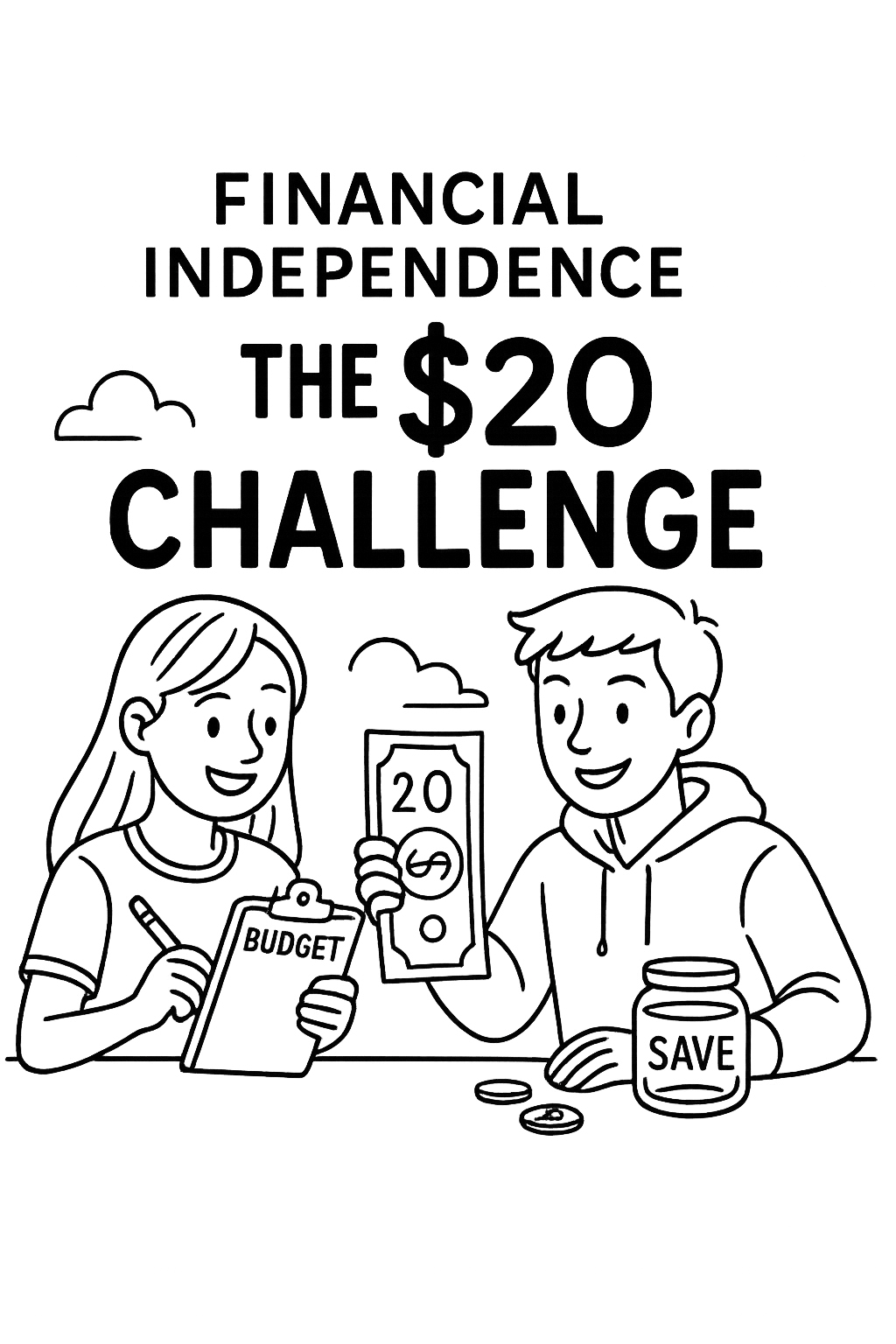
4. Example: The $20 Weekend Challenge
Imagine you get $20 for the weekend.
Sliding Version
You buy:
- $9 fast-food meal
- $7 game upgrade
- $4 drink/snack
Boom. Money gone.
And it’s only Saturday afternoon.
Deciding Version
You plan ahead:
- Spend $10 on lunch
- Save $5
- Use $5 for fun
You enjoy your weekend and hit your goals.
5. Saving: The Secret to Getting What You REALLY Want
Saving isn’t punishment — it’s your ticket to bigger things.
How to make saving easier:
- Have a goal (shoes, tech, a trip)
- Break it into weekly amounts
- Keep your savings somewhere visible (jar, envelope, app)
- Celebrate every milestone
Example:
You want a $300 phone.
You earn $30/week.
You save $15 each week.
You hit your goal in 20 weeks.
You didn’t beg anyone for money.
You didn’t wait for a holiday.
You earned it — and that feels amazing.
6. Learning Through Trial and Error (It’s Normal!)
Guess what?
You’re supposed to make mistakes with money right now.
This is the safest time to learn.
If you:
- Overspend
- Forget to save
- Blow money on something you regret
…it’s all part of the learning process.
Every mistake is a lesson that makes you smarter.
7. Try These Activities to Level Up Your Money Skills
Activity 1: The $20 Challenge
Use $20 and try to make it last the whole weekend.
Plan your spending.
See how much you can save.
Activity 2: Price Comparison
Pick two similar items (snacks, shirts, headphones).
Compare price, quality, and value.
Choose the best deal.
Activity 3: Goal Tracker
Write a goal.
Track your weekly progress.
Watch your savings grow.
You’ll be shocked at how good it feels to stick to a plan.
You’re In Control
Money doesn’t have to be confusing or stressful.
You can learn it, master it, and use it to build the life you want.
When you:
- Budget
- Make strong decisions
- Save with purpose
- Learn from mistakes
…you become financially independent — even before adulthood.
You’re not just “good with money.”
You’re building a future filled with confidence, choices, and freedom.
 Unleashed Learning Gateway